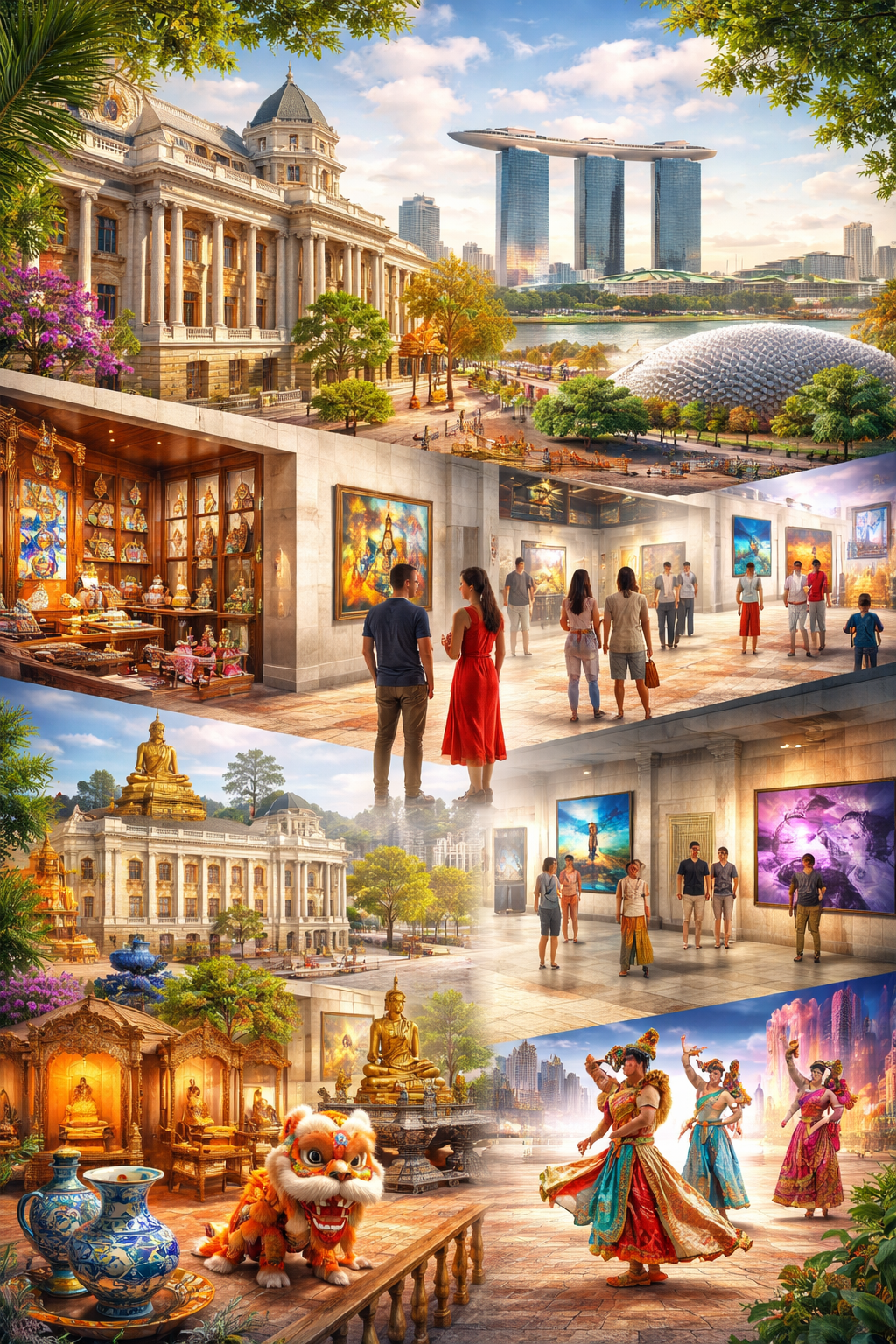
Singapore’s artistic appeal is sometimes overshadowed by its reputation as a financial center and modern travel hub, but for culturally curious visitors, the city offers a remarkably layered art experience. Art tourism in Singapore is not simply about viewing famous paintings or attending a performance for entertainment. It is about understanding how a small island nation has shaped a complex identity through heritage, migration, creativity, and international exchange. From world-class museums to intimate galleries and dynamic cultural performances, Singapore provides a wide-ranging journey into both tradition and innovation.
A natural starting point for art-focused travel is the National Gallery Singapore, one of the country’s most significant cultural institutions. Its strength lies in its focus on Singaporean and Southeast Asian modern art, allowing visitors to see how artistic expression developed alongside major historical changes in the region. The works on display often reflect questions of independence, social transformation, memory, and belonging. The gallery’s location in restored civic buildings also adds symbolic value, linking the nation’s political history with its artistic development. For many visitors, this museum becomes a gateway to understanding Southeast Asia through images, forms, and creative ideas rather than through textbooks alone.
The Asian Civilisations Museum expands that understanding by showing the deeper roots of the communities connected to Singapore. Its collections include sculpture, ceramics, metalwork, textiles, and sacred objects from across Asia. What makes the museum especially meaningful is its ability to explain how trade routes, faiths, and cultural contact influenced artistic production. Singapore has long been shaped by movement across seas and borders, and this museum reflects that history beautifully. Instead of presenting art in a narrow national frame, it demonstrates that Singapore’s cultural identity was built through centuries of interaction.
Visitors interested in hybrid cultural traditions should also explore the Peranakan Museum. This museum offers insight into the art and lifestyle of the Peranakan communities, whose visual culture is known for rich color, decorative detail, and fine craftsmanship. Beaded slippers, embroidered textiles, intricately designed furniture, and ceremonial objects all show how identity can be expressed through everyday beauty. For art tourists, this is an important reminder that art is not always confined to galleries; it also lives in homes, clothing, rituals, and inherited customs.
Singapore’s contemporary art scene adds another dimension to the visitor experience. Institutions such as the Singapore Art Museum, along with various independent and commercial galleries, provide exposure to experimental and modern practices. Here, travelers may encounter video installations, socially critical works, urban photography, or pieces that explore environmental and technological themes. These spaces reflect the concerns of present-day artists and show that Singapore’s art landscape is not only preserving heritage but also encouraging new forms of expression.
Cultural tourism in Singapore becomes even richer when live performance is included. Venues like Esplanade – Theatres on the Bay regularly feature theatre, music, dance, and multidisciplinary productions. The programming often reflects Singapore’s multicultural society, bringing together Chinese, Malay, Indian, and global influences in one calendar of events. Traditional performances may appear alongside contemporary choreography or experimental theatre, giving visitors a sense of how culture is continuously reinterpreted.
What makes Singapore stand out as an art destination is the close relationship between its institutions and its lived cultural diversity. Museums provide historical depth, galleries highlight creative experimentation, and performances animate cultural memory in real time. For travelers who want an experience that is intellectually rewarding as well as visually engaging, Singapore offers a well-rounded artistic journey that reveals the nation far beyond its modern exterior.
Author

Clara@gmail.com
Related Posts
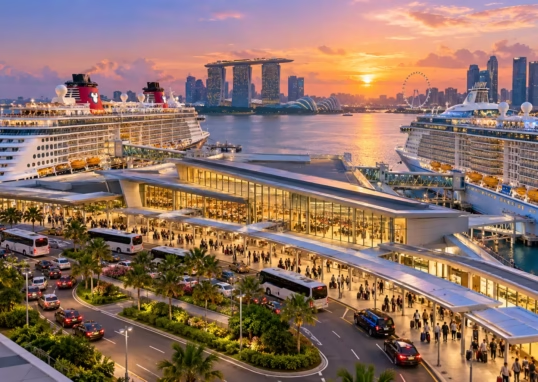
Princess Cruises and Singapore’s Three-Year Partnership: A Blueprint for Cruise Industry Growth in Asia
- 0
- 477 words
A Landmark Partnership for Asian Cruising In May 2026, the Singapore Tourism Board and Princess Cruises announced a three-year partnership that represents...
Read out all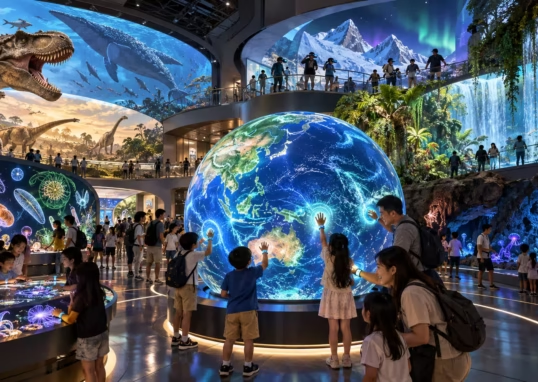
Science Centre Singapore and KidsSTOP: Building Scientific Curiosity Through Play-Based Learning
- 0
- 408 words
A Legacy of Interactive Science Education Since its establishment, Science Centre Singapore has stood as the nation’s premier institution for hands-on scientific...
Read out all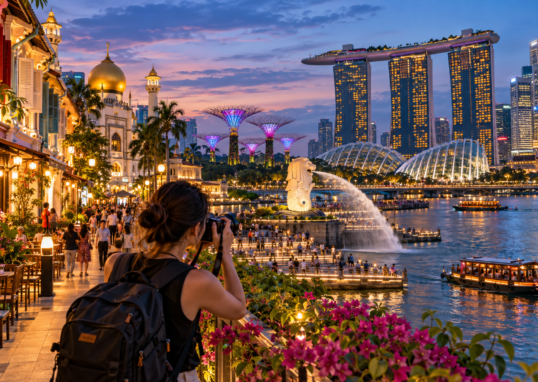
Gardens by the Bay Photography in 2026: A Complete Visual Guide for Travellers
- 0
- 382 words
Gardens by the Bay has welcomed over 87 million visitors since its opening, cementing its status as Singapore’s premier horticultural and photographic...
Read out all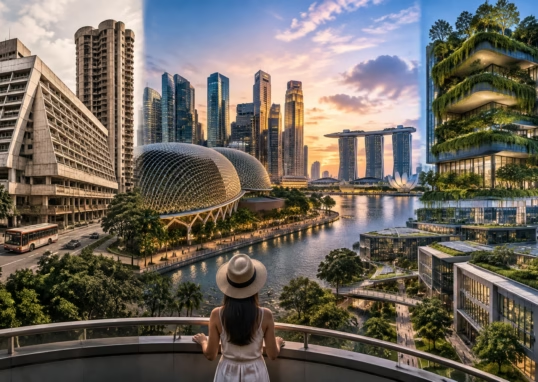
The Architectural Time Machine: Tracing Singapore’s Evolution Through Its Most Iconic Modern Structures
- 0
- 499 words
To walk through Singapore is to flip through the pages of a futuristic novel that actually came true. The city’s modern architecture...
Read out all
Eating Like a King on a Pauper’s Budget: The Backpacker’s Guide to Singapore Hawker Centres
- 0
- 608 words
The reputation of Singapore as one of the most expensive cities in the world often deters budget travelers, but there is a...
Read out all
Singapore Remote Work Visa Options 2026: Tech.Pass, EntrePass, and Work Holiday Pass Explained
- 0
- 494 words
Many digital nomads assume Singapore offers a dedicated digital nomad visa. It doesn’t. Instead, the city-state uses a suite of targeted passes...
Read out all