- 0
- 574 words
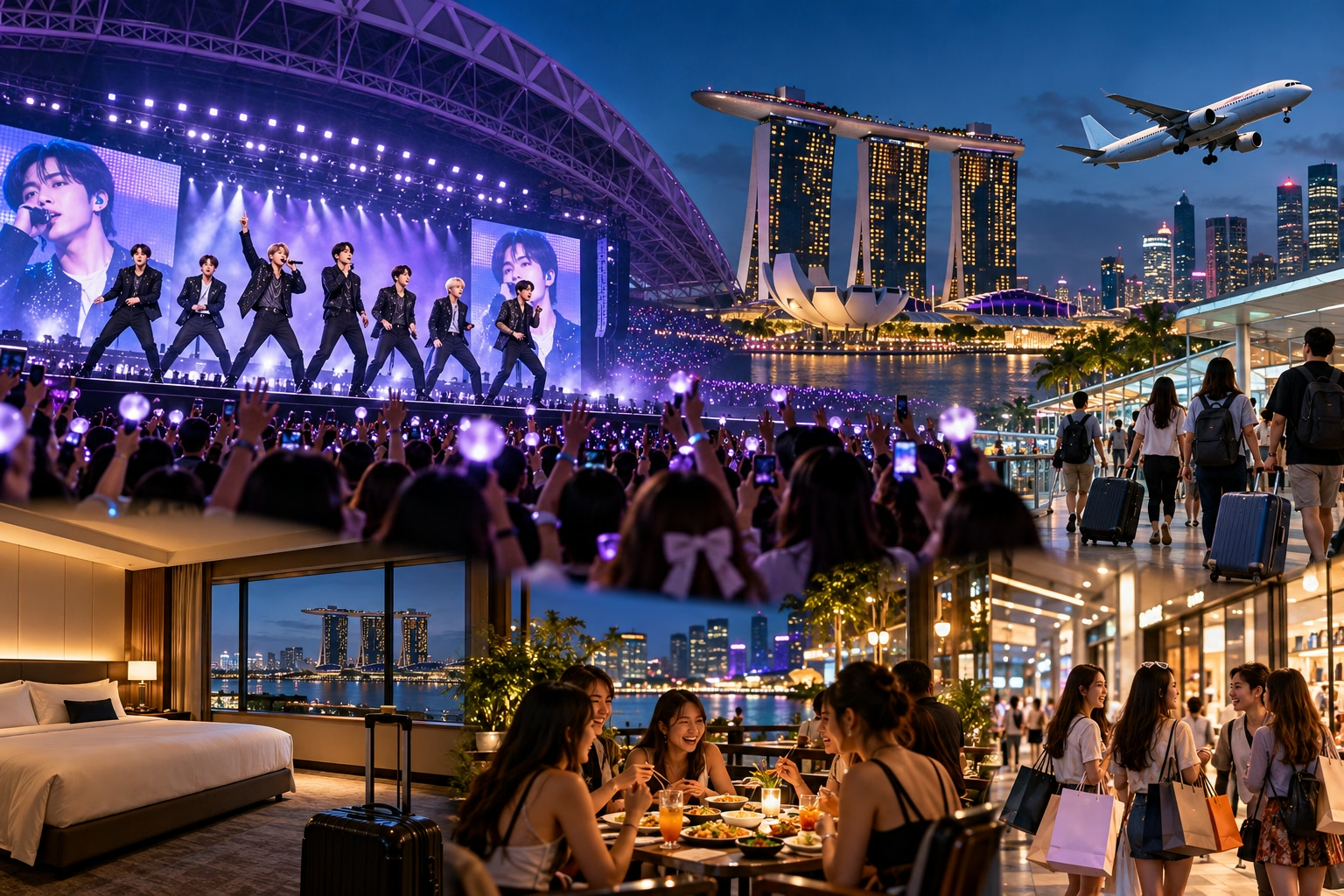
Singapore did not invent the exclusive concert, but it has turned the arrangement into a visible instrument of regional tourism strategy. The most cited precedent remains Taylor Swift’s six-night Eras Tour run in March 2024, which Singapore secured as the pop star’s only Southeast Asian stop. Reports at the time indicated that the Singapore government offered financial incentives of up to US$3 million per concert to secure exclusivity, a figure that became a lightning rod for regional criticism . A Filipino lawmaker publicly criticised the deal, and the episode exposed a structural tension: exclusivity concentrates demand in one city, but it also concentrates resentment among neighbouring markets that see their fans—and their tourism receipts—being redirected across a border .
The Regional Response Is Already Here
Singapore’s exclusivity strategy has not gone unanswered. Malaysia has emerged as the most aggressive challenger, lowering security deposits for foreign performers from RM30,000 to RM15,000 effective May 2026, and introducing the Concert and Event in Malaysia Incentives (CEMI) scheme, which offers a 30% rebate on eligible local expenditure capped at RM1.5 million . Kuala Lumpur’s KL Headline Season 2026 brings 25 major international performances to six primary venues, targeting more than 500,000 regional and local music fans, and Malaysia hosted more than 450 concerts nationwide in 2025, up from 104 in 2022 . The message is explicit: Malaysia wants a larger share of the concert-tourism market, and it is willing to compete on cost and regulatory friction.
The Platform Logic Behind Exclusivity
A 2026 academic paper offers a useful analytical frame for understanding why Singapore pursues exclusivity despite the diplomatic costs. The study argues that Singapore uses concert exclusivity as a “deliberate means of aggregating cross-border demand and creating spillovers in events-related industries like tourism and digital transactions,” enabling the city-state to act as both an event host and a platform hub that controls regional event circulation . In this reading, exclusivity is not about blocking fans from seeing an artist; it is about making Singapore the node through which regional demand must pass. That node position generates network effects—airlines add capacity, hotels invest in concert-ready inventory, and digital platforms build Singapore-specific fan experiences—that are difficult for competitors to replicate quickly.
The Uncomfortable Trade-Offs
The platform logic has limits. Exclusivity deals are opaque, politically sensitive and vulnerable to accusations of economic gatekeeping within ASEAN. The academic analysis explicitly notes that the strategy produces “uneven economic development in ASEAN” and introduces “event-based economic gatekeeping” as a new dimension of digital political economy . For Singapore, the reputational risk is manageable as long as the economic returns are visible and the city remains the most operationally reliable host in the region. But if Malaysia, Thailand and other markets continue to close the infrastructure and regulatory gap, exclusivity becomes a costlier and less defensible strategy.
What Comes After Exclusivity
The more durable play may be to convert exclusivity into ecosystem advantage. Singapore’s December 2026 BTS programme, BTS THE CITY ARIRANG SINGAPORE, runs from 1 to 31 December and extends the concert experience into multiple city precincts through themed events and installations, encouraging fans to explore beyond the stadium . That model does not depend on blocking other Southeast Asian stops; it depends on making Singapore the most compelling place to experience the artist’s broader cultural universe. If that works, exclusivity becomes a catalyst rather than a crutch—a way to seed demand that can later be served through a more distributed regional touring model without ceding Singapore’s position as the premium gateway.
Author

Clara@gmail.com
Related Posts
Singapore’s Help-to-Buy Ticketing Boom Tests the Limits of Consumer Protection in a Scam-Prone Market
- 0
- 789 words
A Grey Zone Between Service and Scalping Help-to-Buy (HTB) ticketing occupies an uncomfortable space in Singapore’s consumer landscape. It is not ticket...
Read out all
Inside The Kallang’s Strategy to Become Asia’s Premier Concert Destination
- 0
- 427 words
From Sports Hub to Entertainment Powerhouse The National Stadium at The Kallang has hosted Taylor Swift, Coldplay, and Blackpink in recent years....
Read out all
Beyond K-Pop: The K-WAVE × AIGC Alliance and Singapore’s Role in AI-Driven Asian Entertainment
- 0
- 476 words
A Trilateral Bet on the Future of Content At the 20th Busan Content Market in June 2026, a quiet signing ceremony took...
Read out all
The Rise of Independent Artist Management in Singapore: Tasha Low and the New Autonomy Model
- 0
- 606 words
A Defining Moment in Singapore’s Talent Management Landscape When Tasha Low announced her departure from WILD Entertainment Group in August 2026 after...
Read out all
Beyond the Headset: Location-Based VR Redefines Narrative Entertainment in Singapore
- 0
- 500 words
HavenXR: Where Cinema Meets Gaming Singapore has long positioned itself at the intersection of entertainment, innovation, and technology. The next evolution of...
Read out all
Inside Singapore’s Influencer Economy: When Entertainment Content Becomes the Most Powerful Ad Format
- 0
- 717 words
The Creator-Led Advertising Boom Singapore’s advertising industry is witnessing a quiet revolution, and its driving force isn’t a new media platform or...
Read out all