- 0
- 500 words
HavenXR: Where Cinema Meets Gaming
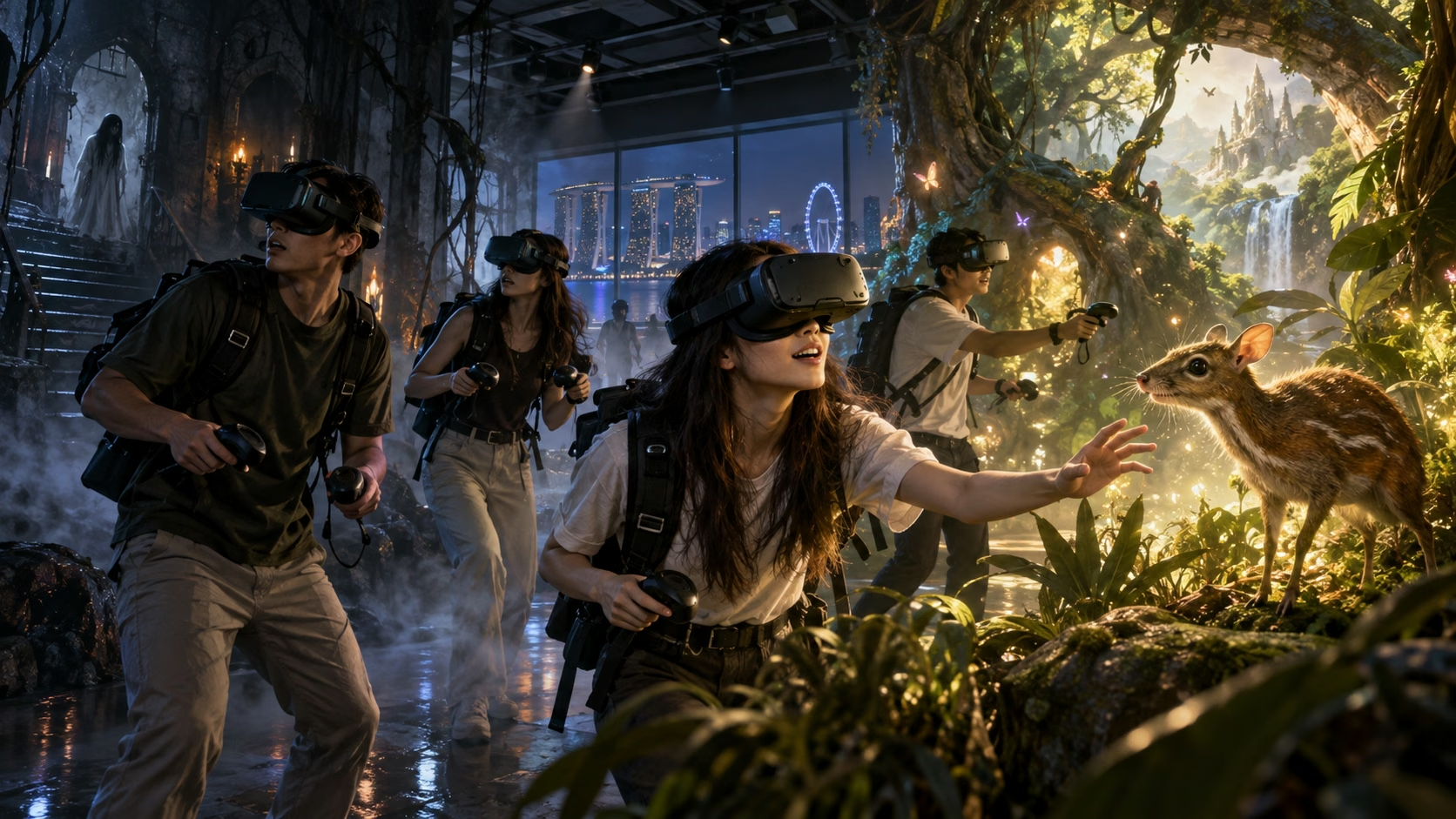
Singapore has long positioned itself at the intersection of entertainment, innovation, and technology. The next evolution of that identity is taking shape in the form of location-based virtual reality, a format that removes the isolation of at-home VR and places participants inside shared, physically grounded digital worlds. HavenXR, a collaboration between Haven XR Holdings and Sim Leisure Group, is among the most anticipated arrivals in this space. Rather than inviting guests to sit back and watch a film from a fixed seat, HavenXR places them directly inside the action using VR headsets and layered environmental effects. Sessions are expected to run for approximately 20 to 30 minutes, with small groups of around four people entering each experience together. The format incorporates branching narratives, allowing participants to make decisions that shape the direction of the story, closer to a “choose-your-own-adventure” structure than a standard screening. Among the first titles expected to debut is The Keeper, a horror-led experience, alongside family-friendly adventures designed to broaden the demographic appeal. Sensory effects such as sound, wind, and potentially scent are integrated to heighten realism, transforming the venue itself into part of the narrative apparatus.
Sang Kancil and the Enchanted Forest: Cultural Storytelling in VR
A different but equally significant LBVR project demonstrates how the format can serve cultural preservation and community engagement. Sang Kancil and the Enchanted Forest, a collaboration with Maya Dance Theatre, reimagines the popular Southeast Asian fable about a clever mousedeer as an immersive, interactive, and spatial VR experience. Participants explore an enchanted forest filled with surprises and amusing characters while helping the mousedeer find her way home to her family. The project is supported by UOB Bank and the stART (Sustain the Arts) Fund, with the National Library Board Singapore as Venue Sponsor and Enabling Village as Venue Partner for public activations over nine weekends between June and August 2026. This model—public funding, institutional partnership, and community access—positions LBVR not merely as a commercial attraction but as a tool for cultural transmission.
The LBVR Ecosystem and Its Impact
Location-based virtual reality differs fundamentally from home VR in its social architecture. The shared physical venue, the guided transition into the digital environment, and the collective nature of the experience create a form of entertainment that is inherently communal. In Singapore, this model is gaining traction across multiple sectors. The Singapore Location-Based Entertainment Market reached USD 226.18 million in 2025 and is estimated to attain USD 534.69 million by 2034, growing at a steady CAGR of 10%. While the growth rate is more modest than the broader immersive entertainment market, it reflects the capital-intensive nature of physical venues and the longer development cycles for original content. The arrival of HavenXR and the continued activation of community-oriented projects like Sang Kancil suggest that Singapore is building an LBVR ecosystem that balances commercial ambition with cultural relevance. For audiences, the proposition is straightforward: entertainment that demands physical presence, collective participation, and narrative agency—a combination that neither traditional cinema nor at-home gaming can fully replicate.
Author

Clara@gmail.com
Related Posts
Inside Singapore’s Influencer Economy: When Entertainment Content Becomes the Most Powerful Ad Format
- 0
- 717 words
The Creator-Led Advertising Boom Singapore’s advertising industry is witnessing a quiet revolution, and its driving force isn’t a new media platform or...
Read out all
Inside Singapore’s MICE Powerhouse: Event Organizers Driving a $3.5 Billion Industry
- 0
- 486 words
Singapore has cemented its position as Asia’s undisputed MICE (Meetings, Incentives, Conferences, and Exhibitions) capital. In 2026, the sector is on track...
Read out all
Beyond Entertainment – The Rise of Hyper-Niche Educational Podcasts in Singapore’s Lifelong Learning Culture
- 0
- 312 words
Audio as a Tool for National Upskilling While Western markets often top the charts with true crime and comedy, Singapore’s podcast ecosystem...
Read out all
Inside Singapore’s 2026 Creative Industry Surge: Designers, Artists, and Digital Creators Drive Growth
- 0
- 388 words
The creative industry in Singapore is experiencing one of its strongest growth phases. Data from the Ministry of Culture, Community and Youth’s...
Read out all
AI on the Menu: How Predictive Analytics and Smart Kitchens Are Eliminating Food Waste in Singapore’s Restaurant Industry
- 0
- 465 words
For an industry built on razor-thin margins and perishable inventory, artificial intelligence is proving to be the ultimate sous-chef. In 2026, Singapore’s...
Read out all
Why Singaporean Animation Is Using Southeast Asian Stories to Win International Audiences
- 0
- 628 words
Cultural Identity Is Becoming a Commercial Advantage Global animation audiences are increasingly exposed to stories originating outside the traditional production centers of...
Read out all