- 0
- 477 words
The S$100 night out vs. the S$20 afternoon
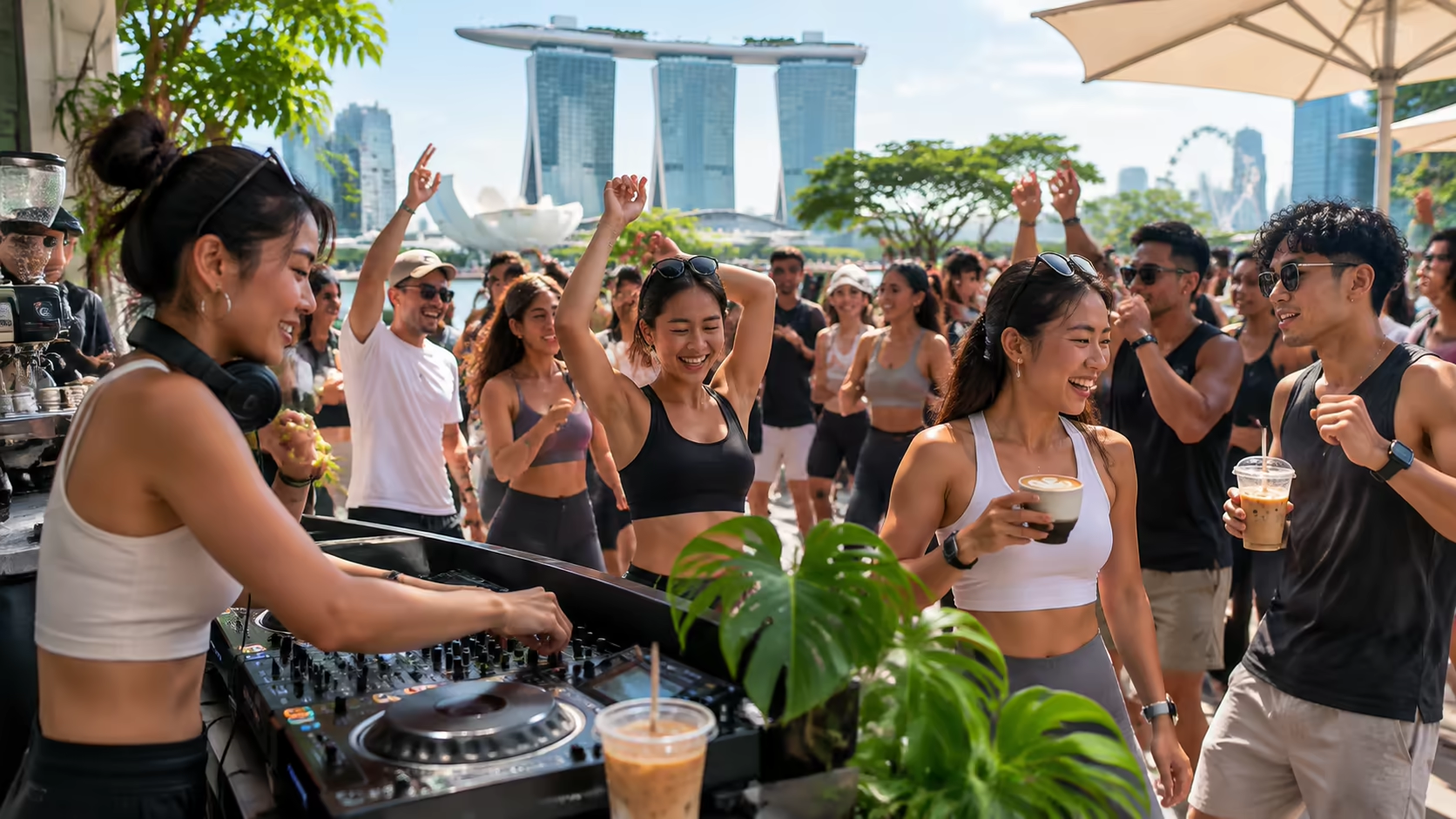
For many young Singaporeans, the decision to skip the nightclub is not ideological—it is arithmetic. A traditional night out can easily cross S$100 once pre-drinks, entry, drinks inside, supper, and a ride home are accounted for. Beans&Beats co-founder Matteo Lie, 21, describes the old formula as a stack of costs that ends with the “killer” Grab fare home. A daytime coffee-clubbing ticket at around S$20, inclusive of a specialty coffee, changes the calculation entirely.
The result is a party that ends before dark and leaves the rest of the evening—and the next morning—intact. University student Alexis Wee, a regular attendee, is blunt about the shift: “The nightlife scene in Singapore is dying. It’s not fun anymore… It’s way too unaffordable to have a night out”.
Interest is not just growing; it is compounding
Beans&Beats reported a roughly 35 per cent increase in interest over the year to mid-2025, and its first-anniversary celebration sold out. The collective has since expanded into large-format takeovers, including a Funan Mall event with 5,000 attendees across three stages and 17 DJs. Exposure Therapy, another organiser in the space, has drawn attendees like 23-year-old Renee Lee, who tried an alcohol-free afternoon gallery rave out of curiosity; entry was free and drinks cost around S$7 each.
This is not merely a cheaper version of the same product. The social contract is different. Organisers describe a crowd that is “alert, present, and surprisingly more social” than in a typical club setting, with conversations replacing shouted small talk and a lower pressure to perform through alcohol consumption. The community element is often organic: many sober parties began among friends and creatives who wanted to connect without alcohol as a social crutch.
Health, clarity, and the “clean joy” proposition
The Breakfast Club’s Tricia Fok, 48, came to the format from a personal health reckoning after years of heavy drinking and blackouts in her younger years. Her morning raves are built around “clean joy”—a phrase that captures the dual promise of physical wellbeing and social euphoria without the aftermath. This resonates across age groups: 8world’s report on a sober party describes a pregnant attendee and her husband using the event as a relaxed, healthy way to socialise, ending at 6 p.m. and fitting neatly before dinner.
For Gen Z, the appeal is less about abstinence than selectivity. Vogue Singapore notes that younger crowds are not necessarily quitting alcohol but becoming more conscious about mental health, physical wellness, and how they spend money and energy. Daytime clubbing fits into that selectivity: it offers the music and the crowd without the recovery cost.
The People’s Association’s inclusion of sober clubbing at the Woodlands Waterfront Countdown 2026—with DJ performances, mocktails, and local snacks—signals that the format has moved from youth subculture into mainstream community programming.
Author

Clara@gmail.com
Related Posts
Singapore’s Help-to-Buy Ticketing Boom Tests the Limits of Consumer Protection in a Scam-Prone Market
- 0
- 789 words
A Grey Zone Between Service and Scalping Help-to-Buy (HTB) ticketing occupies an uncomfortable space in Singapore’s consumer landscape. It is not ticket...
Read out all
Inside The Kallang’s Strategy to Become Asia’s Premier Concert Destination
- 0
- 427 words
From Sports Hub to Entertainment Powerhouse The National Stadium at The Kallang has hosted Taylor Swift, Coldplay, and Blackpink in recent years....
Read out all
Beyond K-Pop: The K-WAVE × AIGC Alliance and Singapore’s Role in AI-Driven Asian Entertainment
- 0
- 476 words
A Trilateral Bet on the Future of Content At the 20th Busan Content Market in June 2026, a quiet signing ceremony took...
Read out all
The Rise of Independent Artist Management in Singapore: Tasha Low and the New Autonomy Model
- 0
- 606 words
A Defining Moment in Singapore’s Talent Management Landscape When Tasha Low announced her departure from WILD Entertainment Group in August 2026 after...
Read out all
Beyond the Headset: Location-Based VR Redefines Narrative Entertainment in Singapore
- 0
- 500 words
HavenXR: Where Cinema Meets Gaming Singapore has long positioned itself at the intersection of entertainment, innovation, and technology. The next evolution of...
Read out all
Inside Singapore’s Influencer Economy: When Entertainment Content Becomes the Most Powerful Ad Format
- 0
- 717 words
The Creator-Led Advertising Boom Singapore’s advertising industry is witnessing a quiet revolution, and its driving force isn’t a new media platform or...
Read out all