
Singapore’s pharmaceutical industry is built on a carefully designed innovation ecosystem that links government, academia, and industry. Rather than growing organically, the sector has been guided by long-term national strategies that treat biomedical sciences as a core economic and societal priority. This intentional planning has helped Singapore attract global pharmaceutical firms, nurture local biotech companies, and build capabilities that span research, development, and manufacturing.
Government roadmaps for research, innovation, and enterprise have allocated substantial funding to life sciences, medical technology, and related disciplines. These programmes support basic research, translational projects, and industry partnerships. Tax incentives, competitive grant schemes, and co-funding arrangements encourage companies to site regional headquarters, manufacturing plants, and R&D centres in Singapore. At the same time, robust governance and transparent regulations make the environment predictable for long-term investments.
Biologics and other complex therapies are a particular strength. Several multinational companies operate facilities in Singapore dedicated to monoclonal antibodies, recombinant proteins, and other biologic products. The country has also invested in capabilities related to vaccines and newer modalities, reflecting lessons from global health crises. Flexible plant designs, modular production lines, and single-use technologies allow manufacturers to respond more quickly to changing demand or new product pipelines.
Digitalisation and “Industry 4.0” practices are deeply embedded in many pharmaceutical operations. Advanced analytics, digital twins, and integrated manufacturing execution systems support real-time monitoring and continuous improvement. Robots and automated guided vehicles are increasingly used for material handling, while AI tools support predictive maintenance and quality analytics. These technologies not only improve efficiency but also help ensure compliance with stringent regulatory expectations.
Alongside large multinational firms, Singapore has nurtured a growing community of biotech and pharmaceutical startups. Incubators, shared lab facilities, and venture capital networks help early-stage companies develop novel therapies, drug delivery systems, and platform technologies. Many of these young firms collaborate closely with academic centres and hospitals, focusing on areas such as oncology, immunology, and rare diseases. The presence of big pharma in the same ecosystem creates opportunities for licensing deals, co-development, or acquisition.
Regionally, Singapore serves as a strategic coordination hub for pharmaceutical operations across Asia-Pacific. Many companies base their regional regulatory, medical affairs, supply chain, and commercial teams in the city-state. This central role is supported by efficient connectivity, a skilled multinational workforce, and a legal framework that supports complex cross-border activities. As demand for healthcare in Asia continues to grow, Singapore’s pharmaceutical ecosystem is likely to deepen its role as both an innovation node and a bridge between global companies and regional markets.
Author

Clara@gmail.com
Related Posts
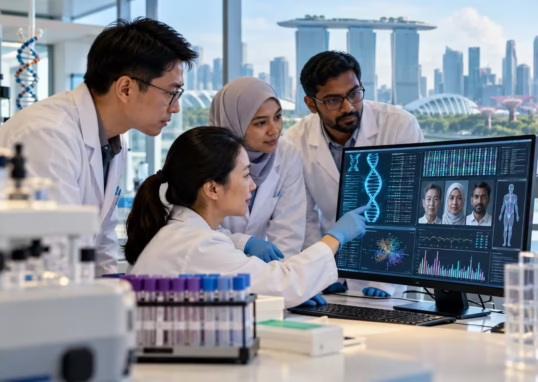
The HELIOS Study and the Multi-Omic Future of Asian Health Research
- 0
- 376 words
Beyond the Single-Layer Genome Most genomic studies examine one biological layer at a time. The Health for Life in Singapore (HELIOS) study...
Read out all
Turmeric, Ginseng, and Echinacea—The Three Botanicals Reshaping Singapore’s Supplement Aisle
- 0
- 583 words
The Turmeric Takeover Walk into any Guardian, Watsons, or Unity pharmacy in Singapore, and the dominance of turmeric is unmistakable. Curcumin capsules,...
Read out all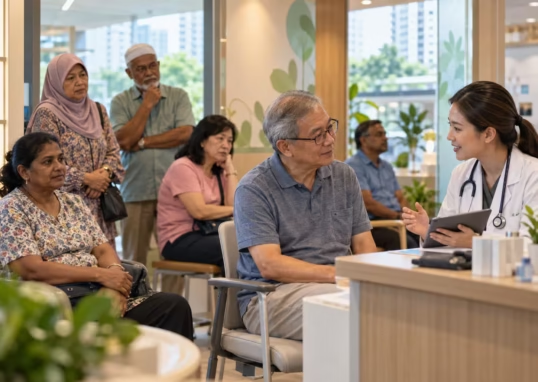
Cancer Screening Crisis in Singapore’s Malay Community Exposes Deeper Health Equity Failures
- 0
- 520 words
A Preventable Crisis Singapore’s National Population Health Survey 2025 delivered a sobering verdict on cancer screening equity: Malay women have the lowest...
Read out all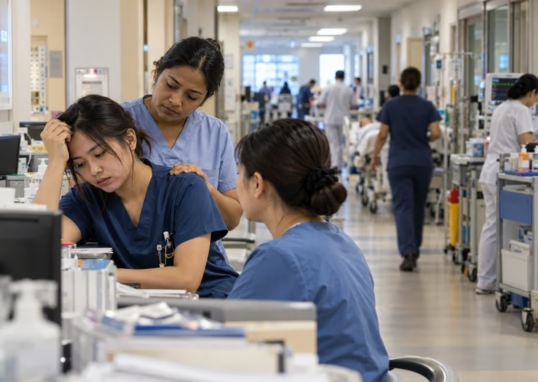
The Nursing Exodus: Why Singapore’s Local Nurses Are Leaving and What It Will Take to Keep Them
- 0
- 650 words
The Silent Drain on Singapore’s Healthcare Frontline Behind the polished corridors of Singapore’s public hospitals, a quiet crisis is unfolding. Over half...
Read out all
NTU Singapore’s Microscopic Peptide Droplets Slash Colorectal Tumour Growth by 67%
- 0
- 352 words
A New Approach to an Old Problem Colorectal cancer remains one of the most challenging malignancies to treat, particularly when tumours develop...
Read out all
Plant Protein Powders and Functional RTDs Are Redefining Singapore’s Urban Supplement Culture
- 0
- 395 words
At 8 a.m. in Singapore’s Central Business District, the breakfast crowd is no longer just ordering kopi and toast. Many are grabbing...
Read out all