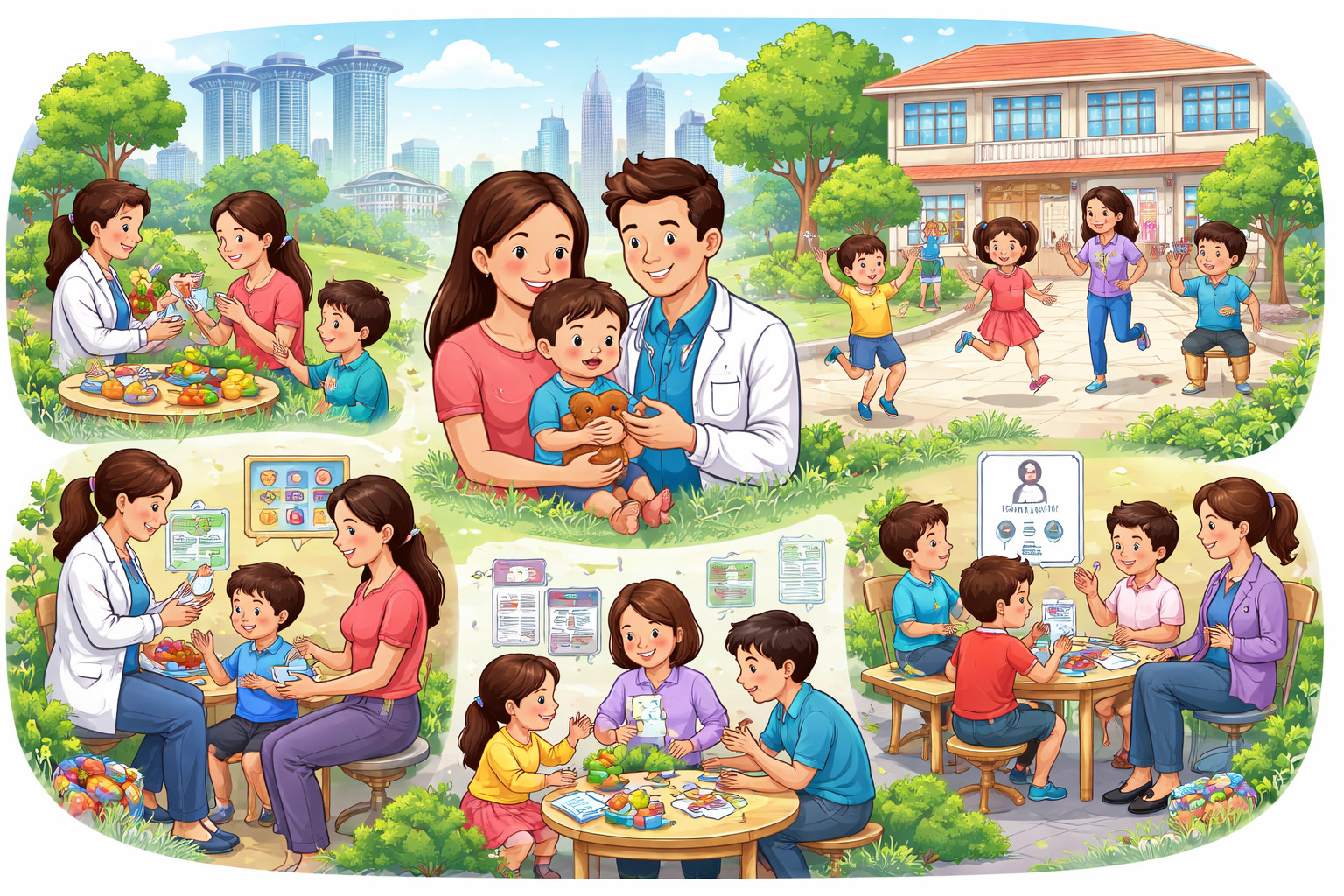
Child health in Singapore is shaped by a comprehensive public health model that aims to support children from their earliest years until their teenage period. Rather than focusing only on hospitals and treatment, Singapore places strong emphasis on prevention, regular monitoring, and community-based support. This approach has helped the country create an environment where children benefit from both medical services and health education in daily life.
A key feature of this system is the use of routine health and developmental assessments. During infancy and early childhood, medical professionals track physical growth, developmental milestones, and general well-being. These visits allow doctors and nurses to identify concerns related to mobility, communication, nutrition, or behavior at an early stage. Early recognition is essential because children often respond better to intervention when support begins as soon as possible. This also gives parents time to understand their child’s needs and make informed decisions.
Vaccination remains one of the most important child health measures in Singapore. Public health authorities encourage families to follow immunization schedules designed to protect children against serious infectious diseases. Vaccines do more than shield individual children; they also strengthen public safety by reducing the spread of disease within schools, childcare settings, and communities. Singapore’s strong healthcare infrastructure supports this effort by making immunization guidance accessible and widely understood.
Another important aspect of Singapore’s child health landscape is nutrition promotion. Healthy eating habits are encouraged through national campaigns, school initiatives, and parental education. Children are taught the importance of fruits, vegetables, balanced meals, and reduced intake of sugar-heavy foods and drinks. This is especially valuable in a highly urbanized society, where convenient processed food can easily become a regular part of daily life. Nutrition education supports healthy growth, brain development, and immunity while also reducing the future risk of obesity and metabolic disorders.
Physical activity is promoted alongside dietary awareness. Schools and community programs encourage children to remain active through sports, movement-based learning, and recreational opportunities. Exercise contributes not only to physical strength and cardiovascular health but also to concentration, emotional regulation, and social development. In this sense, Singapore’s child health initiatives connect body and mind instead of treating them separately.
School-based health services are another practical strength. Since nearly all children spend much of their time in school, the education system provides an effective channel for screenings and health promotion. Students may undergo checks related to vision, hearing, dental health, and posture. These screenings help detect problems that may interfere with academic performance or daily functioning. Early referrals make treatment more timely and often more effective.
Singapore has also expanded attention to children’s mental well-being. Emotional health, stress management, and behavioral challenges are increasingly recognized as vital parts of pediatric care. Support may be offered through school counseling, family guidance, specialist services, and awareness campaigns that help reduce stigma. This is particularly significant in high-pressure educational and social environments where some children may struggle silently without visible physical symptoms.
Children with developmental conditions or special healthcare needs receive dedicated support through early intervention and specialist services. These initiatives can include therapy, developmental programs, and coordinated care involving healthcare professionals, educators, and caregivers. The goal is not only to improve medical outcomes but also to strengthen independence, communication, and participation in daily life.
Singapore’s model demonstrates that child health is most effective when prevention, education, screening, and intervention work together. By combining these elements, the country supports children in a way that is structured, practical, and centered on long-term well-being.
Author

Clara@gmail.com
Related Posts

The HELIOS Study and the Multi-Omic Future of Asian Health Research
- 0
- 376 words
Beyond the Single-Layer Genome Most genomic studies examine one biological layer at a time. The Health for Life in Singapore (HELIOS) study...
Read out all
Turmeric, Ginseng, and Echinacea—The Three Botanicals Reshaping Singapore’s Supplement Aisle
- 0
- 583 words
The Turmeric Takeover Walk into any Guardian, Watsons, or Unity pharmacy in Singapore, and the dominance of turmeric is unmistakable. Curcumin capsules,...
Read out all
Cancer Screening Crisis in Singapore’s Malay Community Exposes Deeper Health Equity Failures
- 0
- 520 words
A Preventable Crisis Singapore’s National Population Health Survey 2025 delivered a sobering verdict on cancer screening equity: Malay women have the lowest...
Read out all
The Nursing Exodus: Why Singapore’s Local Nurses Are Leaving and What It Will Take to Keep Them
- 0
- 650 words
The Silent Drain on Singapore’s Healthcare Frontline Behind the polished corridors of Singapore’s public hospitals, a quiet crisis is unfolding. Over half...
Read out all
NTU Singapore’s Microscopic Peptide Droplets Slash Colorectal Tumour Growth by 67%
- 0
- 352 words
A New Approach to an Old Problem Colorectal cancer remains one of the most challenging malignancies to treat, particularly when tumours develop...
Read out all
Plant Protein Powders and Functional RTDs Are Redefining Singapore’s Urban Supplement Culture
- 0
- 395 words
At 8 a.m. in Singapore’s Central Business District, the breakfast crowd is no longer just ordering kopi and toast. Many are grabbing...
Read out all