- 0
- 514 words
From Side Channel to Core Business Model
For a growing cohort of Singaporean fashion brands, livestreaming is no longer a supplementary marketing tactic—it is the business. These labels have restructured teams, retrained staff, and reimagined their entire operational workflows around the camera and the live audience. The transformation represents one of the most significant strategic pivots in Singapore’s fashion retail history.
The Young Hungry Free Blueprint
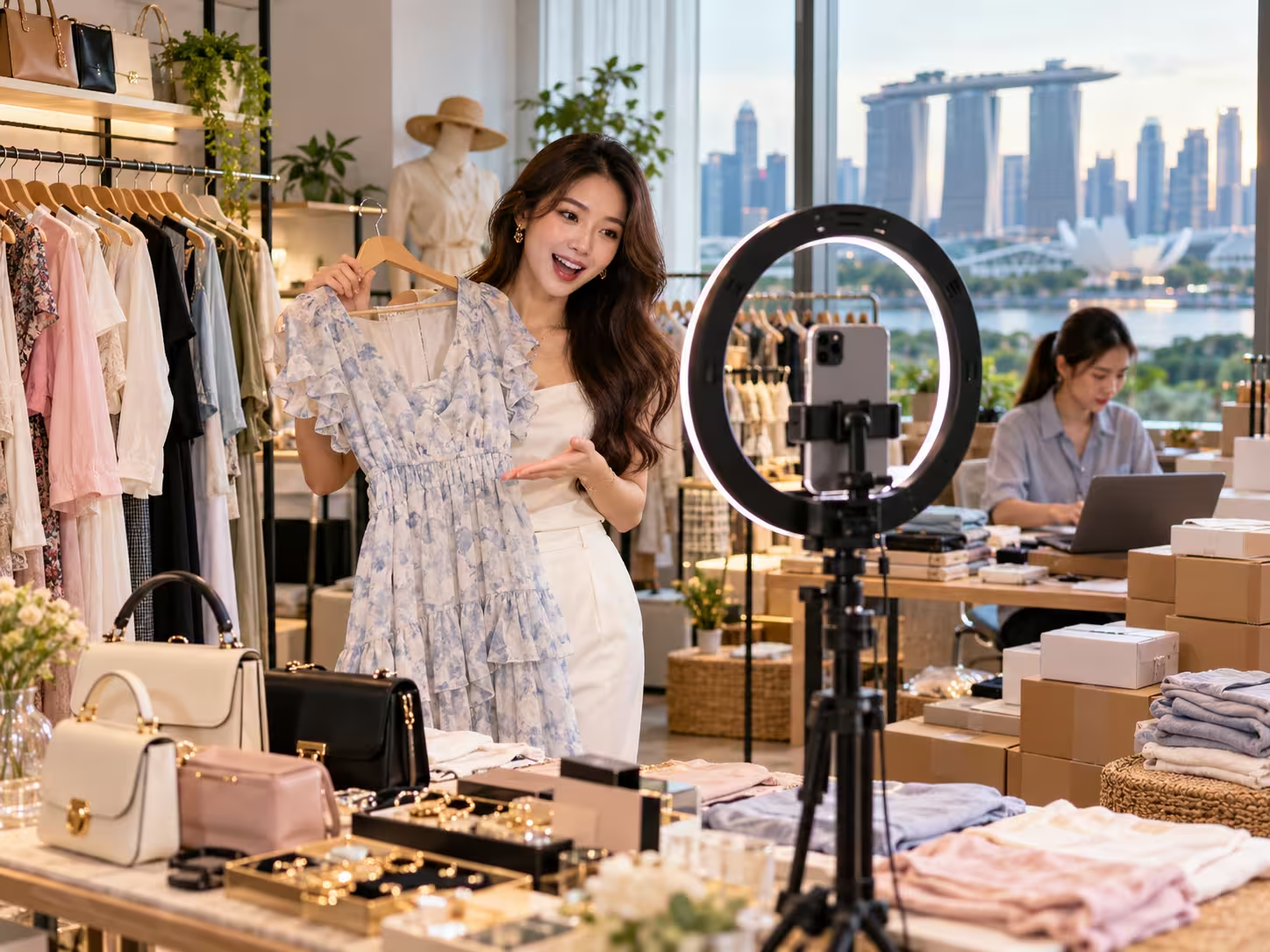
Perhaps no Singaporean fashion label better exemplifies this transformation than Young Hungry Free. Founder and Creative Director Winnie Ong’s perspective shifted dramatically following a learning trip to Hangzhou organized by the Singapore Retailers Association in March 2026. What she witnessed in China was not merely a sales technique but “an entire ecosystem” built around livestreaming, where design, content, marketing, and customer engagement all worked in concert to support each broadcast.
Upon returning to Singapore, Ong restructured her company’s livestream team with clearly defined roles and a structured 10-week training program for new staff. The business now has a lead producer overseeing weekly and monthly planning, presenters who front the livestreams, and behind-the-scenes programmers who analyze customer comments, product demand, and sales trends during each stream to make quick decisions.
The “Shoppertainment” Philosophy
What distinguishes Young Hungry Free’s approach is its emphasis on entertainment value. Ong describes the strategy as “shoppertainment”—a fusion of shopping and entertainment that transforms the livestream from a transactional pitch into an engaging experience. The brand has introduced games, interactive segments, blindfold challenges, and mystery bag reveals to keep viewers engaged.
“I think nothing can replace human interaction or human touch,” Ong said, emphasizing that the team gets to know returning customers over time, including their usernames, measurements, and previous purchases. This personalization creates a loyalty dynamic that traditional e-commerce cannot replicate.
The Cross-Border Success Story: JOLI YANG
Another compelling case study comes from across the causeway. JOLI YANG, a Hangzhou-based new Chinese-style women’s fashion brand, launched on TikTok Shop Singapore in August 2025 and has since sold over 100,000 garments to Singaporean consumers within a single year. A marathon 14-hour livestream in November 2025 generated 1,000 orders in a single session.
The brand’s founder, Joli, transformed her livestream into a virtual personal shopping experience, explaining fabrics, textures, and styling scenarios while recording customer measurements and preferences to feed back into product development. This real-time feedback loop, combined with China’s agile supply chain, enables rapid trend response that local brands often struggle to match.
The Operational Realities
Rebuilding a fashion business around livestreaming is not without challenges. Inventory management becomes volatile when broadcasts trigger abrupt order spikes that strain warehouse packing and delivery networks. Brands must invest in data dashboards to predict customer demand before they articulate it. And the human cost of constant on-camera presence is significant—livestreaming is demanding gig economy work that requires resilience and personal branding.
Yet the rewards justify the investment. For Singapore fashion labels willing to make the operational commitment, live commerce offers a direct, high-conversion channel to consumers that bypasses the rising costs of physical retail and the diminishing returns of traditional digital advertising.
Author

Clara@gmail.com
Related Posts
Localization as Strategy: How Singapore Fashion Brands Speak Asia’s Many Languages
- 0
- 604 words
The End of One-Size-Fits-All Expansion Singapore fashion brands expanding across Asia are discovering that regional success requires more than translated marketing. Love,...
Read out all
The Comfort Revolution: How Singaporean Footwear Brands Are Redefining Support, Health, and Everyday Wear
- 0
- 658 words
From Pain Point to Product Innovation: The Sunnystep Story Sometimes the most disruptive innovations emerge from the most personal struggles. Mao Ting,...
Read out all
Gen Z vs. Gen X—The Generational Battle Over Singapore’s Office Dress Code
- 0
- 576 words
Two Generations, Two Definitions of Professionalism Walk into any Singapore office in 2026, and you may witness a quiet cultural collision. A...
Read out all
Korean Fashion Brands Are Betting Big on Singapore—and Winning
- 0
- 572 words
The Orchard Road Invasion Nobody Saw Coming When Shinsegae Tomboy opened standalone stores for Studio Tomboy and VOV at the METRO department...
Read out all
Blending Tradition with Tech: How Singaporean Fashion Schools Are Forging the Ultimate Hybrid Designers in 2026
- 0
- 465 words
The modern fashion designer is expected to be a polymath. They must be an artist, an engineer, a marketer, and increasingly, a...
Read out all
Lab-Grown Diamonds vs. Natural Stones: The Shifting Preferences in Singapore’s Luxury Sector
- 0
- 352 words
The jewelry counters in Singapore’s luxury malls are witnessing a generational shift in values. While natural diamonds have long been the benchmark for...
Read out all