- 0
- 576 words
Two Generations, Two Definitions of Professionalism
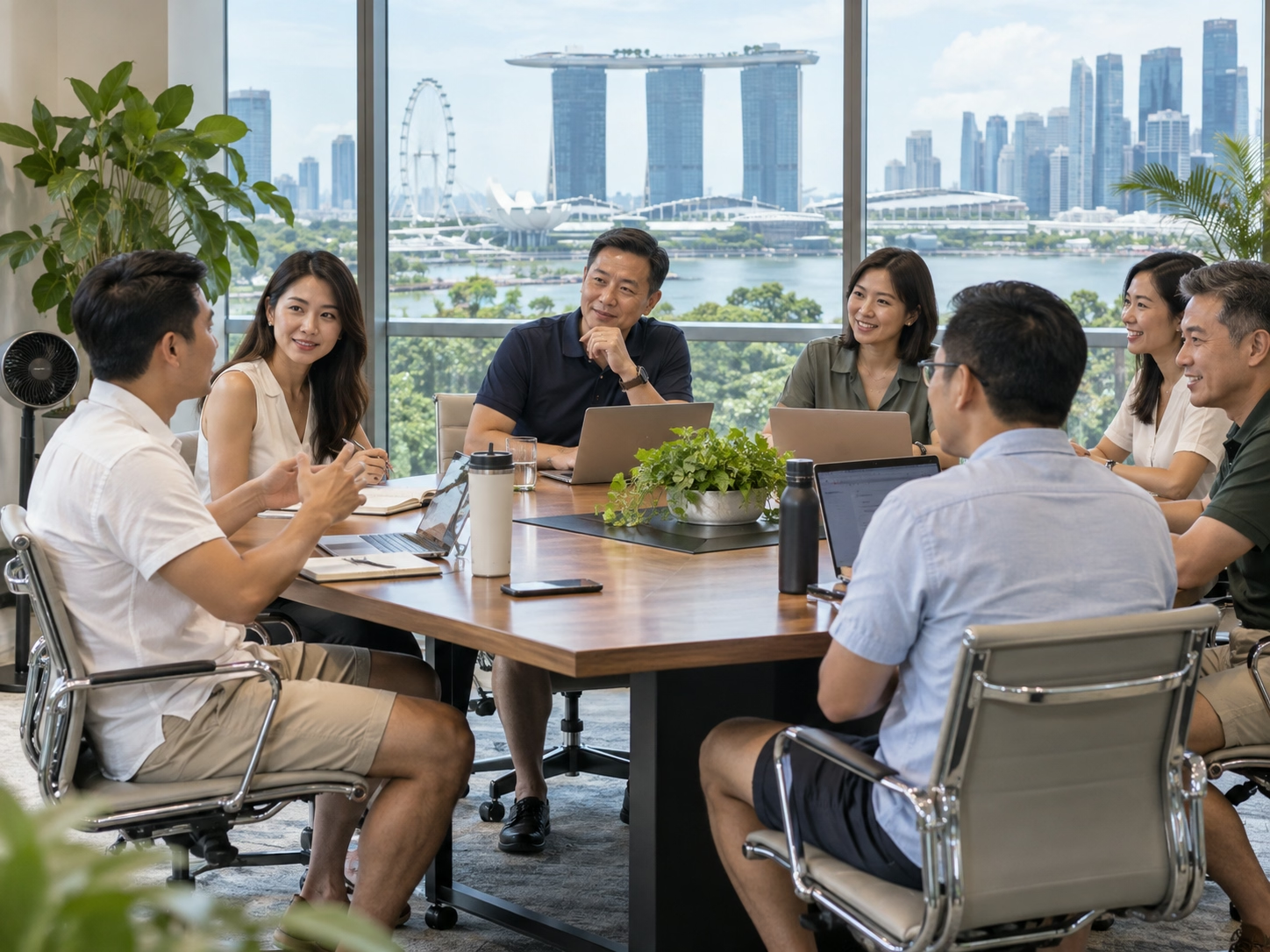
Walk into any Singapore office in 2026, and you may witness a quiet cultural collision. A Gen X manager arrives in a pressed collared shirt and tailored trousers. A Gen Z colleague logs into the same meeting wearing a linen overshirt over a plain T-shirt—and considers it equally professional. Neither is wrong. But they are operating from fundamentally different assumptions about what workwear communicates.
This generational divide is not anecdotal. A Preply survey of 1,000 Singaporean workers revealed that 43% admit to wearing pyjamas or dressing only from the waist up during professional video calls. Among Gen Z employees aged 13 to 28, that figure rises to 57%. Meanwhile, 70% of Gen X respondents aged 45 to 60 say they have never dressed down for a work-related call.
The Hybrid Work Effect on Wardrobe Habits
The “waist-up” phenomenon is a direct artefact of Singapore’s hybrid work transition. When 69% of Singaporeans use video calls for work, the visual frame of professional identity shrinks to a rectangle. What happens below the desk becomes irrelevant to the performance of professionalism. This technological mediation has accelerated a behavioural change that would have taken years to emerge in fully physical offices.
But the generational gap extends beyond video calls. In physical offices, Gen Z workers increasingly favour what industry observers call “soft tailoring”—unstructured blazers, knitted polos, and relaxed-fit trousers that signal competence without the rigidity of traditional business formal. For this cohort, authenticity is a professional value, not a threat to it. Dressing in a way that feels forced or uncomfortable reads as inauthentic, which they consider unprofessional.
The HR Perspective: Managing a Spectrum, Not a Standard
Human resources professionals in Singapore are adapting to this reality by abandoning the single-standard dress code in favour of contextual guidelines. The question is no longer “What is professional attire?” but “What is appropriate for this specific interaction?” A client pitch may still call for a jacket. An internal brainstorming session may not. A video call with a regional partner may require a collared shirt—but only from the chest up.
This contextual approach is gaining traction because it accommodates both generational preferences without forcing either side into discomfort. It also aligns with the practical realities of Singapore’s climate, where heavy formalwear imposes a genuine physical burden that younger workers are less willing to accept as a necessary cost of employment.
What the Data Actually Shows
The generational narrative is not simply “young people are more casual.” The Preply data reveals a more nuanced picture: Gen X’s formality is not rigid traditionalism but a learned professional habit. Many Gen X workers came of age in offices where dress codes were enforced, where deviation carried social risk, and where the blazer functioned as a credential. Their formality is a form of professional security.
Gen Z, by contrast, entered a workforce already destabilised by the pandemic, where remote work normalised informal presentation and where the boundary between personal and professional identity has blurred. For them, the ability to bring one’s whole self to work—including one’s personal style—is not a concession but an expectation.
The resolution may lie not in one generation convincing the other, but in organisations explicitly acknowledging that professionalism is now a spectrum. When the SGBC president argues that “professional image depends on our behaviour, work quality, and respect for others,” he is articulating a principle that both generations can accept—even if their wardrobes look entirely different.
Author

Clara@gmail.com
Related Posts
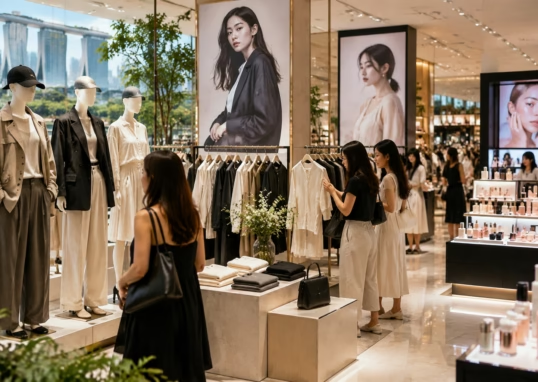
Korean Fashion Brands Are Betting Big on Singapore—and Winning
- 0
- 572 words
The Orchard Road Invasion Nobody Saw Coming When Shinsegae Tomboy opened standalone stores for Studio Tomboy and VOV at the METRO department...
Read out all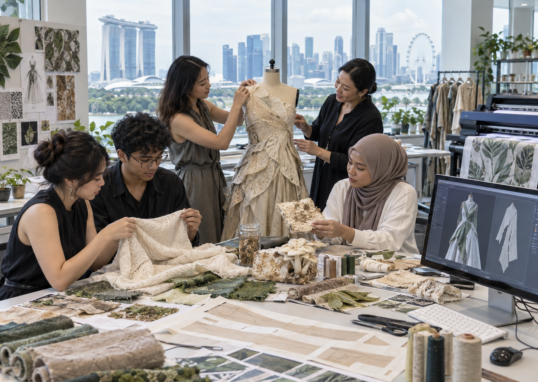
Blending Tradition with Tech: How Singaporean Fashion Schools Are Forging the Ultimate Hybrid Designers in 2026
- 0
- 465 words
The modern fashion designer is expected to be a polymath. They must be an artist, an engineer, a marketer, and increasingly, a...
Read out all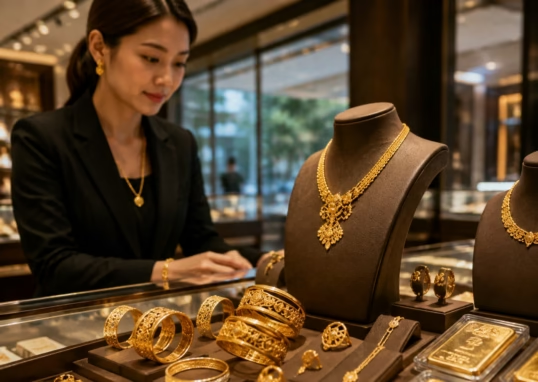
Lab-Grown Diamonds vs. Natural Stones: The Shifting Preferences in Singapore’s Luxury Sector
- 0
- 352 words
The jewelry counters in Singapore’s luxury malls are witnessing a generational shift in values. While natural diamonds have long been the benchmark for...
Read out all
The Custodians of Rare Threads: Inside Singapore’s Private Vintage Archives for Japanese Denim and Vintage Chanel
- 0
- 480 words
In a temperature-controlled room in a private apartment, rows of 1990s Japanese denim hang in acid-free garment bags. Nearby, a glass cabinet...
Read out all
Focus on Sustainability and Ethical Production
- 0
- 358 words
A profound shift is redefining Singapore’s boutique fashion identity: sustainability has moved from marketing tagline to operational necessity. Independent designers and local...
Read out allThe Rise of Mini-Me Dressing: How Instagram and TikTok Shape Singapore’s Kids Fashion Scene
- 0
- 395 words
Scrolling through a Singaporean parent’s social media feed in 2026 reveals a distinct aesthetic: carefully coordinated mother-daughter or family ensembles that blur...
Read out all