- 0
- 604 words
The End of One-Size-Fits-All Expansion
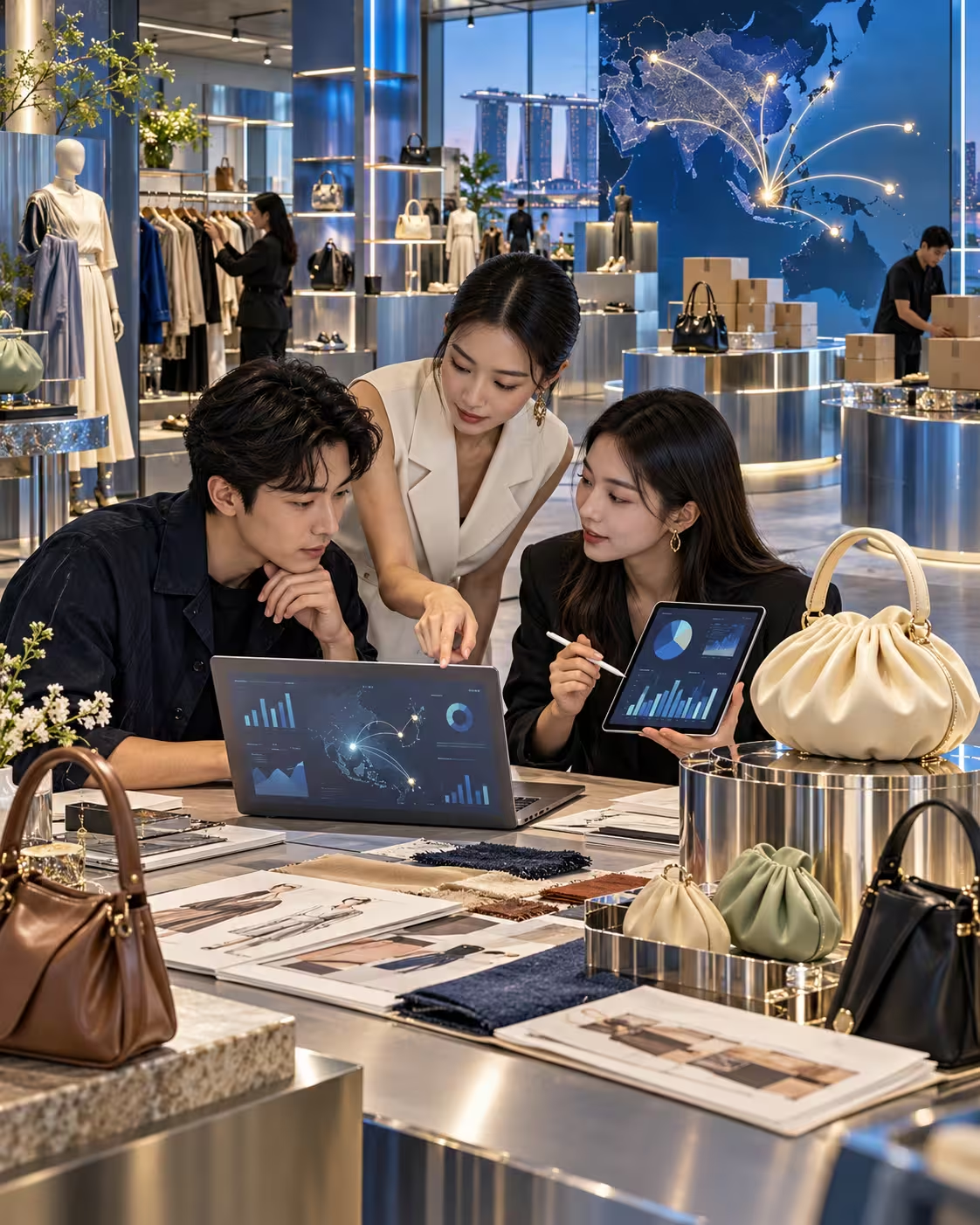
Singapore fashion brands expanding across Asia are discovering that regional success requires more than translated marketing. Love, Bonito’s September 2026 Cebu launch revealed a localization philosophy grounded in observed behavioral differences rather than assumption. Co-founder Rachel Lim noted that Filipino shoppers show a distinct preference for color, sparkle, and prints—a reflection of what she described as the market’s “warm and friendly personality”—and that the Christmas season drives significantly higher demand in the Philippines than elsewhere in Southeast Asia.
This level of granularity is reshaping how Singapore brands approach Asian expansion. The question is no longer whether to localize but how deeply to embed local behavior into product design, store experience, and seasonal calendars.
Product Localization: Body, Climate, Culture
Love, Bonito’s founding insight remains its strongest localization asset. Rachel Lim built the brand after struggling to fit into international fashion brands’ pants, which were designed for Western body proportions. The brand’s Rachel RuchedReady Blazer features deep pockets, sleeves that stay in place without constant adjustment, and silhouettes that accommodate bloating. Its petite line uses custom-adjusted proportions rather than simply shortened hems.
This product-level localization has proven transferable across Asia. The brand’s presence in Malaysia, Indonesia, Hong Kong, and Cambodia operates on the same principle: clothing designed for Asian women’s bodies and Asian climates, not adapted from Western patterns.
Beyond The Vines: Localization Through Cultural Motifs
Beyond The Vines’ Shanghai store demonstrates a different localization approach. The Monster Dumpling bag series was developed specifically for the Chinese market, drawing on Chinese cultural motifs and offered in a color palette—powder blue, black, red, brown, and green—selected for regional preferences. The store also introduces the brand’s first home fragrance line and felt-based home products, extending the brand’s lifestyle offering in a way that resonates with Chinese consumers’ growing interest in home aesthetics.
K-Fashion Brands Using Singapore as a Localization Testbed
The localization dynamic works in both directions. Korean fashion brands like Shinsegae Tomboy chose Singapore as their Southeast Asian expansion base precisely because it serves as a testbed for gauging consumer response before entering larger markets. Singapore’s trend-sensitive, high-purchasing-power consumer base provides a rapid feedback environment for product adaptation.
JAAH, a Korean brand launched at Singapore’s Metro Department Store in July 2026, plans to expand its product lineup to include items reflecting Singaporean consumer preferences and climate, using the market as a hub for broader Southeast Asian expansion.
The Regional Multi-Label Store Phenomenon
Singapore’s boutique retail scene is also localizing in reverse. Young boutique owners are converting second-hand stores into multi-label outlets anchored by emerging Southeast Asian fashion brands, sourcing directly from manufacturing hubs like Ho Chi Minh City and Bangkok to maintain higher gross margins than consignment-heavy vintage retail.
This grassroots localization creates a dual benefit: Singapore consumers gain access to regional brands they cannot find in shopping mall chains, while Southeast Asian designers gain a premium retail platform in one of Asia’s most sophisticated fashion markets.
The Data Behind Localization Decisions
The localization trend is supported by measurable cross-border demand. Singapore is Bunjang Global’s top-performing Southeast Asian market and fourth-largest worldwide, with cross-border gross merchandise value rising 43% year-on-year in the first half of 2026. Kidult items and men’s apparel ranked among the top five categories alongside K-pop merchandise, indicating that localization must account for diverse product categories, not just core fashion.
For Singapore fashion brands, the localization imperative is clear: Asia is not one market but dozens of distinct consumer cultures, and the brands that invest in understanding those differences will build the deepest regional moats.
Author

Clara@gmail.com
Related Posts
The Comfort Revolution: How Singaporean Footwear Brands Are Redefining Support, Health, and Everyday Wear
- 0
- 658 words
From Pain Point to Product Innovation: The Sunnystep Story Sometimes the most disruptive innovations emerge from the most personal struggles. Mao Ting,...
Read out all
Gen Z vs. Gen X—The Generational Battle Over Singapore’s Office Dress Code
- 0
- 576 words
Two Generations, Two Definitions of Professionalism Walk into any Singapore office in 2026, and you may witness a quiet cultural collision. A...
Read out all
Korean Fashion Brands Are Betting Big on Singapore—and Winning
- 0
- 572 words
The Orchard Road Invasion Nobody Saw Coming When Shinsegae Tomboy opened standalone stores for Studio Tomboy and VOV at the METRO department...
Read out all
Blending Tradition with Tech: How Singaporean Fashion Schools Are Forging the Ultimate Hybrid Designers in 2026
- 0
- 465 words
The modern fashion designer is expected to be a polymath. They must be an artist, an engineer, a marketer, and increasingly, a...
Read out all
Lab-Grown Diamonds vs. Natural Stones: The Shifting Preferences in Singapore’s Luxury Sector
- 0
- 352 words
The jewelry counters in Singapore’s luxury malls are witnessing a generational shift in values. While natural diamonds have long been the benchmark for...
Read out all
The Custodians of Rare Threads: Inside Singapore’s Private Vintage Archives for Japanese Denim and Vintage Chanel
- 0
- 480 words
In a temperature-controlled room in a private apartment, rows of 1990s Japanese denim hang in acid-free garment bags. Nearby, a glass cabinet...
Read out all