- 0
- 465 words
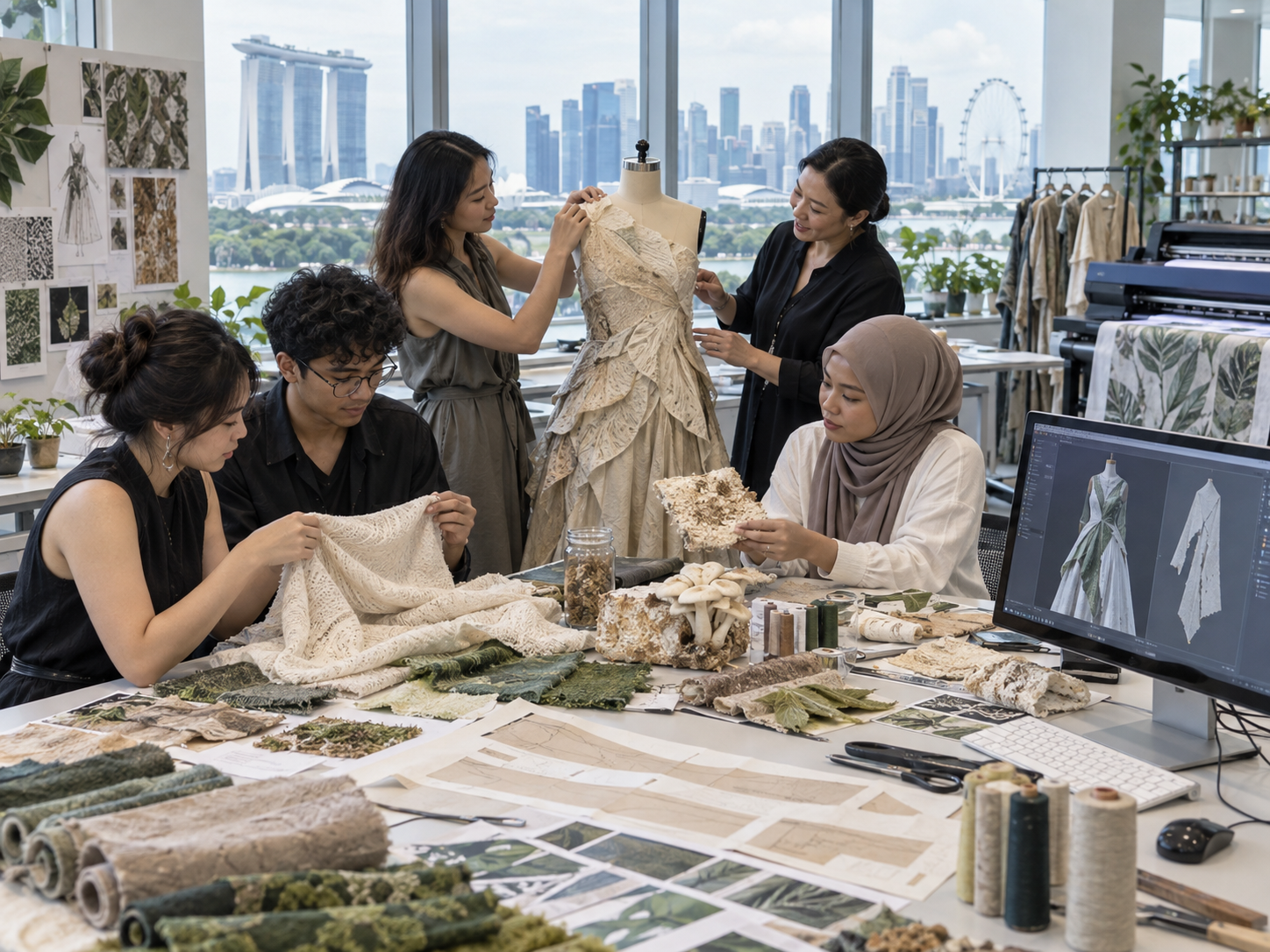
The modern fashion designer is expected to be a polymath. They must be an artist, an engineer, a marketer, and increasingly, a technologist. Singapore, a nation known for its ability to harmoniously blend tradition with hyper-modernity, has positioned its fashion schools as the premier breeding ground for these “hybrid designers” who are equally comfortable with a needle and a neural network.
The Digital Atelier: AI and 3D Mastery
Gone are the days when a sketchbook and a sewing machine were the only tools of the trade. In Singapore’s top fashion programs, the curriculum is heavily weighted toward digital proficiency. Students begin their education not by cutting fabric, but by mastering Clo3D and Browzwear—software that allows them to simulate the drape, weight, and movement of fabric in a virtual environment. This skill significantly reduces material waste during the prototyping phase.
More impressively, institutions are integrating Artificial Intelligence into the creative process. Students are taught to use AI not to replace their creativity, but to augment it. They feed algorithms with data regarding cultural motifs from the region’s rich history—be it Peranakan beadwork patterns or Indian textile geometry—to generate novel design iterations that respect tradition while looking firmly toward the future. This unique ability to curate AI outputs with a human cultural sensitivity is a hallmark of the Singaporean graduate.
Preserving the Human Touch
While technology is critical, it is not the only focus. Singapore’s schools recognize that the soul of fashion lies in the hand. There is a renewed emphasis on haute couture techniques, but with a localized twist. Students are encouraged to delve into Southeast Asian artisanal techniques that are at risk of disappearing.
By partnering with local craftsmen and heritage boards, schools ensure that students understand the value of hand-embroidery, batik making, and intricate weaving. A graduate from a Singapore fashion school is likely to be the person who can code a smart garment that monitors heart rate, while simultaneously hand-beading the collar with an heirloom technique. This juxtaposition of the manual and the digital creates a designer who is irreplaceable by automation.
The industry’s shift toward “phygital” (physical + digital) fashion means that designers must also create for the Metaverse and gaming platforms. Singapore’s institutions have been early adopters of this, offering modules on digital garment creation for avatars. This forward-looking approach ensures that graduates are prepared for revenue streams that didn’t exist a decade ago.
The holistic education provided in the city-state ensures that designers are not siloed. A student might spend the morning learning about the chemical properties of smart fabrics and the afternoon studying the cultural significance of the kebaya. This dual-track expertise is precisely what the global luxury market is seeking as it navigates the complexities of the 21st century.
Author

Clara@gmail.com
Related Posts
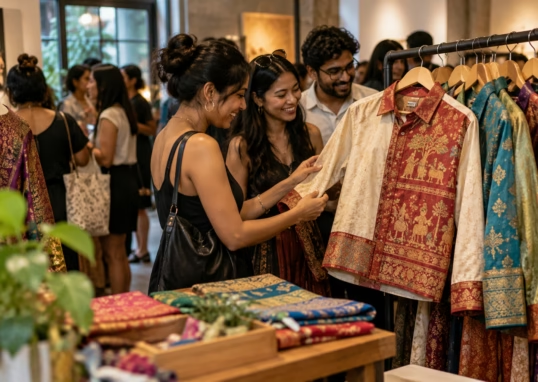
Why Sari Upcycling Is Becoming Singapore’s Most Culturally Specific Circular Fashion Story
- 0
- 464 words
The Cultural Logic of Reuse Upcycled fashion in Singapore is often framed through the language of waste reduction: diverting textiles from incineration,...
Read out all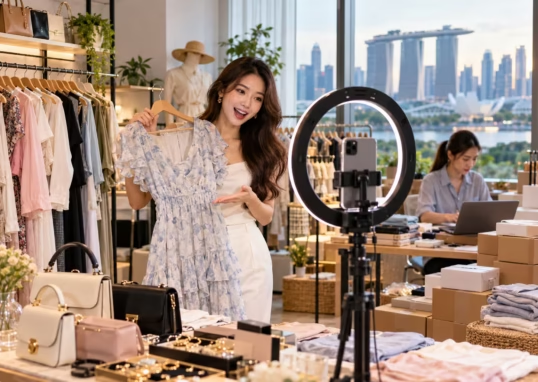
How Singapore’s Homegrown Fashion Labels Rebuilt Their Business Around Livestreaming
- 0
- 514 words
From Side Channel to Core Business Model For a growing cohort of Singaporean fashion brands, livestreaming is no longer a supplementary marketing...
Read out all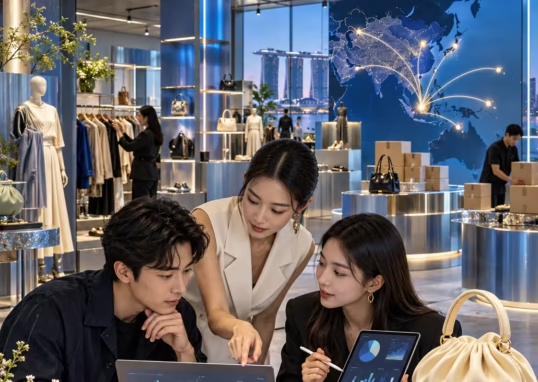
Localization as Strategy: How Singapore Fashion Brands Speak Asia’s Many Languages
- 0
- 604 words
The End of One-Size-Fits-All Expansion Singapore fashion brands expanding across Asia are discovering that regional success requires more than translated marketing. Love,...
Read out all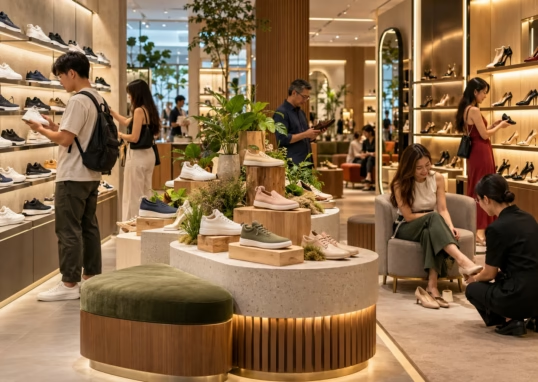
The Comfort Revolution: How Singaporean Footwear Brands Are Redefining Support, Health, and Everyday Wear
- 0
- 658 words
From Pain Point to Product Innovation: The Sunnystep Story Sometimes the most disruptive innovations emerge from the most personal struggles. Mao Ting,...
Read out all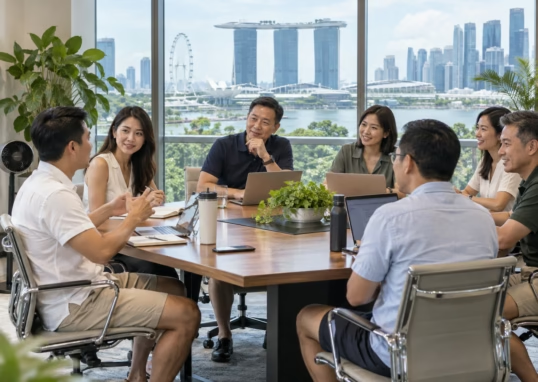
Gen Z vs. Gen X—The Generational Battle Over Singapore’s Office Dress Code
- 0
- 576 words
Two Generations, Two Definitions of Professionalism Walk into any Singapore office in 2026, and you may witness a quiet cultural collision. A...
Read out all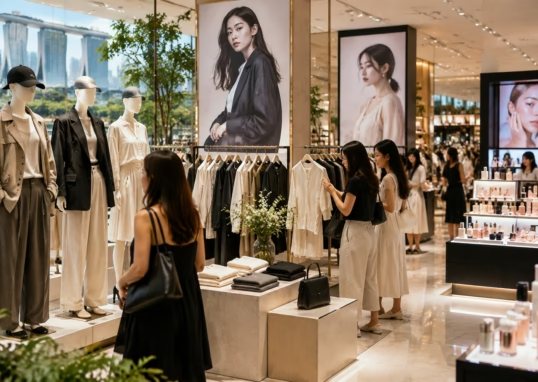
Korean Fashion Brands Are Betting Big on Singapore—and Winning
- 2
- 572 words
The Orchard Road Invasion Nobody Saw Coming When Shinsegae Tomboy opened standalone stores for Studio Tomboy and VOV at the METRO department...
Read out all