- 0
- 431 words
The Speed Economy Comes to Singapore’s Groceries
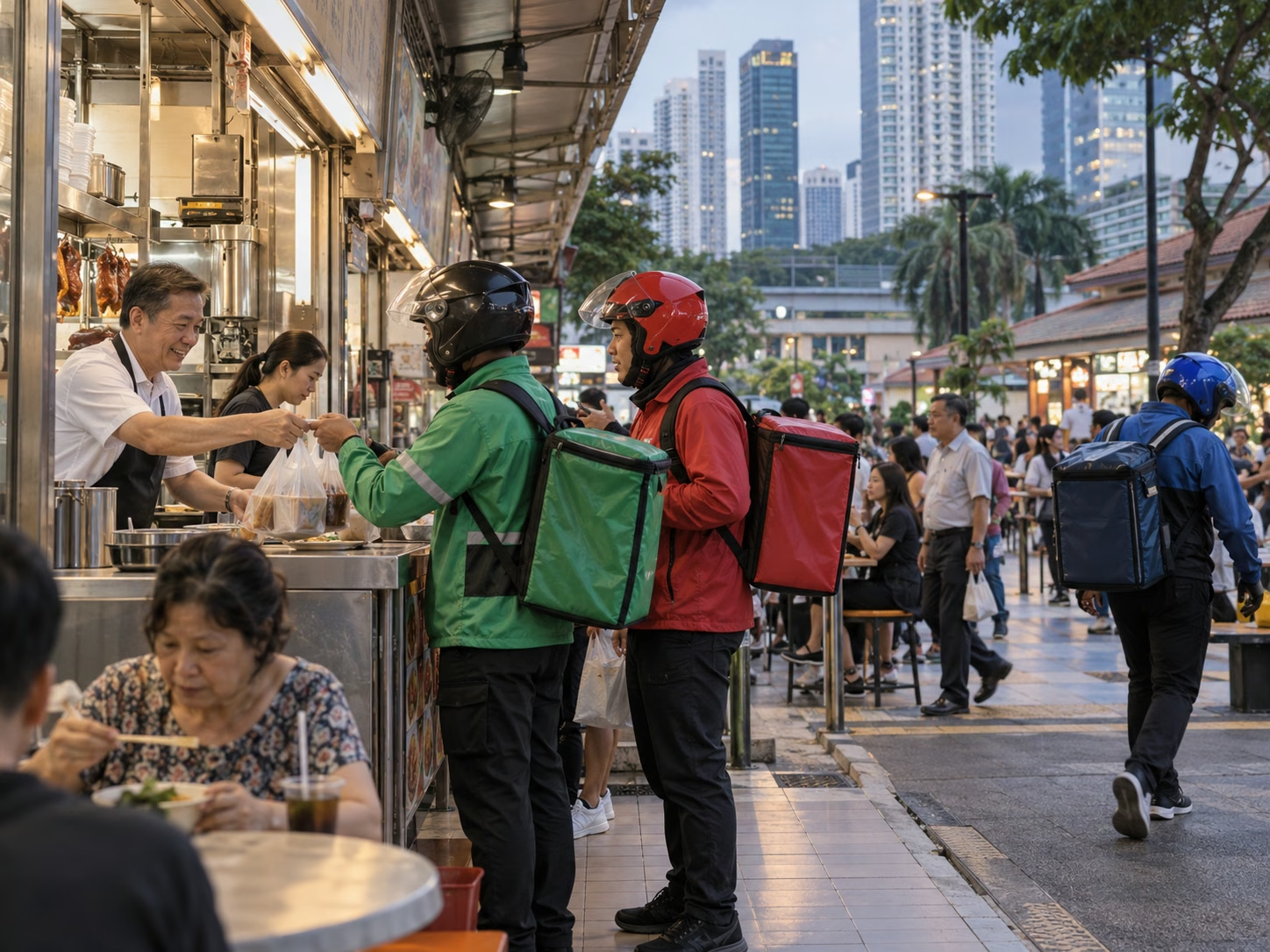
Singapore’s relationship with grocery shopping is undergoing a fundamental transformation. What was once a weekly ritual of navigating supermarket aisles has evolved into an on-demand, app-driven experience where a litre of milk and a dozen eggs can arrive at your doorstep in under 30 minutes. This shift toward quick commerce—a delivery model prioritising speed and convenience over traditional shopping patterns—is reshaping urban consumption in profound ways.
The Market Numbers Tell a Compelling Story
Singapore’s quick commerce market was valued at USD 368.03 million in 2025 and is estimated to grow to USD 387.68 million in 2026, reaching USD 502.86 million by 2031. Quick commerce currently makes up about 33 per cent of total online grocery delivery revenue in Singapore, a figure that underscores how deeply this model has penetrated consumer behaviour.
The competitive landscape has intensified dramatically. In February 2026, Lazada’s RedMart launched RedMart Now, an on-demand grocery delivery service guaranteeing delivery in as little as 30 minutes for residents in south-central and western Singapore. Not to be outdone, foodpanda launched two new pandamart XL stores in Kallang and Yio Chu Kang in January 2026, designed to accommodate larger grocery runs. The platform reported a 7% increase in monthly grocery order frequency and an 8% jump in average items per order between 2024 and 2025.
The Sheng Siong-Foodpanda Partnership: A Case Study in Strategic Convergence
Perhaps the most telling development came in June 2026, when foodpanda announced a partnership with supermarket chain Sheng Siong to offer on-demand delivery for over 12,000 grocery and household products from 43 Sheng Siong outlets, with deliveries promised within one hour. The collaboration exemplified a broader trend: traditional brick-and-mortar retailers recognising that survival increasingly depends on digital integration and last-mile delivery capabilities.
What’s Driving This Behavioural Shift
Singaporeans are using quick commerce to plan, not panic. Rather than functioning as a last-minute emergency fix, these services are being integrated into routine household management. One in two grocery orders now includes housebrand items, suggesting that consumers are making deliberate value-conscious choices rather than simply paying premiums for convenience.
The infrastructure supporting this ecosystem is substantial. Singapore records smartphone penetration near 165%, and mobile checkouts represent 85% of all e-commerce purchases. Surveys indicate that 80% of residents expect same-day delivery, while 61% want receipt within three hours.
The Road Ahead for Quick Commerce
As the market matures, the challenge will shift from speed alone to reliability, product quality, and sustainable unit economics. The partnership models emerging between delivery platforms and established retailers suggest that the future of quick commerce in Singapore lies not in platform-versus-retailer competition, but in strategic collaboration that leverages each party’s strengths.
Author

Clara@gmail.com
Related Posts

Cultivated Beef Meets Frozen Formats: Singapore’s Regulatory Breakthrough Opens New Product Frontiers
- 0
- 474 words
A Regulatory First That Ripples Through the Freezer Aisle In August 2026, the Singapore Food Agency approved Aleph Farms’ cultivated thin-cut steak...
Read out all
Why Korean Convenience Store Culture and Street Food are Taking Over Singapore’s Snack Scene
- 0
- 448 words
While high-end Korean restaurants capture the attention of critics, the true penetration of Korean culture in Singapore is happening on the streets...
Read out all
The Omakase Effect: High-End Sushi Dining Transforms Singapore’s Seafood Sourcing and Luxury F&B Scene
- 0
- 359 words
The New Face of Luxury Dining Singapore’s luxury dining scene has long been dominated by European fine dining and modern Asian fusion....
Read out all
Orh Nee Croissants to Gula Melaka Danishes: How Singapore’s Creative Pastry Chefs Are Redefining Premium Viennoiserie in 2026
- 0
- 474 words
Singapore’s premium pastry sector in 2026 is not simply copying Paris. Local chefs are injecting heritage flavours into classic French techniques, producing...
Read out all
Singapore Culinary Competition 2026: How Restaurant Brands Build Stronger Market Positions Through Innovation and Customer Experience
- 0
- 430 words
Singapore’s Food Scene Evolves Beyond Traditional Dining Singapore has long been recognized as a global food destination where hawker culture, fine dining...
Read out all
How Singapore’s Café Businesses Are Redefining Urban Lifestyle Through Specialty Coffee, Innovation, and Local Entrepreneurship
- 0
- 632 words
Singapore’s café industry has developed into a major lifestyle sector, where coffee shops have evolved from simple beverage providers into destinations for...
Read out all