- 0
- 437 words
At-Sunrice GlobalChef Academy occupies a distinct position in Singapore’s culinary education market: it is neither a government technical institute nor a traditional hospitality school, but a private academy that has built its identity around a specific pedagogical claim—that a professional chef must master both Asian and Western culinary languages.
A Campus Designed Around Flavour
The academy’s location beside Fort Canning Park places students within walking distance of Singapore’s first spice-themed garden. This is not incidental. The school treats the surrounding greenery as an extension of the classroom, allowing students daily contact with Southeast Asian原生 spices and a direct understanding of flavour logic from the source.
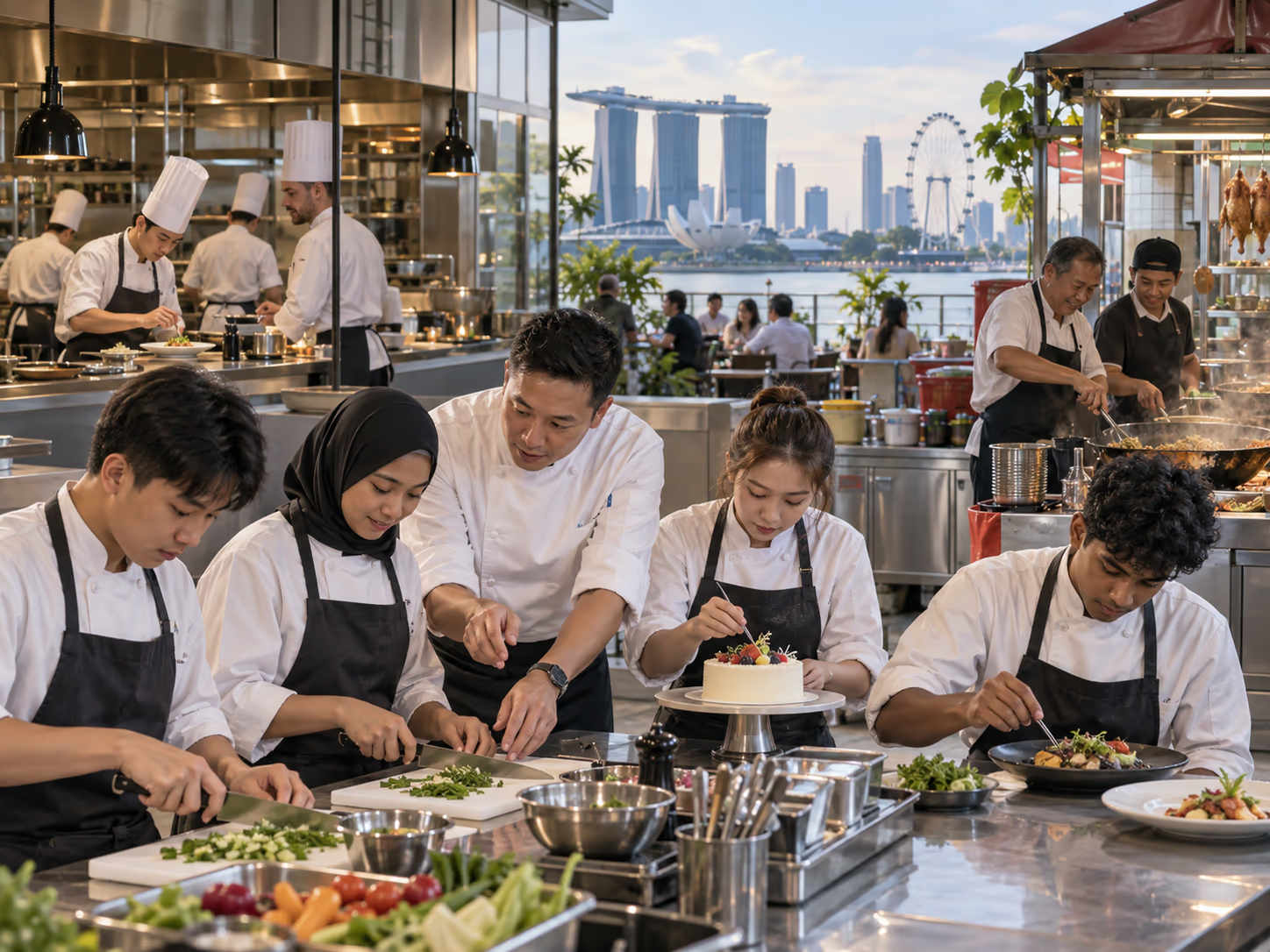
Inside, training kitchens are configured to hotel and Michelin kitchen standards, with individual workstations, molecular gastronomy labs, and flavour-tasting rooms. The campus also operates a training restaurant where students rotate through Thai, Japanese, and Chinese menu production, accumulating plating and service experience in a live environment.
Curriculum: Technique Plus Business
At-Sunrice’s diploma programmes cover classic Asian cuisines—Japanese sushi craft, Chinese regional cooking, Southeast Asian classics—alongside European Michelin techniques. What distinguishes the curriculum is the embedded commercial layer. Modules on healthy cooking, plant-based cuisine, restaurant entrepreneurship, and cost control run parallel to technical training. The stated aim is to produce not “kitchen workers who only know how to stir-fry” but future F&B leaders with flavour literacy, management competence, and academic credentials.
The Internship as Non-Negotiable
At-Sunrice does not treat industry attachment as optional. Every student completes a paid internship of four to twelve months at partner hotels, Michelin-starred restaurants, or resorts. Monthly stipends range from S$1,600 to S$2,000, and a significant proportion of interns receive permanent offers before graduation. The academy’s partnership network includes luxury hotels, Michelin-star restaurants, and global hospitality brands, giving students placement access that individual job-seeking rarely replicates.
Outcomes and Alumni Trajectory
The employment data supports the model. At-Sunrice reports that 38% of students are hired before graduation and 92% within one year. Alumni include Malcolm Lee, whose Michelin-starred restaurant has retained its accolade since 2016; Lee trained at At-Sunrice after receiving a Miele-Guide scholarship. The academy also offers progression routes to bachelor’s and master’s degrees through partnerships with institutions such as the University of West London (Singapore campus), enabling graduates to move from skill certification to academic qualification without leaving the culinary field.
For international students, At-Sunrice provides Student Pass guidance and maintains a rolling intake calendar, with course dates available through SkillsFuture Singapore’s training portal. The academy’s positioning is clear: it sells a pathway, not just a course—a structured route from amateur interest to global kitchen employment.
Author

Clara@gmail.com
Related Posts
Quick Commerce Revolution: How Singapore’s Grocery Delivery Market Is Reshaping Urban Convenience
- 0
- 431 words
The Speed Economy Comes to Singapore’s Groceries Singapore’s relationship with grocery shopping is undergoing a fundamental transformation. What was once a weekly...
Read out all
Cultivated Beef Meets Frozen Formats: Singapore’s Regulatory Breakthrough Opens New Product Frontiers
- 0
- 474 words
A Regulatory First That Ripples Through the Freezer Aisle In August 2026, the Singapore Food Agency approved Aleph Farms’ cultivated thin-cut steak...
Read out all
Why Korean Convenience Store Culture and Street Food are Taking Over Singapore’s Snack Scene
- 0
- 448 words
While high-end Korean restaurants capture the attention of critics, the true penetration of Korean culture in Singapore is happening on the streets...
Read out all
The Omakase Effect: High-End Sushi Dining Transforms Singapore’s Seafood Sourcing and Luxury F&B Scene
- 0
- 359 words
The New Face of Luxury Dining Singapore’s luxury dining scene has long been dominated by European fine dining and modern Asian fusion....
Read out all
Orh Nee Croissants to Gula Melaka Danishes: How Singapore’s Creative Pastry Chefs Are Redefining Premium Viennoiserie in 2026
- 0
- 474 words
Singapore’s premium pastry sector in 2026 is not simply copying Paris. Local chefs are injecting heritage flavours into classic French techniques, producing...
Read out all
Singapore Culinary Competition 2026: How Restaurant Brands Build Stronger Market Positions Through Innovation and Customer Experience
- 0
- 430 words
Singapore’s Food Scene Evolves Beyond Traditional Dining Singapore has long been recognized as a global food destination where hawker culture, fine dining...
Read out all