- 0
- 407 words
The Succession Crisis Nobody Talks About
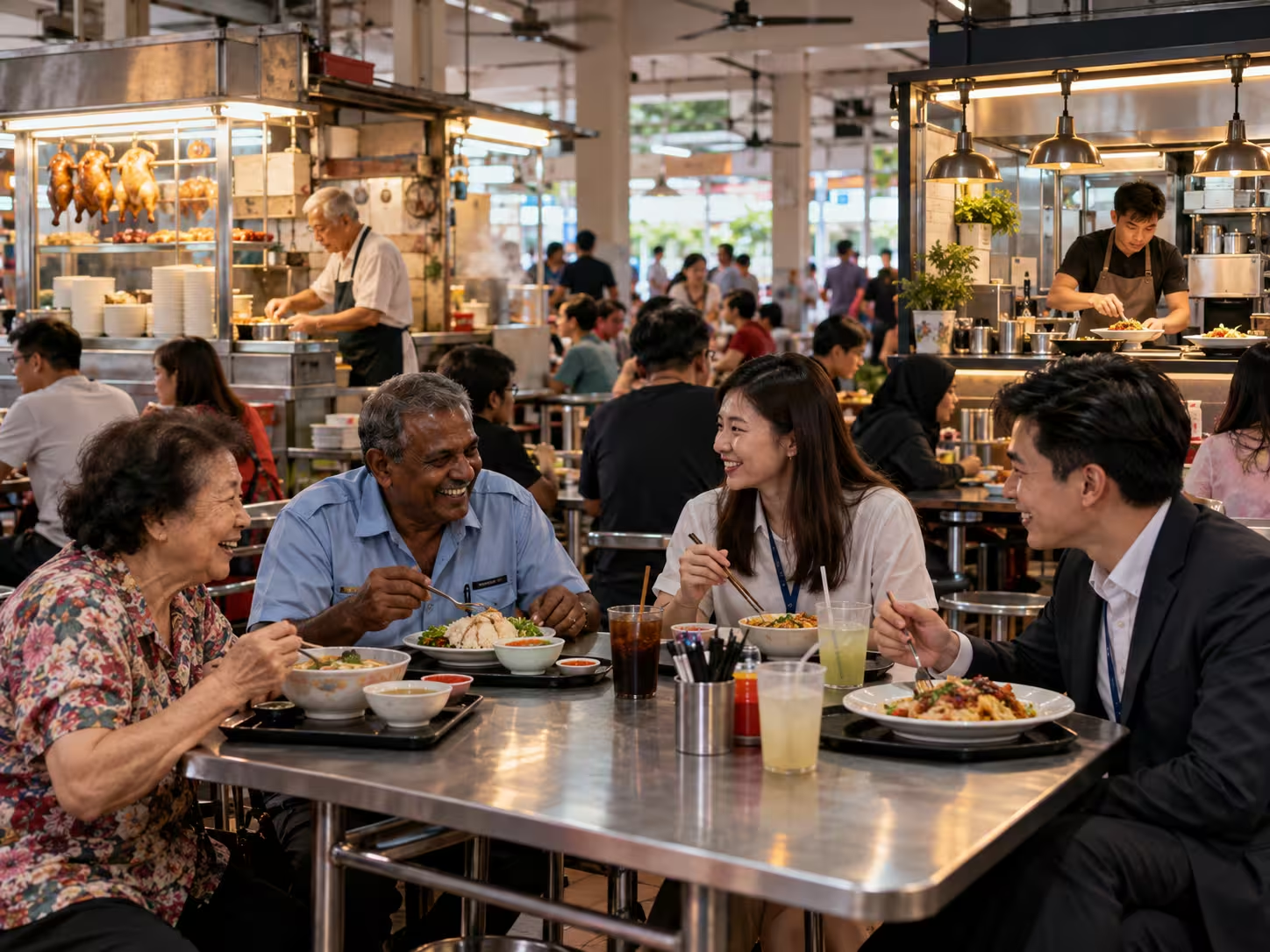
Singapore’s hawker culture is a UNESCO-listed intangible cultural heritage, but its future is far from secure. The median age of a Singapore hawker is 59, and their children—educated, upwardly mobile, and drawn to white-collar careers—have largely declined to take over the family stall. This demographic cliff has created what some observers call a “succession crisis.” Into this breach step the neo-hawkers: young entrepreneurs who may not have grown up in the trade but who bring passion, training, and a willingness to experiment.
Preserving While Innovating
The neo-hawker movement is not a rejection of tradition—it is a reinterpretation of it. The National Library Board’s Curiocity project notes that some young hawkers are “taking over their family businesses, carrying on the legacy of their parents or grandparents, while others are honouring traditional recipes to keep the local hawker culinary heritage alive”. At Rui Ji Kitchen in Holland Drive Market and Food Centre, for instance, the bak chor mee is served with handmade fishballs using yellowfish—a technique that requires skill and patience, not shortcuts. These hawkers understand that innovation without authenticity is mere novelty.
The Affordability Paradox
Yet the neo-hawker movement faces a fundamental tension: hawker food is expected to be cheap. As the ABC News reported, government policies designed to keep meals affordable have created an “invisible price ceiling” for hawkers, while the National Environment Agency requires stalls at “socially conscious” hawker centres to offer a value meal benchmarked at about S$3.50. Meanwhile, operational costs have risen by 20 to 30 per cent, and new stallholders often pay market rents of S$4,000 per month—ten times the subsidised rates paid by legacy hawkers.
This paradox creates a difficult calculus for neo-hawkers. A pasta stall selling S$8 Bolognese is affordable by restaurant standards but expensive by hawker norms. The movement risks creating a two-tier system: heritage stalls serving cheap, traditional food for older Singaporeans, and neo-hawker stalls serving pricier, innovative food for younger, wealthier diners.
Government Intervention and Its Limits
The Singapore government has attempted to bridge this gap. The Hawker Incubation Scheme, introduced in 2018, offers temporary subsidised rent and equipment fit-outs to aspiring hawkers. As of June 2026, about half of the 109 participants achieved viability. In July 2026, the government announced rental support for 15,200 hawkers and market stallholders, with cooked food stalls receiving S$1,200 each. These measures provide breathing room, but they do not resolve the fundamental tension between affordability and sustainability.
Author

Clara@gmail.com
Related Posts
Inside Singapore’s Bean-to-Bar Revolution: The Artisans Redefining Chocolate Craft
- 0
- 535 words
From Supermarket Shelves to Craft Workshops Singapore’s artisanal chocolate movement has evolved from a niche curiosity into a formidable force within the...
Read out all
At-Sunrice GlobalChef Academy and the “East-Meets-West” Chef Training Model
- 0
- 437 words
At-Sunrice GlobalChef Academy occupies a distinct position in Singapore’s culinary education market: it is neither a government technical institute nor a traditional...
Read out all
Quick Commerce Revolution: How Singapore’s Grocery Delivery Market Is Reshaping Urban Convenience
- 0
- 431 words
The Speed Economy Comes to Singapore’s Groceries Singapore’s relationship with grocery shopping is undergoing a fundamental transformation. What was once a weekly...
Read out all
Cultivated Beef Meets Frozen Formats: Singapore’s Regulatory Breakthrough Opens New Product Frontiers
- 0
- 474 words
A Regulatory First That Ripples Through the Freezer Aisle In August 2026, the Singapore Food Agency approved Aleph Farms’ cultivated thin-cut steak...
Read out all
Why Korean Convenience Store Culture and Street Food are Taking Over Singapore’s Snack Scene
- 0
- 448 words
While high-end Korean restaurants capture the attention of critics, the true penetration of Korean culture in Singapore is happening on the streets...
Read out all
The Omakase Effect: High-End Sushi Dining Transforms Singapore’s Seafood Sourcing and Luxury F&B Scene
- 0
- 359 words
The New Face of Luxury Dining Singapore’s luxury dining scene has long been dominated by European fine dining and modern Asian fusion....
Read out all