- 0
- 359 words
The New Face of Luxury Dining
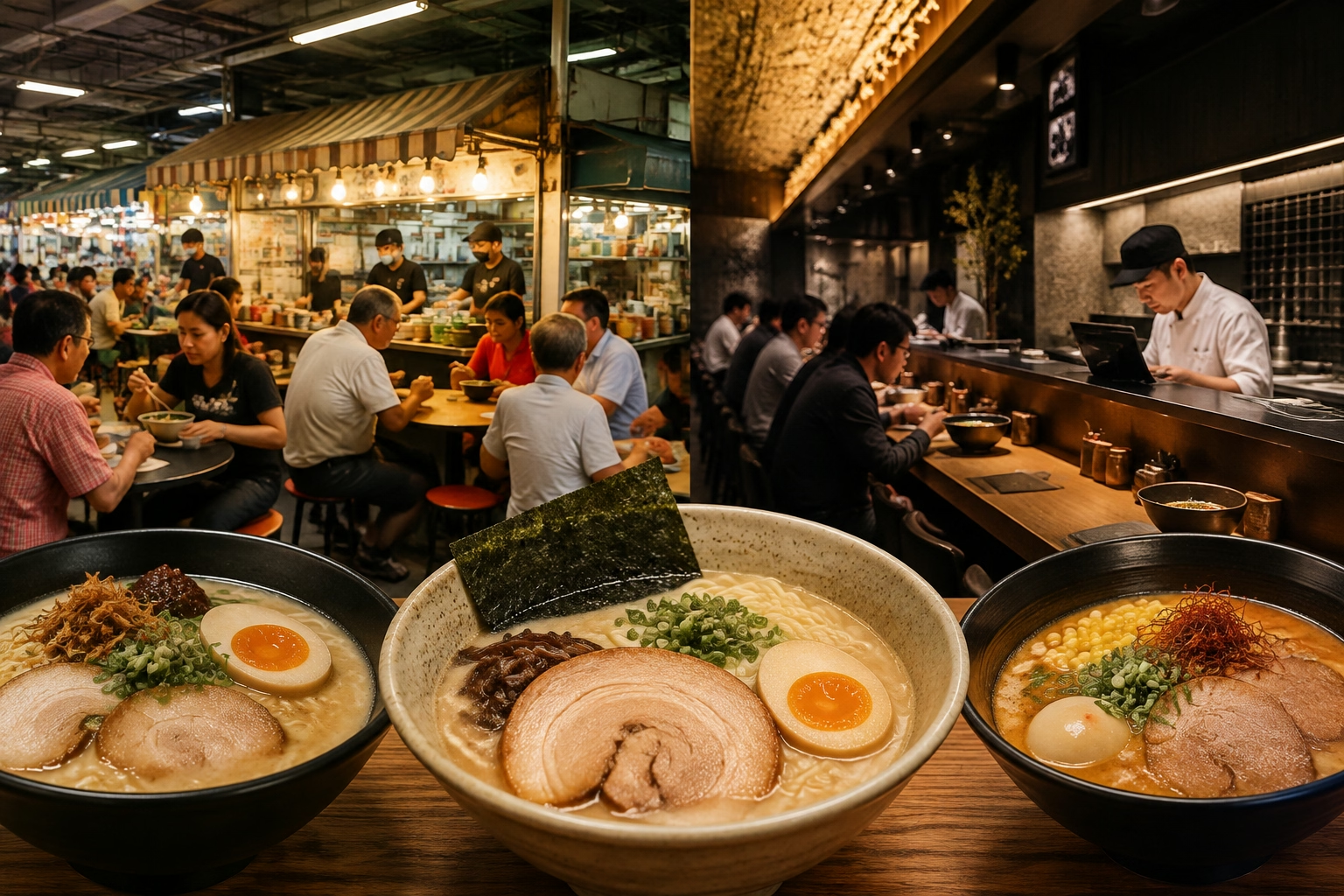
Singapore’s luxury dining scene has long been dominated by European fine dining and modern Asian fusion. But since 2023, the most sought-after tables are increasingly Japanese omakase counters, where diners surrender menu choices to the chef. In 2026, a 12-seat omakase restaurant in Dempsey Hill can command $450 per person before drinks, with waiting lists stretching for months. This shift has profound implications for seafood sourcing, chef training, and the broader local F&B ecosystem.
A 2026 report by the Singapore Tourism Board (STB Food & Beverage Trends) notes that Japanese fine dining now accounts for 23 percent of all high-end restaurant bookings in Singapore, up from 14 percent in 2022. The report highlights omakase as the fastest-growing subcategory, with more than 40 dedicated omakase venues operating in the city-state.
Seafood Sourcing and Supply Chain Pressure
Edomae-style sushi relies on specific fish species—bluefin tuna, kinmedai, shirako, and seasonal shellfish—most of which are not caught locally. Singapore’s omakase boom has therefore increased demand for air-flown Japanese seafood. Importers now work directly with auction houses at Toyosu Market in Tokyo, bidding for premium lots several times a week. This has raised prices for high-grade tuna and uni, with some Singapore restaurants paying up to $200 per kilogram for wild-caught otoro.
The pressure on supply has also encouraged local innovation. A few Singapore-based aquaculture firms now farm Japanese varieties of hirame (flounder) and madai (sea bream) in recirculating systems. While not yet comparable to wild Japanese fish, these locally farmed options are appearing in mid-tier omakase menus as a sustainable alternative. This adaptation shows how Japanese culinary standards can stimulate local food production capabilities.
Training and the Rise of Local Itamae
Traditionally, omakase counters in Singapore were staffed by Japanese chefs with decades of training. By 2026, a new generation of Singaporean itamae (sushi chefs) has emerged. Culinary schools now offer specialised sushi apprenticeships, and several local chefs have trained in Tokyo for three to five years before returning to open their own counters. This localisation reduces labour costs and creates a distinctive Singaporean omakase style—one that may incorporate local ingredients like laksa leaf or calamansi zest into traditional shari (sushi rice).
Author

Clara@gmail.com
Related Posts
Heritage Under Pressure: Can Neo-Hawker Cuisine Save Singapore’s UNESCO Food Culture?
- 0
- 407 words
The Succession Crisis Nobody Talks About Singapore’s hawker culture is a UNESCO-listed intangible cultural heritage, but its future is far from secure....
Read out all
Inside Singapore’s Bean-to-Bar Revolution: The Artisans Redefining Chocolate Craft
- 0
- 535 words
From Supermarket Shelves to Craft Workshops Singapore’s artisanal chocolate movement has evolved from a niche curiosity into a formidable force within the...
Read out all
At-Sunrice GlobalChef Academy and the “East-Meets-West” Chef Training Model
- 0
- 437 words
At-Sunrice GlobalChef Academy occupies a distinct position in Singapore’s culinary education market: it is neither a government technical institute nor a traditional...
Read out all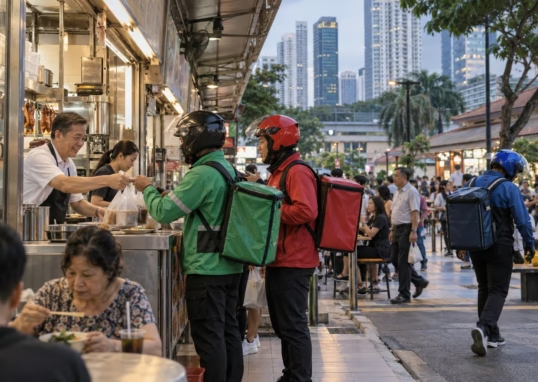
Quick Commerce Revolution: How Singapore’s Grocery Delivery Market Is Reshaping Urban Convenience
- 0
- 431 words
The Speed Economy Comes to Singapore’s Groceries Singapore’s relationship with grocery shopping is undergoing a fundamental transformation. What was once a weekly...
Read out all
Cultivated Beef Meets Frozen Formats: Singapore’s Regulatory Breakthrough Opens New Product Frontiers
- 0
- 474 words
A Regulatory First That Ripples Through the Freezer Aisle In August 2026, the Singapore Food Agency approved Aleph Farms’ cultivated thin-cut steak...
Read out all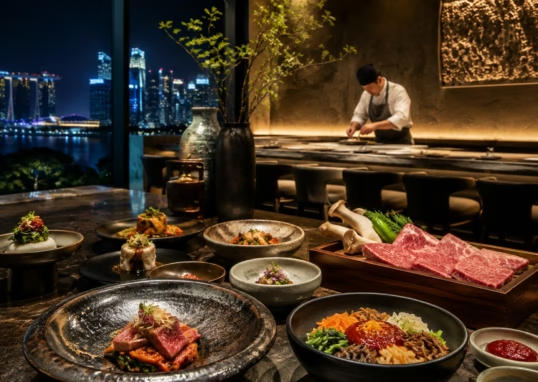
Why Korean Convenience Store Culture and Street Food are Taking Over Singapore’s Snack Scene
- 0
- 448 words
While high-end Korean restaurants capture the attention of critics, the true penetration of Korean culture in Singapore is happening on the streets...
Read out all