- 0
- 561 words
Singapore’s entertainment industry is entering a new phase as international music partnerships become increasingly important to the country’s tourism development strategy.
While major concerts traditionally attract audiences primarily through ticket sales, Singapore is exploring ways to turn artist appearances into broader visitor experiences that connect entertainment with the destination itself.
The approach is especially relevant in Asia, where international pop concerts, K-pop performances, and fan communities influence travel decisions.
Recent collaborations between tourism authorities and major music companies illustrate how Singapore intends to strengthen its position in this market.
Singapore Tourism Board Expands Partnerships With Global Music Companies
A significant development occurred on May 8, 2026, when the Singapore Tourism Board announced a three-year partnership with Universal Music Singapore.
According to the official Singapore Tourism Board announcement, the collaboration aims to promote Singapore internationally through artist-led campaigns, fan experiences, and partnerships with travel businesses. Singapore Tourism Board
The initiative includes opportunities to connect international performers with Singapore’s cultural attractions while showcasing local artistic talent.
Previous collaborations highlighted by the agency include Billie Eilish’s performance filmed at Gardens by the Bay and music-related content involving OneRepublic.
These projects demonstrate how artist associations can introduce tourist destinations to audiences who may not ordinarily engage with conventional tourism advertising.
BTS THE CITY ARIRANG Connects Music With Tourist Attractions
Singapore’s collaboration with HYBE provides a particularly ambitious example of this entertainment strategy.
In October 2026, the tourism board announced BTS THE CITY ARIRANG SINGAPORE, scheduled throughout December 2026.
The initiative will accompany four sold-out BTS concerts at the National Stadium.
Rather than limiting fan activities to the concert venue, the program will incorporate Singapore’s established tourist attractions.
Planned experiences include themed entertainment at Jewel Changi Airport, artistic installations at National Gallery Singapore, and activities at Resorts World Sentosa.
The concept allows a concert to become the centerpiece of a much larger tourism experience, connecting the artist’s identity with the host destination.
Entertainment Tourism Extends Beyond Stadium Concerts
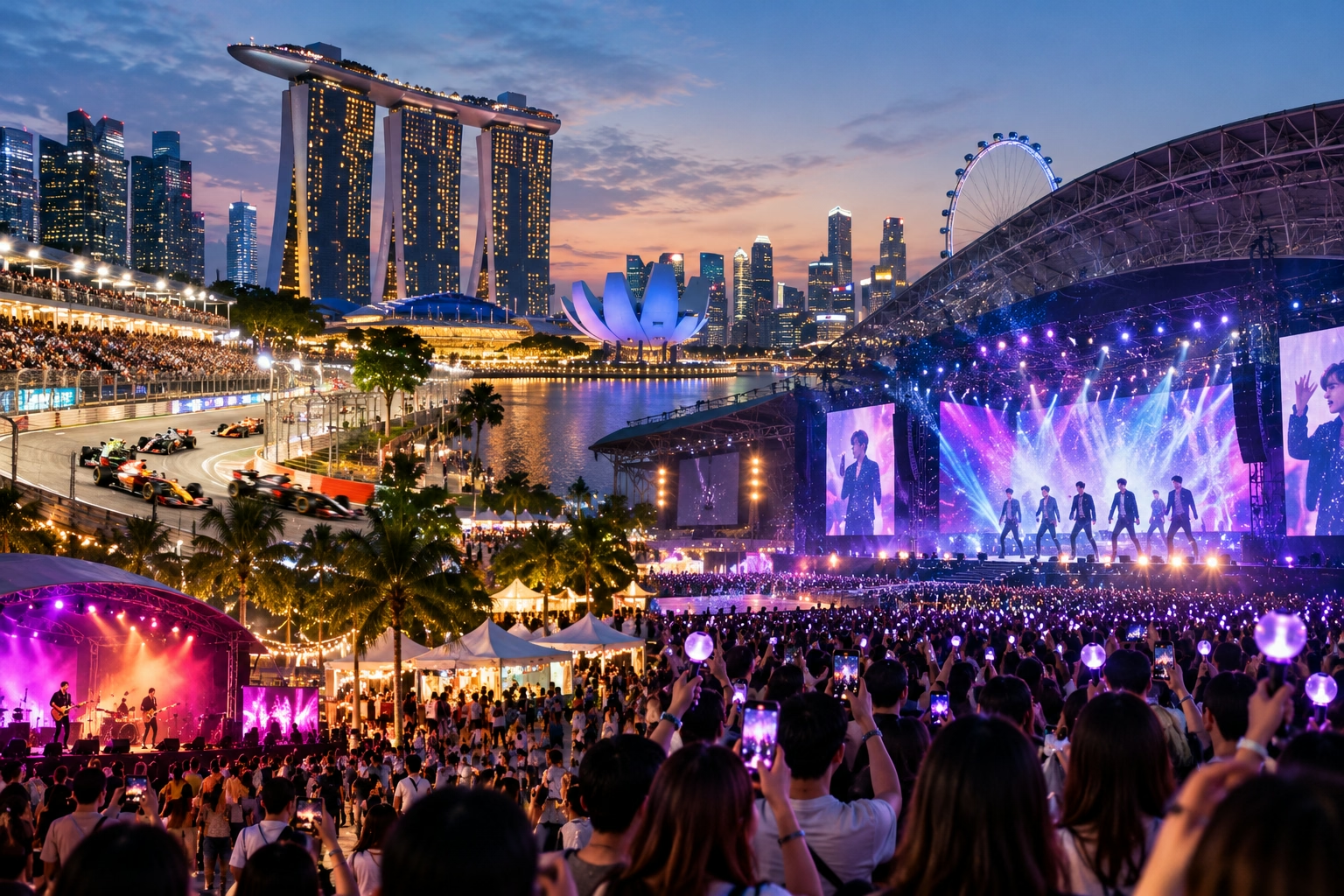
Singapore’s 2026 music calendar also demonstrated how live performances can complement international sporting events.
The October Singapore Grand Prix featured global artists including Lana Del Rey, The Killers, Janet Jackson, and JJ Lin.
By integrating multiple music genres into its motorsport program, the event appealed to audiences with different entertainment interests.
This diversified format can help destinations attract visitors who value several experiences within the same trip.
It also creates opportunities for tourism businesses to promote accommodations, dining, and sightseeing alongside event participation.
Why Music Partnerships Matter for Singapore’s Tourism Economy
The commercial potential of music tourism extends beyond ticket revenue.
Visitors may spend money on flights, hotels, restaurants, transportation, merchandise, and entertainment activities.
Singapore recorded approximately S$32.8 billion in tourism receipts in 2025, according to figures announced by government officials in May 2026.
Although that figure cannot be attributed specifically to concerts, it provides context for the country’s broader focus on high-value tourism experiences.
Music-related collaborations could support this objective by encouraging travelers to develop more extensive itineraries.
A More Experience-Driven Tourism Model
The success of Singapore’s strategy will depend on delivering experiences that feel distinctive rather than simply attaching famous artists to commercial campaigns.
Authentic cultural connections, convenient visitor services, and accessible fan activities remain important.
With international music partnerships, major concerts, and integrated tourism attractions, Singapore is developing an entertainment model in which the destination becomes part of the fan experience.
Author

Clara@gmail.com
Related Posts
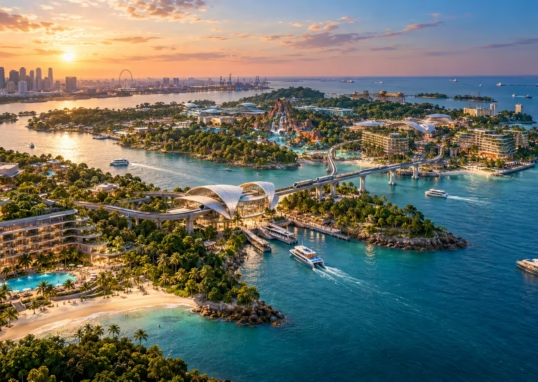
Cooling Sentosa and Carbon Neutrality: The Sustainability Layer Behind the 2030 Transformation
- 0
- 292 words
The 4°C Promise Most tourism master plans treat sustainability as a compliance requirement. Greater Sentosa treats it as a visitor-experience feature. The...
Read out all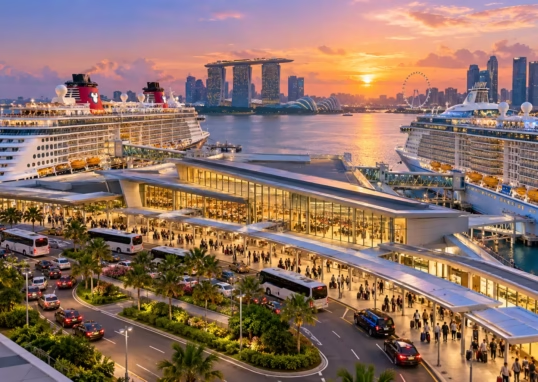
Princess Cruises and Singapore’s Three-Year Partnership: A Blueprint for Cruise Industry Growth in Asia
- 0
- 477 words
A Landmark Partnership for Asian Cruising In May 2026, the Singapore Tourism Board and Princess Cruises announced a three-year partnership that represents...
Read out all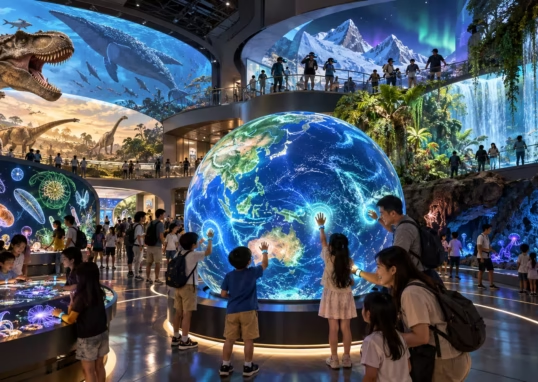
Science Centre Singapore and KidsSTOP: Building Scientific Curiosity Through Play-Based Learning
- 0
- 408 words
A Legacy of Interactive Science Education Since its establishment, Science Centre Singapore has stood as the nation’s premier institution for hands-on scientific...
Read out all
Gardens by the Bay Photography in 2026: A Complete Visual Guide for Travellers
- 0
- 382 words
Gardens by the Bay has welcomed over 87 million visitors since its opening, cementing its status as Singapore’s premier horticultural and photographic...
Read out all
The Architectural Time Machine: Tracing Singapore’s Evolution Through Its Most Iconic Modern Structures
- 0
- 499 words
To walk through Singapore is to flip through the pages of a futuristic novel that actually came true. The city’s modern architecture...
Read out all
Eating Like a King on a Pauper’s Budget: The Backpacker’s Guide to Singapore Hawker Centres
- 0
- 608 words
The reputation of Singapore as one of the most expensive cities in the world often deters budget travelers, but there is a...
Read out all