- 0
- 520 words
A Preventable Crisis
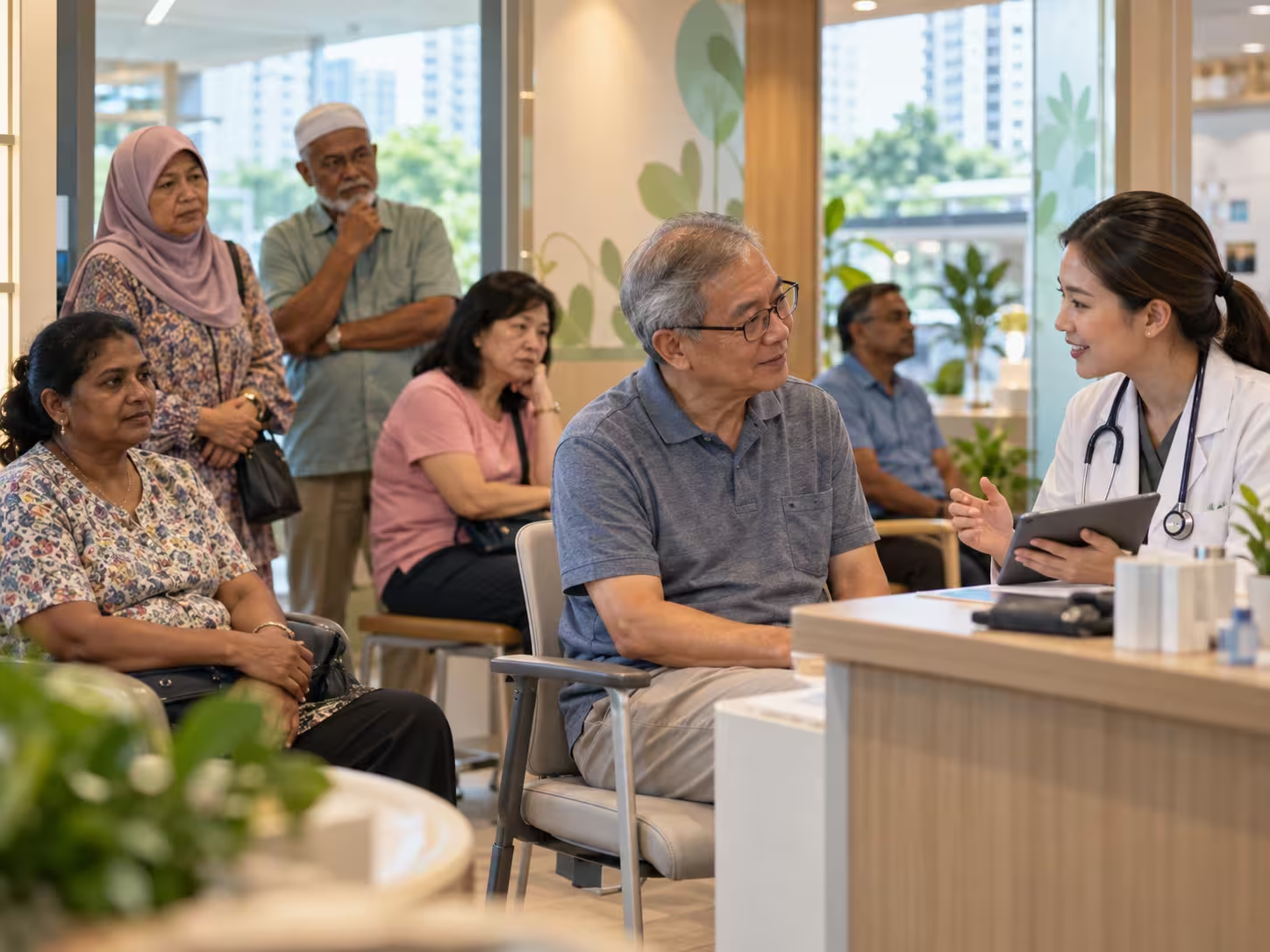
Singapore’s National Population Health Survey 2025 delivered a sobering verdict on cancer screening equity: Malay women have the lowest participation rates across all three national screening programmes — breast, cervical, and colorectal cancer. Only 18.4% of Malay women underwent breast cancer screening in 2024, compared to 37.9% of Chinese women and 30.2% of Indian women. The disparity is even more alarming given that between 2007 and 2024, breast cancer screening participation among Malay women declined from 35% to 18.4% — a nearly 50% drop across all education levels.
The Consequence of Late Detection
These screening gaps directly translate into worse outcomes. Malay Muslims in Singapore are disproportionately diagnosed with late-stage cancer, often due to low screening rates, cultural stigma, and limited health literacy. Dr Jack Chan, Senior Consultant at the National Cancer Centre Singapore (NCCS), emphasised that “cancer screening is critical because early detection through screening programmes significantly improves treatment options and survival outcomes, reduces the aggressiveness of treatment required, and enhances overall quality of life for cancer patients”.
When cancer is detected at advanced stages, treatment options become limited, survival rates drop significantly, and patients often face worse outcomes. With cancer accounting for 26.2% of all deaths in Singapore and approximately one in four residents likely to develop cancer by age 75, these screening disparities represent a significant public health challenge.
Root Causes and Community Perspectives
Dr Md Yusof Ismail, CEO of the Ain Society, identified multiple barriers preventing Malay community members from undergoing cancer screening. Based on surveys conducted by the organisation, these barriers include fatalistic attitudes toward cancer, fear of diagnosis, modesty concerns regarding breast and cervical screenings, and practical obstacles such as time constraints and caregiving responsibilities. These are not merely individual choices but reflect deeper structural and cultural factors that mainstream health promotion efforts have failed to adequately address.
Community-Led Solutions Showing Promise
In response, Malay/Muslim community partners have launched targeted interventions to address screening disparities. The M³+ Focus Area 5 specifically prioritises improving screening rates through community partners who raise awareness, address common concerns, and dispel misconceptions about screening programmes. These partners work with the Health Promotion Board, Ministry of Health, and the Muslim Healthcare Professionals Association to increase chronic disease screening through culturally tailored health events and talks.
The Saham Kesihatan initiative offers a particularly promising model — a community-led programme supported by HPB that provides tailored, culturally sensitive health programmes complementing the Healthier SG movement. Additionally, the Jaga Kesihatan, Jaga Ummah network has expanded to over 190 partners, including mosques, creating trusted community touchpoints for health education and screening outreach.
The Road Ahead
Singapore’s experience demonstrates that eliminating cost barriers — while necessary — is insufficient to achieve screening equity. The decline in breast cancer screening among Malay women over 17 years occurred despite universal healthcare coverage and subsidised screening programmes. What is required is a fundamental shift toward culturally embedded health promotion that engages community leaders, addresses religious and cultural concerns, and meets people in the spaces they already trust. The 2026 Berita Harian report on this issue represents a critical wake-up call for a healthcare system that prides itself on universal access but must now confront the reality that access without uptake is not equity.
Author

Clara@gmail.com
Related Posts
The Nursing Exodus: Why Singapore’s Local Nurses Are Leaving and What It Will Take to Keep Them
- 0
- 650 words
The Silent Drain on Singapore’s Healthcare Frontline Behind the polished corridors of Singapore’s public hospitals, a quiet crisis is unfolding. Over half...
Read out all
NTU Singapore’s Microscopic Peptide Droplets Slash Colorectal Tumour Growth by 67%
- 0
- 352 words
A New Approach to an Old Problem Colorectal cancer remains one of the most challenging malignancies to treat, particularly when tumours develop...
Read out all
Plant Protein Powders and Functional RTDs Are Redefining Singapore’s Urban Supplement Culture
- 0
- 395 words
At 8 a.m. in Singapore’s Central Business District, the breakfast crowd is no longer just ordering kopi and toast. Many are grabbing...
Read out all
Mindful Aesthetics: The Integration of Holistic Mental Wellness into Singapore’s Beauty Routines
- 0
- 563 words
In the bustling metropolis of Singapore, where the pressure to perform is relentless, the beauty industry is recognizing that stress is the...
Read out all
Inside Singapore’s High-Tech Specialist Clinics: AI, Robotics, and Precision Medicine in 2026
- 0
- 353 words
The Rise of AI-Augmented Diagnostics Machine Learning in Radiology and Pathology Radiologists and pathologists in leading private clinics now work alongside AI...
Read out all
Duke-NUS’s Team-Based Learning Model: Forging Clinician-Scientists Ready for Singapore’s Future Healthcare Challenges
- 0
- 467 words
Departing from the conventional undergraduate pathway, Duke-NUS Medical School offers a graduate-entry MD programme that emphasizes scientific discovery and clinical leadership. This...
Read out all