- 0
- 597 words
The Loneliness Prescription
In March 2026, a parliamentary question asked the Ministry of Health a deceptively simple question: what structured support exists to help seniors rebuild daily routines and social connections? The answer described a layered system: Silver Generation Ambassadors identify at-risk seniors, community befrienders visit at least once a month, and Active Ageing Centres (AACs) provide communal dining, volunteering opportunities, and group activities.
That system is not a soft add-on to medical care. Social isolation is a physiological risk factor. It accelerates cognitive decline, worsens cardiovascular outcomes, and increases mortality. For a country with one of the world’s fastest-ageing populations—more than one in five citizens are already 65 or older—the social infrastructure of ageing is as important as the hospital infrastructure.
Inside the AAC Model
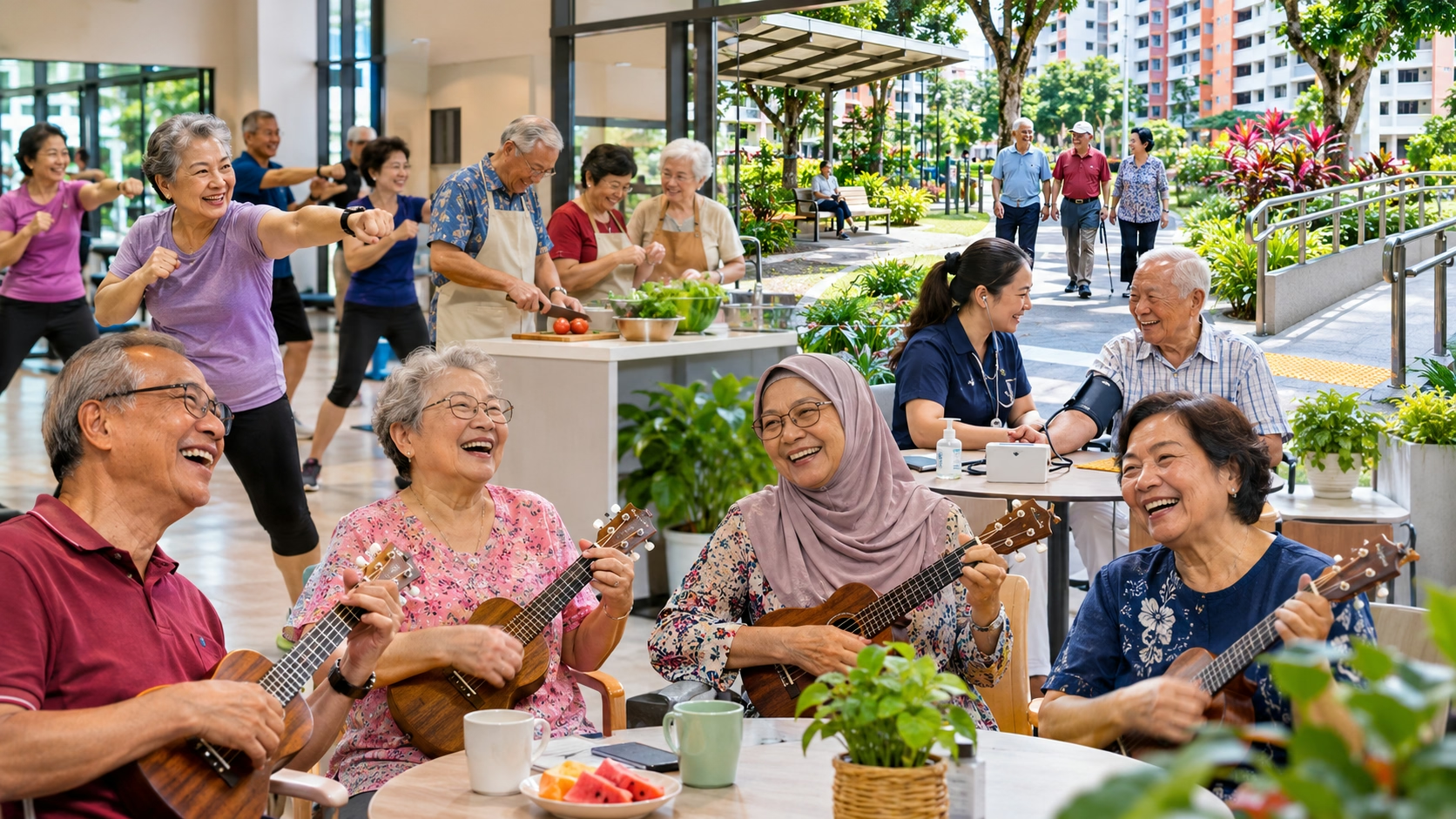
Active Ageing Centres are the frontline of community-based longevity. They operate across five domains: social connection, physical health, cognitive stimulation, learning, and volunteerism. The programming is deliberately broad—from combat-style workouts and aqua aerobics to digital calligraphy and ukulele sessions—because different seniors are drawn in by different hooks. The point is not the activity itself but the routine and relationship it creates.
The AAC model recognises that many older adults will not seek help for loneliness or mild depression. They will, however, attend a cooking class, a karaoke session, or a community garden. The activity is the bait; the relationship is the intervention.
Age Well Neighbourhoods: Scaling the Model
In 2026, Singapore designated Toa Payoh as its first Age Well Neighbourhood, with Bedok, Bukit Panjang, and Tiong Bahru-Redhill to follow from 2027. Together, the four neighbourhoods will cover more than 110,000 seniors. The AWN concept goes beyond individual centres. It coordinates health services, social programmes, physical infrastructure, and community outreach at the town level, so that a senior’s daily environment—not just a weekly appointment—supports healthy ageing.
The operational details matter. Enhanced Community Health Posts within AACs offer longer hours, walk-in access, and basic health assessments including fall-risk screening and medication review. In Woodlands, where diabetes and hypertension prevalence exceeds the national average, these posts are being extended to mosques and other trusted community venues to reach Malay/Muslim seniors who may not access traditional clinical settings.
What “Meaningful Engagement” Actually Requires
The hardest question for the AAC model is quality. A centre can fill its calendar with activities without changing anyone’s trajectory. The Ministry of Health has acknowledged this by differentiating services for seniors with complex conditions: those with dementia are referred to cognitive stimulation and social recreational programmes at Dementia Day Care centres, while those with mental health needs are supported by Community Outreach Teams (CREST).
The emerging evidence from the ground suggests that the most effective interventions are relational and persistent. A volunteer who remembers a senior’s name, notices when they have stopped attending, and follows up is worth more than a dozen one-off health talks. Singapore’s challenge is to systematise that kind of attentiveness at scale—without bureaucratising it into a checkbox.
The Built Environment as a Longevity Technology
Age Well Neighbourhoods also embed longevity into physical design: barrier-free access, rest stops, senior-friendly housing, and co-located services. The Housing Board has lowered the eligibility age for Community Care Apartments from 65 to 55 and reduced monthly fees through new subsidies, expanding the stock of housing designed for ageing in place.
The underlying insight is that healthy longevity is not produced in clinics alone. It is produced in the daily negotiation between a person and their environment. When that environment is designed for walking, social contact, and easy access to care, the default path is healthier.
Author

Clara@gmail.com
Related Posts

Cost-Effectiveness of Population DNA Screening in Singapore: BRCA Works, Lynch Syndrome Needs a Different Path
- 0
- 455 words
The Question Behind Every Screening Programme Genomic screening is scientifically feasible long before it becomes economically sensible. Singapore’s health system operates under...
Read out all
The HELIOS Study and the Multi-Omic Future of Asian Health Research
- 0
- 376 words
Beyond the Single-Layer Genome Most genomic studies examine one biological layer at a time. The Health for Life in Singapore (HELIOS) study...
Read out all
Turmeric, Ginseng, and Echinacea—The Three Botanicals Reshaping Singapore’s Supplement Aisle
- 0
- 583 words
The Turmeric Takeover Walk into any Guardian, Watsons, or Unity pharmacy in Singapore, and the dominance of turmeric is unmistakable. Curcumin capsules,...
Read out all
Cancer Screening Crisis in Singapore’s Malay Community Exposes Deeper Health Equity Failures
- 0
- 520 words
A Preventable Crisis Singapore’s National Population Health Survey 2025 delivered a sobering verdict on cancer screening equity: Malay women have the lowest...
Read out all
The Nursing Exodus: Why Singapore’s Local Nurses Are Leaving and What It Will Take to Keep Them
- 0
- 650 words
The Silent Drain on Singapore’s Healthcare Frontline Behind the polished corridors of Singapore’s public hospitals, a quiet crisis is unfolding. Over half...
Read out all
NTU Singapore’s Microscopic Peptide Droplets Slash Colorectal Tumour Growth by 67%
- 14
- 352 words
A New Approach to an Old Problem Colorectal cancer remains one of the most challenging malignancies to treat, particularly when tumours develop...
Read out all