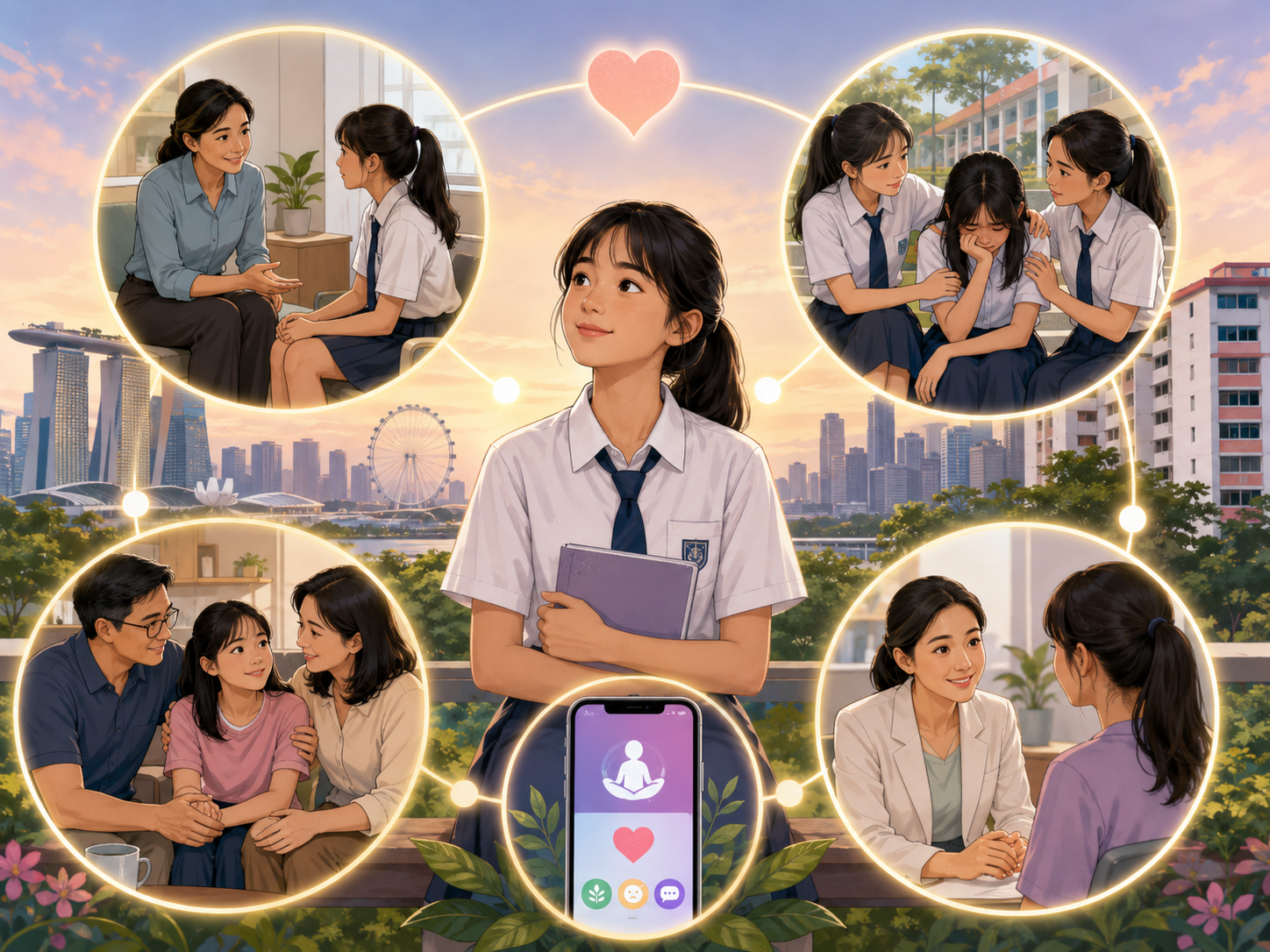
Mental health among teenagers in Singapore has received growing attention as students navigate academic demands, competitive environments, online pressures, and changing social relationships. Rather than viewing mental health only as a medical issue, Singapore has developed a broader model that involves education, healthcare, community agencies, families, and digital support. This multi-layered approach aims to help young people before distress becomes a crisis.
Schools are one of the most important spaces for mental health promotion. Singapore’s Ministry of Education has placed greater emphasis on student well-being, including social-emotional learning, counselling support, and peer support networks. Through school programmes, students learn how to manage stress, build healthy friendships, recognise emotions, and seek help when needed. These lessons are valuable because many teenagers may not immediately understand that anxiety, burnout, sadness, or emotional numbness can be signs of deeper mental strain.
School counsellors provide another layer of help. They support students dealing with stress, family conflict, grief, bullying, self-esteem issues, or emotional difficulties. Teachers are also trained to identify students who may be struggling. A teacher who notices changes in behaviour, mood, performance, or attendance can guide a student toward support before the situation becomes more serious.
Singapore’s youth mental health framework also includes specialised intervention. REACH, or Response, Early Intervention and Assessment in Community Mental Health, works with schools and community partners to support children and teenagers with emotional, behavioural, or mental health concerns. Its strength lies in early assessment and collaboration. Instead of waiting for a young person to enter hospital-based care, professionals can work with schools and families to provide support closer to the student’s daily environment.
Another significant service is CHAT, which has provided mental health checks and support for young people. Youth-friendly services are essential because teenagers may avoid traditional clinical settings due to fear, shame, or uncertainty. A service designed around young people’s needs can make help-seeking feel less frightening.
At the national level, Singapore’s mental health policies have increasingly highlighted early intervention, community-based support, and reduced stigma. The National Mental Health and Well-being Strategy, announced before August 2025, reflects this direction by promoting mental well-being across society and improving access to care. For adolescents, this means that support should not only come from hospitals but also from schools, primary care, community organisations, and online platforms.
Digital mental health tools have become especially relevant. Teenagers are familiar with online spaces, so resources such as mindline.sg can help them explore coping strategies, understand symptoms, and locate support. These tools are not a replacement for professional treatment, but they can reduce the barrier to taking the first step.
Community awareness also matters. Campaigns like Beyond the Label help challenge the belief that people with mental health conditions are dangerous, weak, or unreliable. For teenagers, stigma can be deeply harmful because peer acceptance is often very important. Reducing stigma makes it easier for students to speak openly and support one another.
Singapore’s approach still faces challenges. Some teenagers may not want adults to know they are struggling. Others may worry about confidentiality, school records, or disappointing their parents. Waiting times and service demand can also be concerns. To improve youth mental health further, Singapore needs continued investment in counsellors, public education, affordable services, and family support. The strongest system is one where teenagers know that asking for help is normal, safe, and respected.
Author

Clara@gmail.com
Related Posts

Princess Cruises and Singapore’s Three-Year Partnership: A Blueprint for Cruise Industry Growth in Asia
- 0
- 477 words
A Landmark Partnership for Asian Cruising In May 2026, the Singapore Tourism Board and Princess Cruises announced a three-year partnership that represents...
Read out all
Science Centre Singapore and KidsSTOP: Building Scientific Curiosity Through Play-Based Learning
- 0
- 408 words
A Legacy of Interactive Science Education Since its establishment, Science Centre Singapore has stood as the nation’s premier institution for hands-on scientific...
Read out all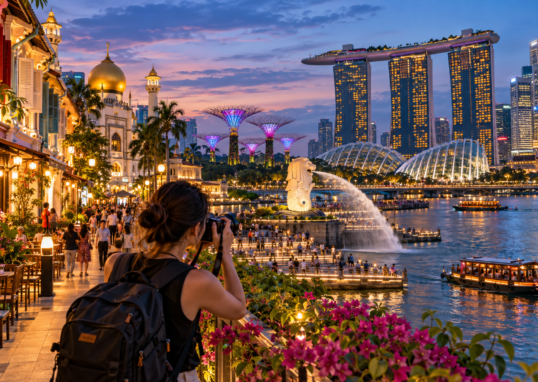
Gardens by the Bay Photography in 2026: A Complete Visual Guide for Travellers
- 0
- 382 words
Gardens by the Bay has welcomed over 87 million visitors since its opening, cementing its status as Singapore’s premier horticultural and photographic...
Read out all
The Architectural Time Machine: Tracing Singapore’s Evolution Through Its Most Iconic Modern Structures
- 0
- 499 words
To walk through Singapore is to flip through the pages of a futuristic novel that actually came true. The city’s modern architecture...
Read out all
Eating Like a King on a Pauper’s Budget: The Backpacker’s Guide to Singapore Hawker Centres
- 0
- 608 words
The reputation of Singapore as one of the most expensive cities in the world often deters budget travelers, but there is a...
Read out all
Singapore Remote Work Visa Options 2026: Tech.Pass, EntrePass, and Work Holiday Pass Explained
- 0
- 494 words
Many digital nomads assume Singapore offers a dedicated digital nomad visa. It doesn’t. Instead, the city-state uses a suite of targeted passes...
Read out all