- 0
- 486 words
The New Face of Singapore Tourism
Singapore’s tourism appeal has long been connected to efficiency, safety, and innovation. In 2026, however, a growing number of visitors are looking at the city through a different lens: sustainability. The question is no longer only what to see, but how to travel with less waste, lower carbon impact, and more respect for local ecosystems.
Singapore’s official Green Plan 2030 supports this wider shift by focusing on sustainability, cleaner energy, greener transport, and a “City in Nature” vision. This national direction gives travelers a useful framework for understanding why so many attractions now combine leisure with environmental education.
Gardens by the Bay: A Green Landmark With Global Appeal
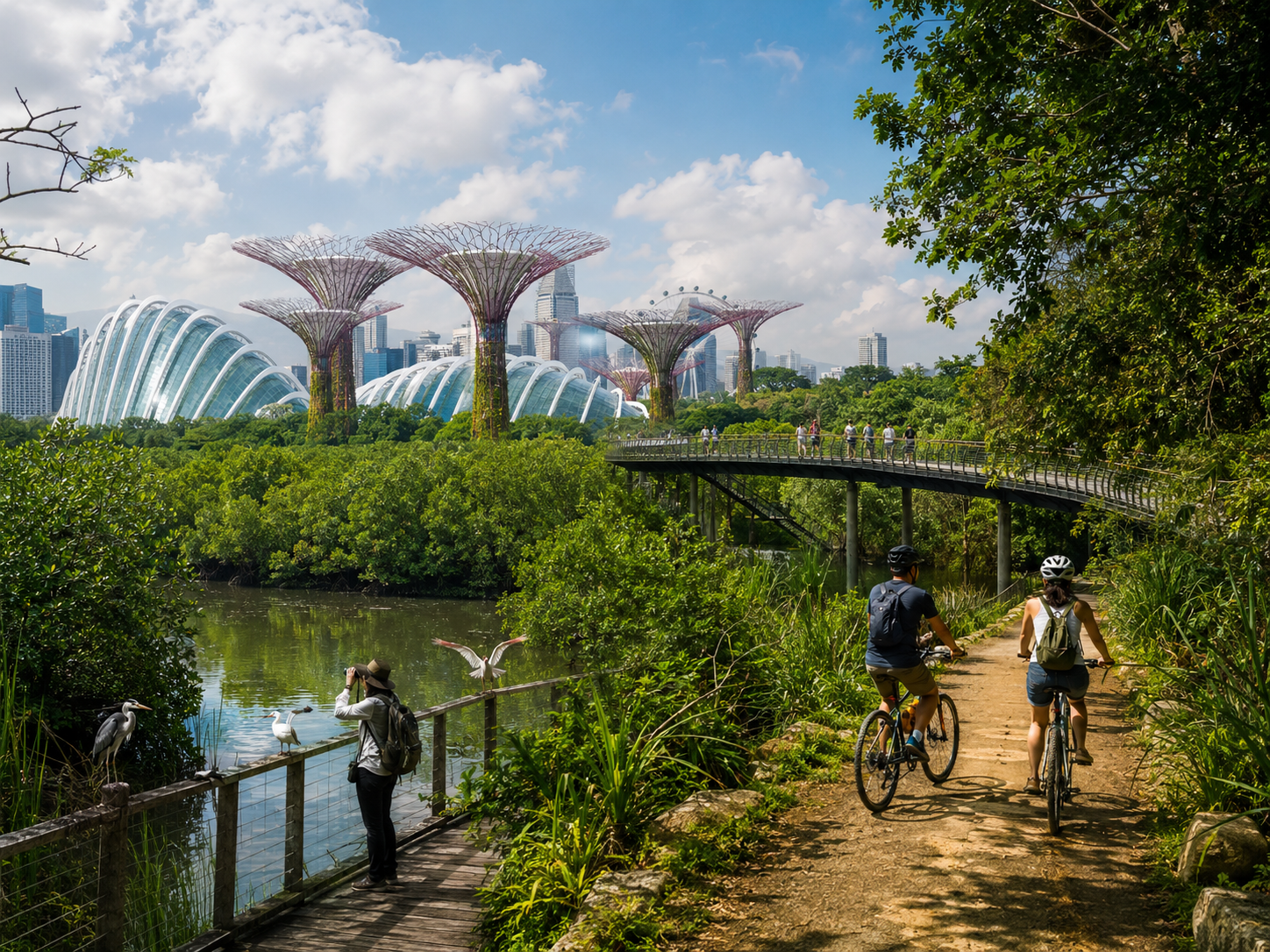
Gardens by the Bay is one of the clearest symbols of Singapore’s ambition to blend tourism and sustainability. The famous Supertree Grove attracts millions of cameras, but the deeper story lies in how the site presents conservation, plant science, and urban greening to the public.
A Smarter Way to Visit
Travelers can make the experience more meaningful by visiting during cooler hours, using public transport, and spending time in the outdoor gardens as well as the ticketed conservatories. This slower approach reduces the “rush and photograph” style of tourism and turns the visit into a fuller learning experience.
Sungei Buloh Wetland Reserve: Where Wildlife Shapes the Itinerary
For tourists who want something quieter than Marina Bay, Sungei Buloh Wetland Reserve offers a powerful alternative. Its mangroves and mudflats support birds, reptiles, fish, and small coastal species. It is especially appealing for photographers, families, and travelers interested in biodiversity.
The reserve also shows why conservation areas need careful visitor behavior. Loud noise, feeding animals, and leaving rubbish can damage the very experience people come to enjoy. Responsible travel here means keeping distance from wildlife and treating the boardwalks as observation points, not playgrounds.
Pulau Ubin: A Case Study in Slow Travel
Pulau Ubin remains one of Singapore’s most distinctive nature destinations. Its cycling routes, forest paths, and coastal wetlands provide a sense of rural calm that contrasts sharply with the city skyline.
Why It Matters in 2026
The island reflects a real tourism trend: travelers want authentic, low-impact experiences. Pulau Ubin does not need heavy development to be valuable. Its appeal comes from simplicity, local character, and ecological diversity. Visitors can support this by choosing licensed services, avoiding litter, and respecting restricted areas.
Rail Corridor: Turning Heritage Into a Green Route
The Rail Corridor is another strong example of sustainable urban planning. Once connected to railway history, it now functions as a long green passage for walking, jogging, and cycling. It helps visitors move through Singapore in a way that is slower but more connected to neighborhoods and landscapes.
For tourists, this means sustainability can be built into the day without feeling restrictive. A morning walk, a public transport connection, and a stop at a local café can become a low-impact itinerary.
Author

Clara@gmail.com
Related Posts
Princess Cruises and Singapore’s Three-Year Partnership: A Blueprint for Cruise Industry Growth in Asia
- 0
- 477 words
A Landmark Partnership for Asian Cruising In May 2026, the Singapore Tourism Board and Princess Cruises announced a three-year partnership that represents...
Read out all
Science Centre Singapore and KidsSTOP: Building Scientific Curiosity Through Play-Based Learning
- 0
- 408 words
A Legacy of Interactive Science Education Since its establishment, Science Centre Singapore has stood as the nation’s premier institution for hands-on scientific...
Read out all
Gardens by the Bay Photography in 2026: A Complete Visual Guide for Travellers
- 0
- 382 words
Gardens by the Bay has welcomed over 87 million visitors since its opening, cementing its status as Singapore’s premier horticultural and photographic...
Read out all
The Architectural Time Machine: Tracing Singapore’s Evolution Through Its Most Iconic Modern Structures
- 0
- 499 words
To walk through Singapore is to flip through the pages of a futuristic novel that actually came true. The city’s modern architecture...
Read out all
Eating Like a King on a Pauper’s Budget: The Backpacker’s Guide to Singapore Hawker Centres
- 0
- 608 words
The reputation of Singapore as one of the most expensive cities in the world often deters budget travelers, but there is a...
Read out all
Singapore Remote Work Visa Options 2026: Tech.Pass, EntrePass, and Work Holiday Pass Explained
- 0
- 494 words
Many digital nomads assume Singapore offers a dedicated digital nomad visa. It doesn’t. Instead, the city-state uses a suite of targeted passes...
Read out all