- 0
- 588 words
A trip to Singapore is often built around food, shopping, architecture, and famous skyline views. Yet travelers who follow the city’s artistic network can discover a more layered destination—one shaped by colonial history, migration, Southeast Asian influences, and rapid urban transformation.
For 2026 visitors, Singapore can be approached as a connected cultural circuit. Museums provide historical context, contemporary galleries show how artists respond to current issues, and performance venues reveal traditions through music, movement, and theater.
Start with Southeast Asian Art at National Gallery Singapore
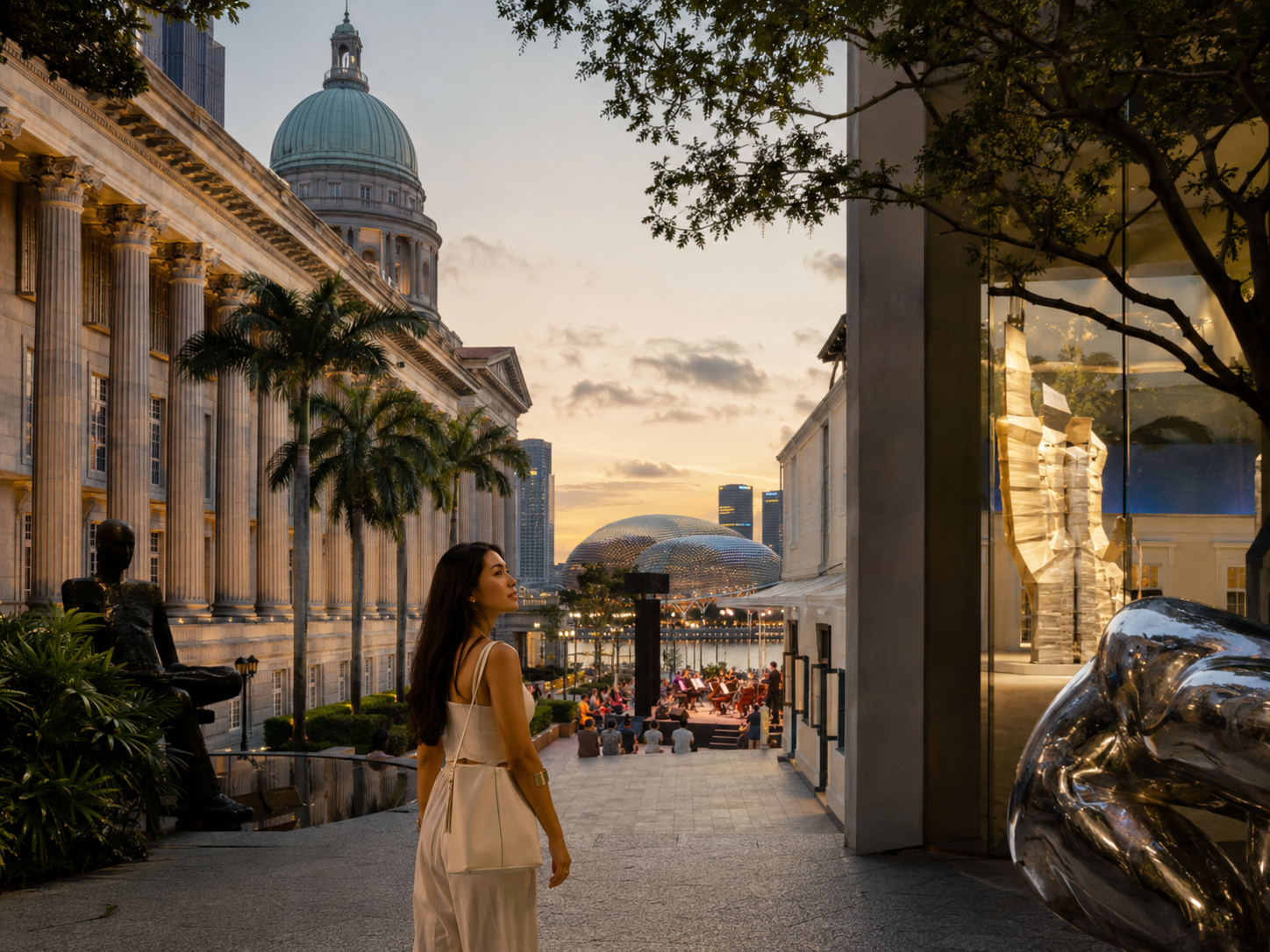
National Gallery Singapore is one of the most important starting points for understanding the city’s cultural development. Housed within the former Supreme Court and City Hall, the museum connects art with the political architecture of Singapore’s past.
Its collections and exhibitions explore artistic developments across Singapore and Southeast Asia. This regional approach is significant because many modern artists worked during periods of colonial rule, independence movements, social change, and fast economic growth.
A visitor is therefore not simply looking at paintings. The artworks can become evidence of how people imagined nationhood, modernity, rural life, urban change, and personal identity.
For updated visitor information, travelers should consult the official National Gallery Singapore website before arranging their 2026 itinerary.
Explore Singapore’s Contemporary Art Scene
From Traditional Exhibition Halls to Experimental Spaces
Contemporary art in Singapore often moves beyond conventional painting and sculpture. Installations, video, sound, performance, and digital technology have become important parts of the city’s creative environment.
Singapore Art Museum plays a major role in this field. Its contemporary focus can help visitors understand how artists across Singapore and the region engage with subjects such as environmental pressure, social change, memory, globalization, and technology.
The museum experience at Tanjong Pagar Distripark is especially interesting because the surrounding industrial character creates a contrast with Singapore’s image of carefully planned urban perfection.
Visit Galleries for a Different Perspective
Museums are only one part of the art ecosystem. Commercial and independent galleries can provide a closer look at artists currently producing and exhibiting work.
Gillman Barracks has been one of Singapore’s most recognizable art clusters. Set within former military buildings, it offers a quieter environment than the city’s busiest tourist districts.
The value of visiting a gallery district is unpredictability. A traveler may encounter an established Southeast Asian artist, a new experimental practice, or a tightly focused exhibition that would be difficult to find in a major general-interest museum.
Opening days and exhibition calendars can vary, so planning is essential.
Add Music, Theater, and Dance to the Journey
Singapore’s cultural landscape becomes more complete when live performance is included. Esplanade – Theatres on the Bay is a key venue for this experience.
Its stages can host international productions alongside Singaporean and regional performers. Depending on the program, visitors may encounter contemporary dance, theater, orchestral music, popular concerts, or performances connected with Chinese, Malay, Indian, and other cultural traditions.
This diversity reflects Singapore itself: a modern city where multiple communities and artistic languages coexist.
Why Singapore’s Art Scene Matters in 2026
The most interesting aspect of Singapore’s cultural growth is the relationship between old spaces and new ideas. Government buildings have become museums. Military compounds have become gallery districts. Industrial environments have been adapted for contemporary art.
For 2026 travelers, this transformation offers a compelling reason to explore beyond the usual attractions. Singapore’s art scene does not exist separately from the city’s history. It reveals how the country preserves selected parts of its past while continually redesigning its future.
Author

Clara@gmail.com
Related Posts
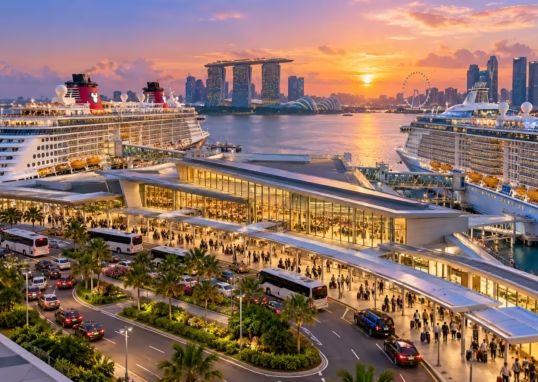
Princess Cruises and Singapore’s Three-Year Partnership: A Blueprint for Cruise Industry Growth in Asia
- 0
- 477 words
A Landmark Partnership for Asian Cruising In May 2026, the Singapore Tourism Board and Princess Cruises announced a three-year partnership that represents...
Read out all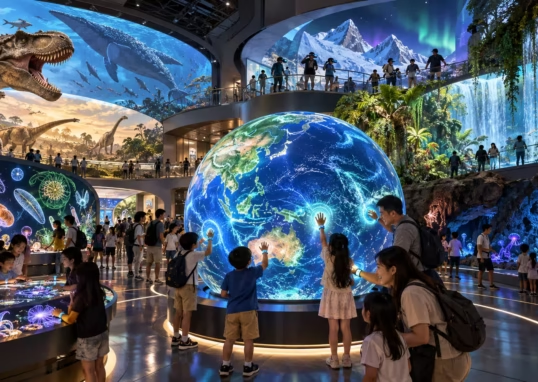
Science Centre Singapore and KidsSTOP: Building Scientific Curiosity Through Play-Based Learning
- 0
- 408 words
A Legacy of Interactive Science Education Since its establishment, Science Centre Singapore has stood as the nation’s premier institution for hands-on scientific...
Read out all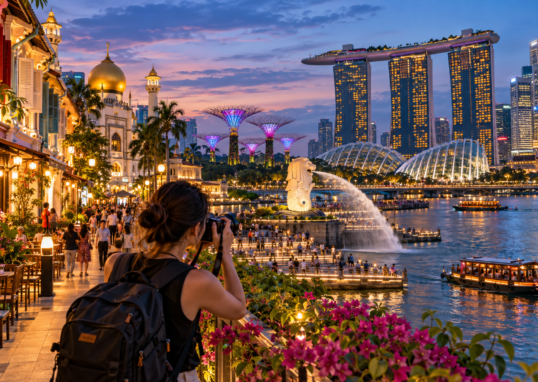
Gardens by the Bay Photography in 2026: A Complete Visual Guide for Travellers
- 0
- 382 words
Gardens by the Bay has welcomed over 87 million visitors since its opening, cementing its status as Singapore’s premier horticultural and photographic...
Read out all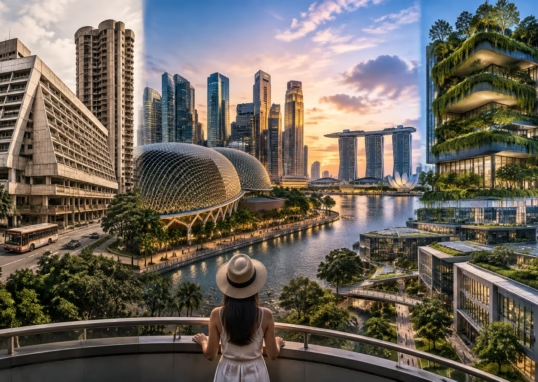
The Architectural Time Machine: Tracing Singapore’s Evolution Through Its Most Iconic Modern Structures
- 0
- 499 words
To walk through Singapore is to flip through the pages of a futuristic novel that actually came true. The city’s modern architecture...
Read out all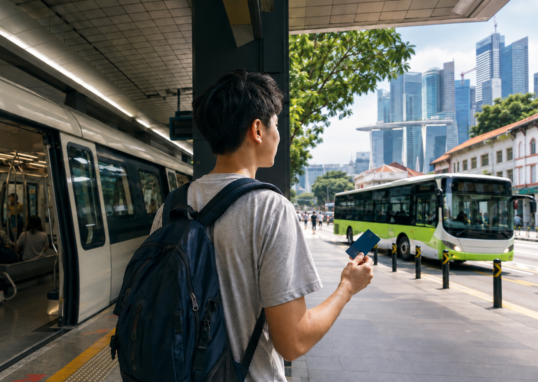
Eating Like a King on a Pauper’s Budget: The Backpacker’s Guide to Singapore Hawker Centres
- 0
- 608 words
The reputation of Singapore as one of the most expensive cities in the world often deters budget travelers, but there is a...
Read out all
Singapore Remote Work Visa Options 2026: Tech.Pass, EntrePass, and Work Holiday Pass Explained
- 0
- 494 words
Many digital nomads assume Singapore offers a dedicated digital nomad visa. It doesn’t. Instead, the city-state uses a suite of targeted passes...
Read out all