- 0
- 628 words
Cultural Identity Is Becoming a Commercial Advantage
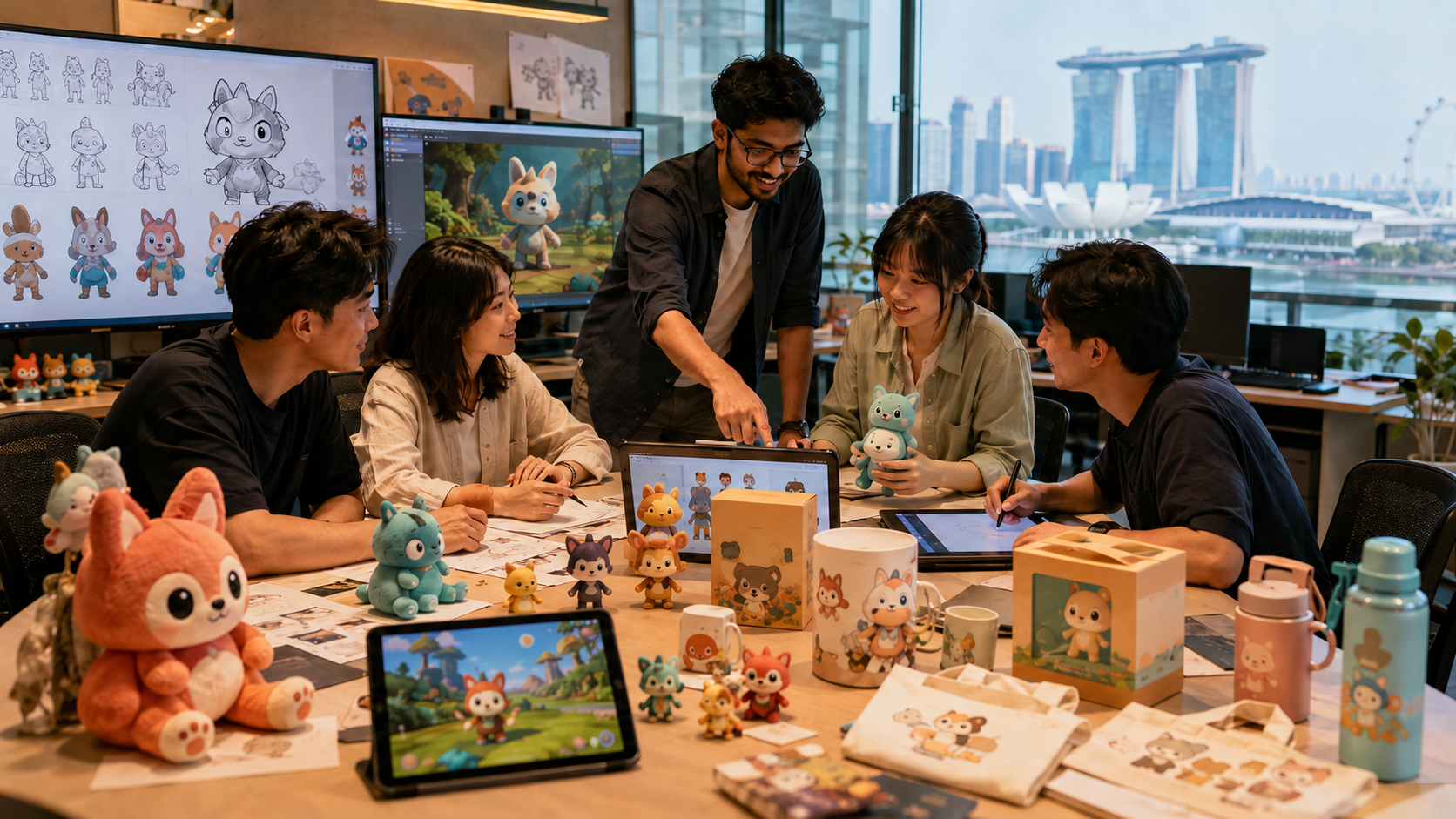
Global animation audiences are increasingly exposed to stories originating outside the traditional production centers of Hollywood and Japan. Streaming services and digital platforms have made viewers more comfortable with unfamiliar settings, traditions, and visual languages.
This shift creates an opportunity for Singapore. The country’s multicultural society brings together Chinese, Malay, Indian, Eurasian, and international influences within a compact urban environment. These overlapping identities provide writers and artists with a rich source of characters, conflicts, architecture, food traditions, languages, and family experiences.
The challenge is not a shortage of cultural material. It is determining how to present that material in a way that feels authentic without becoming inaccessible to international viewers.
Universal Themes Can Carry Local Details
Successful cultural animation usually connects specific settings with universal emotional experiences. A story may feature a Singaporean neighborhood, hawker center, traditional celebration, or regional legend, but its central conflict should remain immediately understandable.
Friendship, ambition, sibling rivalry, belonging, environmental responsibility, and intergenerational relationships can connect audiences across markets. Cultural details then make the production distinctive rather than limiting its appeal.
Singaporean studios can also avoid the common mistake of treating Southeast Asia as one uniform culture. Each country, community, and historical tradition has its own identity. Meaningful consultation with cultural experts and local communities can strengthen both accuracy and storytelling quality.
Established Studios Show Different Export Strategies
Singapore studios have already demonstrated several approaches to international distribution. One Animation’s Oddbods relies heavily on visual comedy, allowing it to travel with limited language barriers.
Omens Studios has produced children’s properties such as Leo the Wildlife Ranger, using animals, exploration, and educational themes that can appeal to families in many markets. Tiny Island Productions has also built internationally oriented animated properties while working across television, licensing, and co-production models.
These examples show that Singaporean content does not need to remove its Asian identity. Instead, producers must decide which parts of a concept should remain culturally specific and which parts should be designed for broad accessibility.
Design Is Part of Singapore’s Creative Competitiveness
Animation is closely connected to character design, branding, user experience, architecture, fashion, and digital media. Singapore’s broader design ecosystem can therefore contribute to animation development.
The DesignSingapore Council promotes design as an economic and cultural capability. Its work reflects a national environment in which creative problem-solving is increasingly linked with commercial innovation.
For animation producers, strong design is especially important during the early stages of intellectual property development. A memorable silhouette, color palette, environment, or character expression can improve recognition across television screens, mobile devices, toys, books, and social-media content.
Digital Platforms Create New Entry Points
A studio no longer needs to begin with a full television season. It can test characters through short videos, web comics, social-media clips, music, mobile games, or educational content.
Audience data can reveal which characters attract attention, which regions generate engagement, and which stories are most likely to support longer productions. This approach reduces risk and provides evidence when studios approach broadcasters, investors, or licensing partners.
However, creators should not allow platform algorithms to control every storytelling decision. Short-term engagement metrics can encourage repetitive content, while valuable intellectual property requires consistency, emotional depth, and a recognizable creative identity.
Authenticity Can Differentiate Singapore Globally
Singapore’s greatest creative opportunity may come from combining its international business capabilities with stories that could not have originated anywhere else.
Instead of imitating established Western or Japanese franchises, studios can develop visual worlds influenced by Southeast Asian cities, tropical environments, folklore, migration, and multilingual family life.
When local specificity is supported by professional production and universal emotional storytelling, cultural identity becomes a market advantage. This strategy can help Singaporean animation stand out within an increasingly crowded global content economy.
Author

Clara@gmail.com
Related Posts
Inside Singapore’s MICE Powerhouse: Event Organizers Driving a $3.5 Billion Industry
- 0
- 486 words
Singapore has cemented its position as Asia’s undisputed MICE (Meetings, Incentives, Conferences, and Exhibitions) capital. In 2026, the sector is on track...
Read out all
Beyond Entertainment – The Rise of Hyper-Niche Educational Podcasts in Singapore’s Lifelong Learning Culture
- 0
- 312 words
Audio as a Tool for National Upskilling While Western markets often top the charts with true crime and comedy, Singapore’s podcast ecosystem...
Read out all
Inside Singapore’s 2026 Creative Industry Surge: Designers, Artists, and Digital Creators Drive Growth
- 0
- 388 words
The creative industry in Singapore is experiencing one of its strongest growth phases. Data from the Ministry of Culture, Community and Youth’s...
Read out all
AI on the Menu: How Predictive Analytics and Smart Kitchens Are Eliminating Food Waste in Singapore’s Restaurant Industry
- 0
- 465 words
For an industry built on razor-thin margins and perishable inventory, artificial intelligence is proving to be the ultimate sous-chef. In 2026, Singapore’s...
Read out all
How OTT Platforms Are Redefining Entertainment Consumption Patterns Across Singapore’s Digital Society
- 0
- 439 words
The entertainment industry in Singapore is undergoing a major transformation as over-the-top (OTT) streaming platforms become increasingly integrated into daily life. Unlike...
Read out all
Inside Singapore’s 2026 Theatre Scene: Where Global Productions, Asian Stories and New Audiences Meet
- 0
- 579 words
Singapore as a Crossroads for Live Performance Theatre in Singapore in 2026 reflects the city itself: compact in geography, international in outlook...
Read out all