- 0
- 703 words
The language of Singapore’s sustainable fashion sector tends toward the aspirational: circular economy, conscious consumption, responsible retail. Less frequently discussed is the operational reality of running a social enterprise in a market where the cost of doing good often exceeds what customers are willing to pay.
The Accessibility Problem
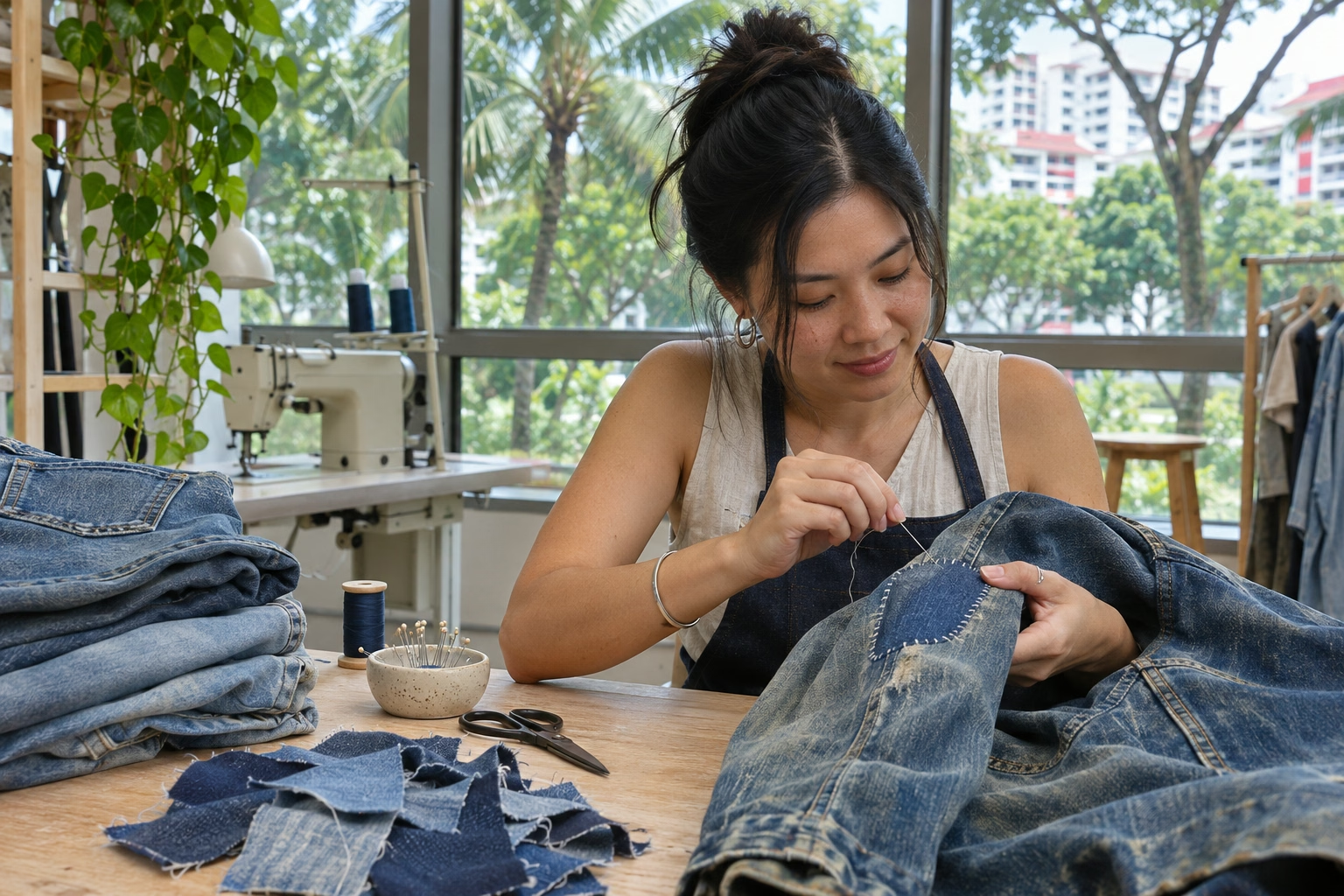
The Fashion Pulpit, a Singapore-based upcycling and clothing-swap platform, has built a loyal community around extending garment lifecycles through swaps and repairs. A 2026 case study from NUS Business School identified a structural tension in its model: while The Fashion Pulpit offers a more affordable alternative to buying new fast fashion, its membership and event fees can unintentionally exclude low-income individuals from the very circular economy it seeks to promote . The observation is not a criticism of the enterprise but a diagnosis of a sector-wide challenge. Circular fashion, when priced to sustain operations, risks becoming a middle-class pursuit.
This tension played out differently at Nyana Nyana Eco, a social enterprise founded in 2019 that designs and retails apparel using certified eco-fabrics and pre-consumer textile waste. The company has integrated inclusive employment into its core operations and works with women-owned brands and rural artisans across the region . Its retail store at Claymore Connect, operating since 2024, showcases local and regional designers alongside its own label. By embedding social procurement into its supply chain rather than treating it as a separate philanthropic initiative, Nyana Nyana demonstrates one pathway toward aligning mission and margin.
The Quality Question
A more uncomfortable challenge emerged from Cloop’s experience with donated fast-fashion garments. The enterprise’s co-founder told media in May 2026 that most donated clothing from Shein and similar brands cannot be resold due to poor quality and is instead routed for recycling . This creates a perverse dynamic: circular enterprises become de facto waste handlers for the linear brands whose business models generate the waste in the first place.
Cloop’s decision to decline Shein’s offer of unsold samples was framed as a refusal to legitimize disposable fashion. But the underlying operational reality is that circular businesses depend on a steady inflow of resellable, high-quality garments. When the market is flooded with low-cost, low-durability items, the resale value of all clothing declines. The social enterprises most committed to circularity are therefore harmed most directly by the success of ultra-fast fashion.
The Measurement Gap
The NUS case study also highlighted a governance dimension that receives less public attention: the absence of robust impact measurement frameworks among circular fashion social enterprises. The Fashion Pulpit, for instance, operates without a formal ESG board, relying instead on founder leadership and community accountability . While this values-driven governance model allows for flexibility and responsiveness, it complicates efforts to quantify social return on investment or to attract institutional capital that demands metrics.
The recommendation to adopt Social Return on Investment modeling is pragmatic rather than transformative . But it points to a broader maturation challenge. As Singapore’s sustainable fashion sector grows, the enterprises that survive will need to demonstrate impact with the same rigor they apply to their supply chains. The alternative—remaining small, mission-driven, and perpetually undercapitalized—is a viable choice for founders but not a pathway to systemic change.
The Retail Experiment
Government-backed initiatives are beginning to address the visibility gap. The IMPACT Retail programme’s curated showcase at Design Orchard includes social enterprises and independent labels alongside more commercially established brands, giving them access to a high-traffic retail environment they could not afford independently . Nyana Nyana Eco’s participation in such platforms, combined with its B2B work producing sustainable uniforms for corporate clients like Singtel, suggests that diversification across retail, wholesale, and corporate channels may be the most resilient model for social enterprises in this space .
The paradox of social enterprise fashion in Singapore is that the businesses most committed to inclusivity and circularity are often the least equipped to scale. Their strengths—community intimacy, founder passion, supply chain transparency—are difficult to replicate. Their weaknesses—thin margins, limited capital, dependence on volunteer labor—are structural. The 2026 landscape suggests that the sector is producing admirable experiments but not yet a replicable formula. Whether that formula emerges from policy support, consumer shifts, or simply the attrition of the least viable models remains an open question.
Author

Clara@gmail.com
Related Posts
The 132-Brand Question—What Three Years of Mall Data Reveal About Chinese Fashion’s Singapore Footprint
- 0
- 651 words
Counting Tenants, Reading Signals: The Retail Geography of Chinese Brand Expansion in Singapore The most concrete way to understand the Chinese fashion...
Read out all
231,000 Tonnes, 3% Recycled: The Hard Numbers Reshaping Singapore’s Reworked Fashion Industry
- 0
- 499 words
The Gap Between Discard and Recovery Singapore’s reworked fashion scene is often framed through individual brand stories — a sold-out sari launch,...
Read out all
Why Sari Upcycling Is Becoming Singapore’s Most Culturally Specific Circular Fashion Story
- 0
- 464 words
The Cultural Logic of Reuse Upcycled fashion in Singapore is often framed through the language of waste reduction: diverting textiles from incineration,...
Read out all
How Singapore’s Homegrown Fashion Labels Rebuilt Their Business Around Livestreaming
- 0
- 514 words
From Side Channel to Core Business Model For a growing cohort of Singaporean fashion brands, livestreaming is no longer a supplementary marketing...
Read out all
Localization as Strategy: How Singapore Fashion Brands Speak Asia’s Many Languages
- 0
- 604 words
The End of One-Size-Fits-All Expansion Singapore fashion brands expanding across Asia are discovering that regional success requires more than translated marketing. Love,...
Read out all
The Comfort Revolution: How Singaporean Footwear Brands Are Redefining Support, Health, and Everyday Wear
- 0
- 658 words
From Pain Point to Product Innovation: The Sunnystep Story Sometimes the most disruptive innovations emerge from the most personal struggles. Mao Ting,...
Read out all