- 0
- 362 words
The Counter-Trend to Fine Dining
While Michelin-trained chefs attract headlines, a parallel strand of Singapore’s private dining economy is built on a different proposition: cultural preservation through hospitality. These are tables where the chef is not a restaurant veteran but a home cook whose expertise comes from family lineage, marriage, or decades of practice.
Linda’s Table exemplifies the model. Linda, a Cantonese cook, developed her Peranakan repertoire after marrying into a Peranakan family. Her meals are served communally in her home, with dishes such as kueh pie tee, ngoh hiang, fish maw soup, beef rendang, sambal prawns, and her much-requested pork lard rice. Pricing starts from $150 per person . The menu shifts with market availability rather than a fixed tasting structure.
Butterfly Table, led by MasterChef Singapore Season 2 contestant Sophia Yeow, focuses on Peranakan tok panjang feasts—long-table communal meals—starting from $218 per person . **Beok** offers a rare Korean private home dining experience, with chefs Aesil and Jackson (formerly of Marina Bay Sands and Korean establishments) serving eight-course seasonal menus featuring banchan, stews, and grilled meats from $128 per person .
Why Heritage Sells
The commercial logic is distinct from chef-driven concepts. Heritage private dining sells nostalgia, cultural authenticity, and the illusion—carefully constructed—of being welcomed into a family home. The food is not plated with tweezers. It is served in generous portions, often family-style, with leftovers offered for takeaway. The value proposition is emotional rather than technical.
This strand also carries lower operational risk. A Peranakan home cook does not require a culinary school pedigree or Michelin pedigree to command $150 per head. The credibility comes from the recipes themselves and the story of their transmission.
The Regulatory and Cultural Context
Home-based F&B operators are permitted to run small-scale dining under the HBB scheme, provided they do not alter the residential character of the property . For heritage cooks, this framework is enabling: it allows them to monetise cultural knowledge without the capital expenditure of a commercial kitchen.
The Singapore Food Agency does not license home-based food businesses, citing their lower food-safety risk profile compared to restaurants, though operators remain subject to the Sale of Food Act and Environmental Public Health Act .
Author

Clara@gmail.com
Related Posts
Veganuary 2026 Shattered Records in Singapore—What Happens After January Matters More
- 0
- 334 words
A Record-Breaking January Singapore’s Veganuary 2026 participation reached over 8,200 registered participants, a 41% increase over 2025. More than 140 food and...
Read out all
Singapore’s New Supper Clubs 2026: Late-Night Dining Is the Nightlife Now
- 0
- 416 words
For decades, the Singapore supper was a pit stop — something you ate after the actual night out was over. In 2026,...
Read out all
Kappo Suguru Brings Joo Chiat Shophouse Intimacy to Singapore’s Seasonal Omakase Map
- 0
- 428 words
Kappo Culture in a Joo Chiat Shophouse Kappo Suguru has settled into a cosy shophouse at 192 Joo Chiat Road, bringing the...
Read out all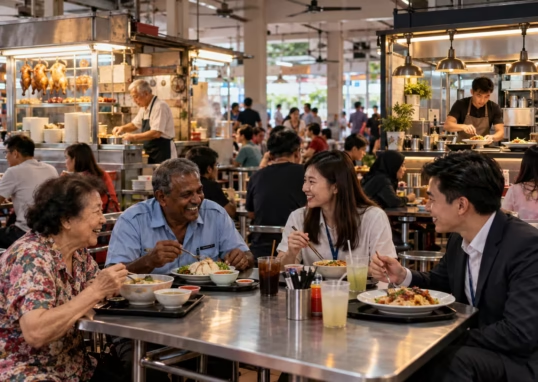
Heritage Under Pressure: Can Neo-Hawker Cuisine Save Singapore’s UNESCO Food Culture?
- 0
- 407 words
The Succession Crisis Nobody Talks About Singapore’s hawker culture is a UNESCO-listed intangible cultural heritage, but its future is far from secure....
Read out all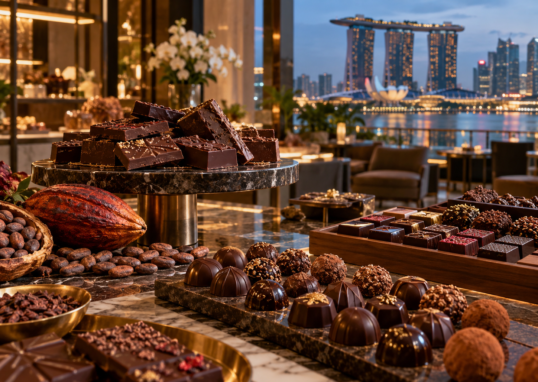
Inside Singapore’s Bean-to-Bar Revolution: The Artisans Redefining Chocolate Craft
- 0
- 535 words
From Supermarket Shelves to Craft Workshops Singapore’s artisanal chocolate movement has evolved from a niche curiosity into a formidable force within the...
Read out all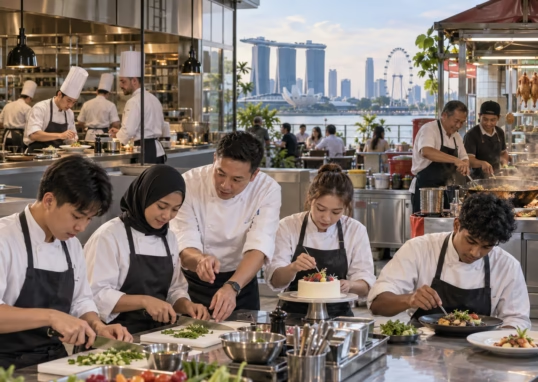
At-Sunrice GlobalChef Academy and the “East-Meets-West” Chef Training Model
- 0
- 437 words
At-Sunrice GlobalChef Academy occupies a distinct position in Singapore’s culinary education market: it is neither a government technical institute nor a traditional...
Read out all