- 0
- 474 words
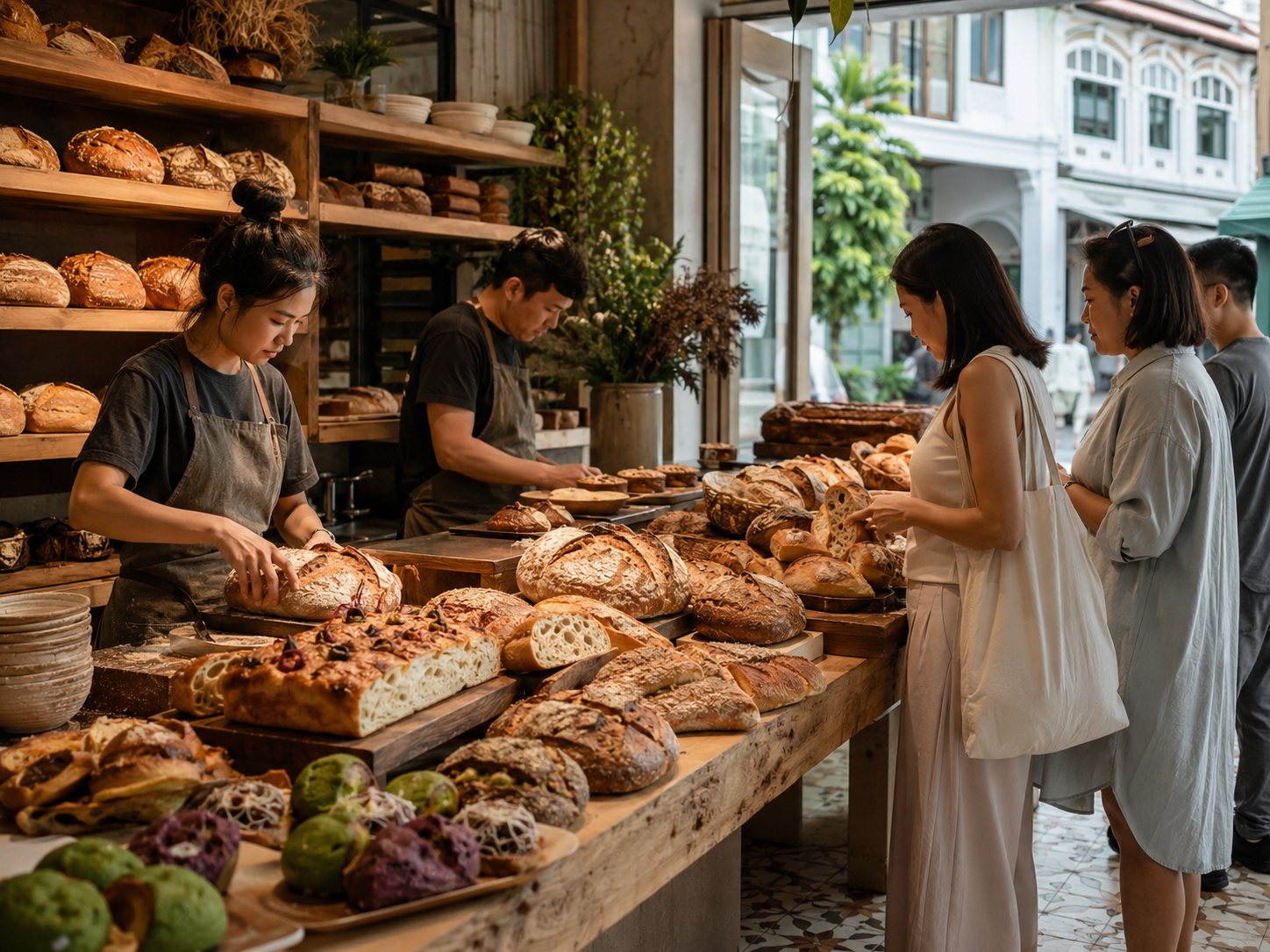
Singapore’s premium pastry sector in 2026 is not simply copying Paris. Local chefs are injecting heritage flavours into classic French techniques, producing visually stunning creations that travel well on social media. This fusion approach has turned the croissant from a breakfast item into a cultural canvas.
Heritage Flavours Meet French Techniques
Flavours like orh nee (yam paste), gula melaka (palm sugar), kaya, and salted egg yolk now appear inside croissants, danishes, and brioche. These ingredients carry deep emotional resonance for local customers while intriguing tourists. Bakeries such as Keong Saik Bakery and Tiong Bahru Bakery have proven that Asian flavours can work in laminated dough without overwhelming its buttery layers. The key is balance: lower sugar levels and precise fillings.
From Hawker Centre to Bakery Counter
Many of these flavours have long existed in Singapore’s hawker centres and kopitiams. What is new is their elevation through French pastry technique. A pandan croissant, for example, uses pandan juice and coconut milk in the dough, then adds a gula melaka syrup glaze. The result is familiar yet unexpected, bridging everyday local taste with premium European craft.
Visual Appeal and Social Media Virality
The premium pastry market in Singapore is driven by Instagram and TikTok. Consumers want pastries that look as good as they taste. Bakers respond with vibrant colours, dramatic cross-sections, and limited-edition drops. A salted egg yolk brioche with molten centre becomes shareable content. This visual demand pushes pastry chefs to innovate constantly.
Pricing Strategy and Limited Drops
Premium pastries in Singapore now commonly cost between SGD 6 and SGD 12 per piece. While this seems high, customers are willing to pay because each product feels like a small event. Many bakeries use limited drops—only 50 pieces of a new flavour per day—to create urgency. This strategy also reduces waste and allows chefs to experiment without committing to large production runs.
Data and Industry Insights
A 2025 CNA Lifestyle feature on Singapore’s evolving pastry culture highlighted how local flavours have moved from novelty to menu staples, reflecting wider consumer interest in heritage-driven premium food (CNA Lifestyle Dining). The article noted that bakers are increasingly collaborating with traditional dessert shops to reinterpret classic recipes. This cultural crossover adds authenticity and depth, making the pastries more than just sweet treats.
The Role of Coffee and Café Culture
Many premium pastry shops are also coffee-focused spaces. A well-made flat white or local kopi-inspired latte complements the richness of a gula melaka croissant. This pairing encourages longer dwell time and higher average spend. In neighbourhoods like Tanjong Pagar and Everton Park, cafés use pastry as a differentiator, changing menus seasonally to reflect holidays or local festivals.
As more chefs enter the premium pastry space, the competition is no longer about who can copy Paris best, but who can tell the most compelling Singaporean story through butter and flour.
Author

Clara@gmail.com
Related Posts
Inside Singapore’s Bean-to-Bar Revolution: The Artisans Redefining Chocolate Craft
- 0
- 535 words
From Supermarket Shelves to Craft Workshops Singapore’s artisanal chocolate movement has evolved from a niche curiosity into a formidable force within the...
Read out all
At-Sunrice GlobalChef Academy and the “East-Meets-West” Chef Training Model
- 0
- 437 words
At-Sunrice GlobalChef Academy occupies a distinct position in Singapore’s culinary education market: it is neither a government technical institute nor a traditional...
Read out all
Quick Commerce Revolution: How Singapore’s Grocery Delivery Market Is Reshaping Urban Convenience
- 0
- 431 words
The Speed Economy Comes to Singapore’s Groceries Singapore’s relationship with grocery shopping is undergoing a fundamental transformation. What was once a weekly...
Read out all
Cultivated Beef Meets Frozen Formats: Singapore’s Regulatory Breakthrough Opens New Product Frontiers
- 0
- 474 words
A Regulatory First That Ripples Through the Freezer Aisle In August 2026, the Singapore Food Agency approved Aleph Farms’ cultivated thin-cut steak...
Read out all
Why Korean Convenience Store Culture and Street Food are Taking Over Singapore’s Snack Scene
- 0
- 448 words
While high-end Korean restaurants capture the attention of critics, the true penetration of Korean culture in Singapore is happening on the streets...
Read out all
The Omakase Effect: High-End Sushi Dining Transforms Singapore’s Seafood Sourcing and Luxury F&B Scene
- 0
- 359 words
The New Face of Luxury Dining Singapore’s luxury dining scene has long been dominated by European fine dining and modern Asian fusion....
Read out all