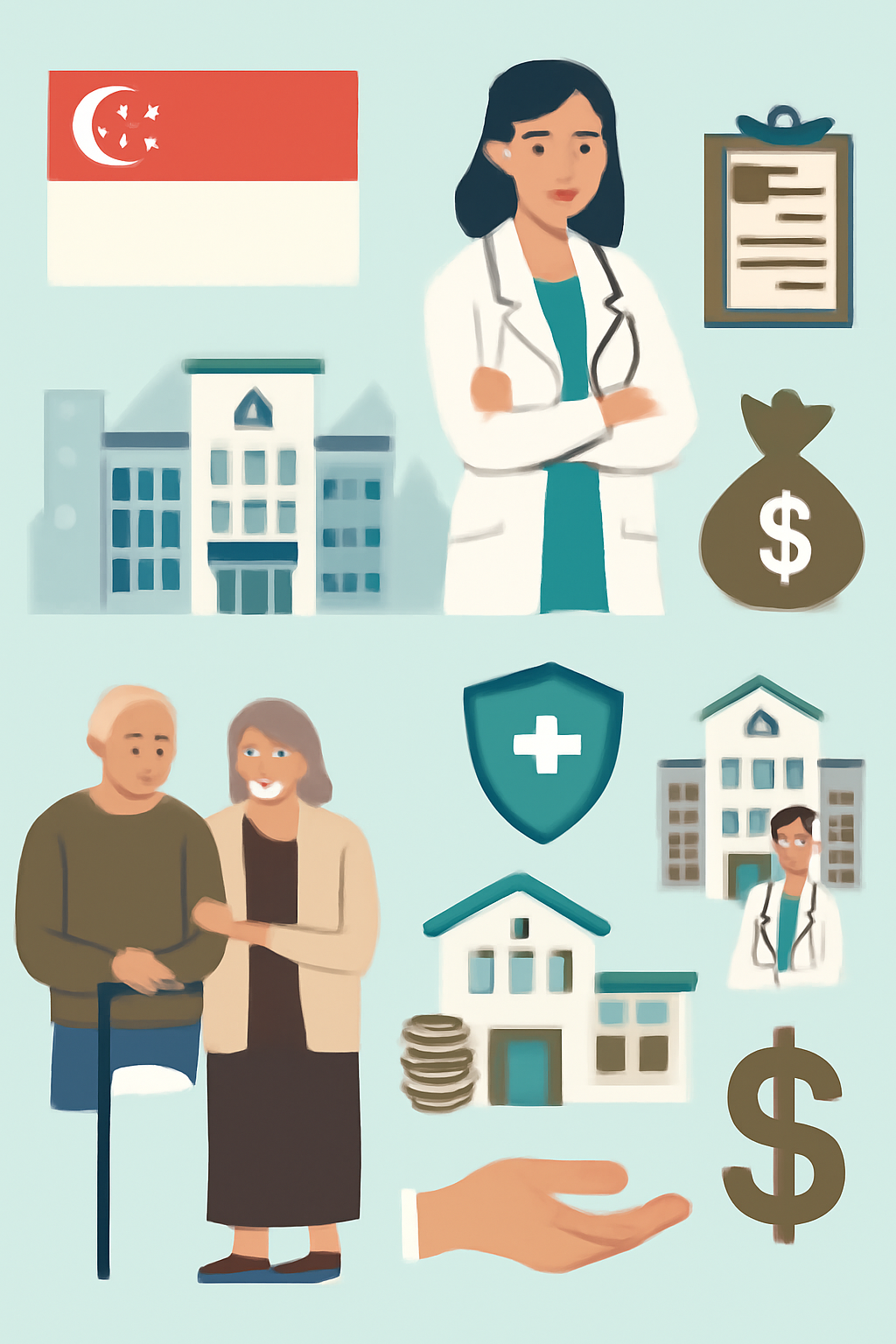
Singapore’s healthcare system is often cited as a model of excellence, combining cutting-edge medical technology with a focus on accessibility and efficiency. Central to the success of this system is the government’s strong commitment to creating a balanced approach that involves both private and public sectors while encouraging personal responsibility among citizens.
The backbone of Singapore’s healthcare framework is the “3M” system, which consists of Medisave, Medishield Life, and Medifund. Medisave is a mandatory savings account into which citizens contribute a portion of their income, allowing them to fund their own healthcare needs throughout their lives. This system places significant emphasis on self-reliance, ensuring that individuals are prepared for future medical expenses. Medishield Life, an insurance program, helps cover large medical costs, particularly for hospitalization and surgery. For those who cannot afford healthcare even after these two programs, Medifund acts as a safety net to cover additional expenses.
Another key feature of Singapore’s healthcare system is its accessibility. Public healthcare in the city-state is highly subsidized and well-equipped, providing affordable options to citizens. Public hospitals and clinics deliver high-quality services at a fraction of the cost compared to private facilities. This makes Singapore’s healthcare system accessible to a broad spectrum of society, including lower-income groups. In addition, private healthcare services provide a more personalized experience for those who can afford it, ensuring that high-quality care is available for all.
One of the core philosophies behind Singapore’s healthcare system is encouraging individuals to take responsibility for their own health costs. The government ensures that citizens are well-prepared for medical expenses through Medisave and Medishield Life, but individuals are expected to make use of their own savings and insurance before seeking government assistance. This system significantly reduces the burden on public funds and promotes a sustainable model of healthcare.
Despite these strengths, Singapore’s healthcare system faces several challenges. As the population ages, the demand for healthcare services is increasing, placing greater pressure on both public and private health sectors. The elderly require more medical attention, and the rising costs of healthcare technologies and treatments exacerbate this issue. While Medisave and Medishield Life provide financial protection, their coverage may not fully meet the needs of an aging population. Therefore, future reforms will need to consider ways to address the increasing costs of elderly care.
Another challenge is the increasing inequality between the public and private healthcare sectors. While the public system provides affordable and high-quality services, private healthcare providers often have access to more advanced technology and more personalized services. This has created a tiered healthcare system, where wealthier individuals may have access to more advanced care, potentially creating disparities in the quality of healthcare received.
Despite these challenges, Singapore continues to remain a global leader in healthcare. The government’s proactive approach to healthcare policy and the system’s emphasis on both individual responsibility and government support have created a model that many other nations look to for inspiration. Moving forward, Singapore will need to balance the increasing demands of an aging population with the need for sustainability in its healthcare system.
Author

Clara@gmail.com
Related Posts

NTU Singapore’s Microscopic Peptide Droplets Slash Colorectal Tumour Growth by 67%
- 0
- 352 words
A New Approach to an Old Problem Colorectal cancer remains one of the most challenging malignancies to treat, particularly when tumours develop...
Read out all
Plant Protein Powders and Functional RTDs Are Redefining Singapore’s Urban Supplement Culture
- 0
- 395 words
At 8 a.m. in Singapore’s Central Business District, the breakfast crowd is no longer just ordering kopi and toast. Many are grabbing...
Read out all
Mindful Aesthetics: The Integration of Holistic Mental Wellness into Singapore’s Beauty Routines
- 0
- 563 words
In the bustling metropolis of Singapore, where the pressure to perform is relentless, the beauty industry is recognizing that stress is the...
Read out all
Inside Singapore’s High-Tech Specialist Clinics: AI, Robotics, and Precision Medicine in 2026
- 0
- 353 words
The Rise of AI-Augmented Diagnostics Machine Learning in Radiology and Pathology Radiologists and pathologists in leading private clinics now work alongside AI...
Read out all
Duke-NUS’s Team-Based Learning Model: Forging Clinician-Scientists Ready for Singapore’s Future Healthcare Challenges
- 0
- 467 words
Departing from the conventional undergraduate pathway, Duke-NUS Medical School offers a graduate-entry MD programme that emphasizes scientific discovery and clinical leadership. This...
Read out all
How Singapore Is Using Genomics and Precision Medicine to Shape the Future of Asian Healthcare
- 0
- 618 words
Singapore’s biotechnology ambitions are increasingly centered on a fundamental medical question: why do patients with the same disease respond differently to the...
Read out all