
Over the years, the music scene in Singapore has experienced significant growth, transforming into a vibrant industry that now enjoys global recognition. While Singapore might be geographically small, its music talent has proven to be mighty, carving out a place for itself on the international stage. This article delves into the growth of the local music scene and how its artists are garnering attention from global audiences.
Singaporean artists have made their mark in various genres, including pop, hip-hop, electronic, and even classical music. One of the notable figures in this movement is Charlie Lim, a singer-songwriter whose eclectic style blends indie rock, pop, and soul. Charlie Lim has gained recognition in Southeast Asia and beyond, with his music featured on international platforms like BBC Radio 6 Music. His success reflects the growing appetite for diverse and unconventional music, showing how Singapore’s unique musical perspective can resonate with listeners worldwide.
The rise of electronic music in Singapore has also garnered international acclaim, with artists like Jasmine Sokko and MYRNE leading the charge. Jasmine Sokko, known for her futuristic beats and electro-pop vocals, has emerged as a prominent figure on the global electronic music scene. Her tracks have been played at major festivals like Tomorrowland, solidifying Singapore’s presence in global electronic music circles. These artists, who have built a following through social media and streaming platforms, prove that Singaporean talent can transcend local boundaries.
Singapore’s music industry also benefits from strong institutional support. The government has invested in the growth of the local arts and music scene through initiatives such as the Singapore Music Directory, which helps local musicians connect with industry professionals globally. Moreover, events like ZoukOut—one of Asia’s largest electronic music festivals—have placed Singapore at the heart of global music tourism. These events not only celebrate local talent but also attract international artists and music lovers, fostering cross-cultural exchanges and collaborations.
The local music industry’s influence has expanded through partnerships with international labels and collaborations between Singaporean artists and their global counterparts. One such example is the collaboration between JJ Lin, a popular Singaporean Mandopop artist, and American rapper Far East Movement. Their work together highlights the way that Singapore’s local stars are able to engage with international markets, blending Eastern and Western musical influences to create something fresh and exciting.
In addition to these success stories, independent music labels in Singapore have played an important role in supporting emerging talent. Labels like Umami Records and The Observatory have helped many local musicians carve out a name for themselves both locally and internationally. These smaller, independent labels provide an alternative to the mainstream music industry, allowing artists to maintain creative control while reaching global audiences.
Additionally, social media and streaming platforms such as Spotify and Apple Music have allowed Singaporean musicians to expand their reach. With global streaming platforms offering easy access to music from every corner of the globe, Singapore’s artists are able to share their music with a worldwide audience. This has been a game changer, especially for independent musicians looking to gain traction outside of traditional radio play.
Finally, Singapore’s unique cultural diversity plays a vital role in shaping its musical output. The blending of Chinese, Malay, Indian, and other cultural influences has led to the creation of a distinct sound that sets Singaporean music apart from the rest. This multicultural identity is reflected in the music of artists such as Tanya Chua and Sodagreen, whose work blends traditional musical elements with contemporary sounds to create a unique listening experience for their international fanbase.
Overall, Singapore’s local music scene continues to thrive, with its artists gaining recognition on the global stage. As more and more Singaporean musicians make their mark internationally, the nation’s music industry is poised for even greater success in the years to come.
Author

Clara@gmail.com
Related Posts
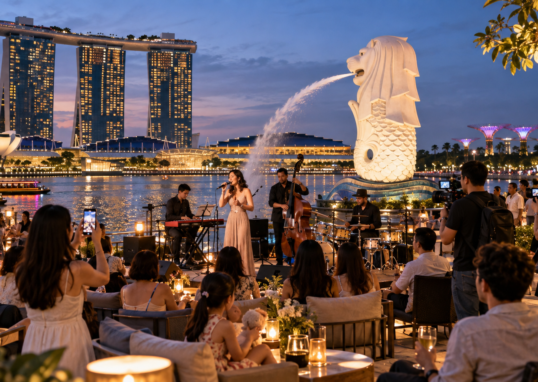
Inside Singapore’s Influencer Economy: When Entertainment Content Becomes the Most Powerful Ad Format
- 0
- 717 words
The Creator-Led Advertising Boom Singapore’s advertising industry is witnessing a quiet revolution, and its driving force isn’t a new media platform or...
Read out all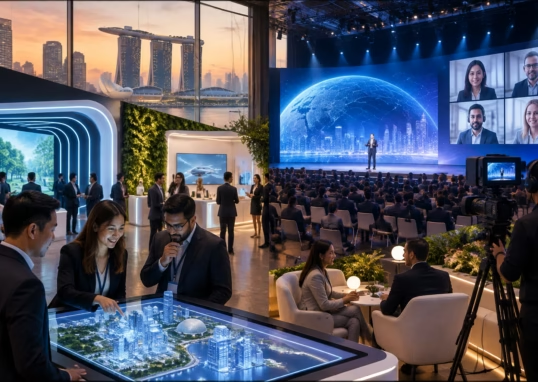
Inside Singapore’s MICE Powerhouse: Event Organizers Driving a $3.5 Billion Industry
- 0
- 486 words
Singapore has cemented its position as Asia’s undisputed MICE (Meetings, Incentives, Conferences, and Exhibitions) capital. In 2026, the sector is on track...
Read out all
Beyond Entertainment – The Rise of Hyper-Niche Educational Podcasts in Singapore’s Lifelong Learning Culture
- 0
- 312 words
Audio as a Tool for National Upskilling While Western markets often top the charts with true crime and comedy, Singapore’s podcast ecosystem...
Read out all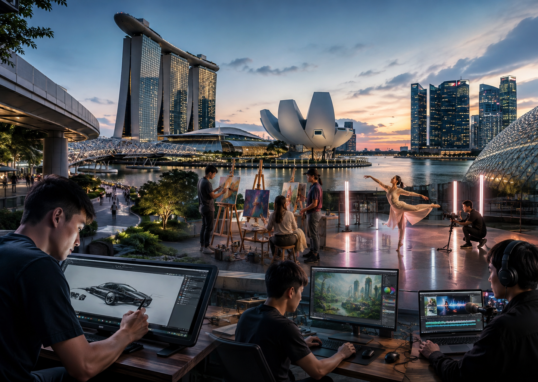
Inside Singapore’s 2026 Creative Industry Surge: Designers, Artists, and Digital Creators Drive Growth
- 0
- 388 words
The creative industry in Singapore is experiencing one of its strongest growth phases. Data from the Ministry of Culture, Community and Youth’s...
Read out all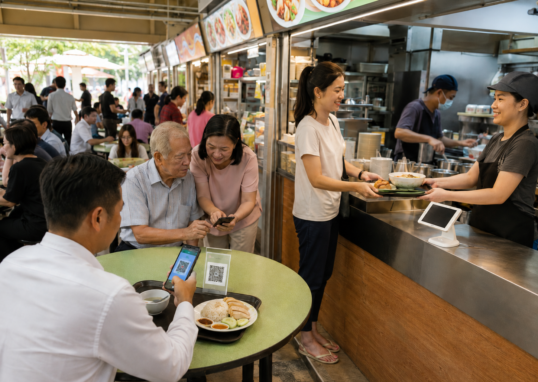
AI on the Menu: How Predictive Analytics and Smart Kitchens Are Eliminating Food Waste in Singapore’s Restaurant Industry
- 0
- 465 words
For an industry built on razor-thin margins and perishable inventory, artificial intelligence is proving to be the ultimate sous-chef. In 2026, Singapore’s...
Read out all
Why Singaporean Animation Is Using Southeast Asian Stories to Win International Audiences
- 0
- 628 words
Cultural Identity Is Becoming a Commercial Advantage Global animation audiences are increasingly exposed to stories originating outside the traditional production centers of...
Read out all