
- 0
- 353 words
The Rise of AI-Augmented Diagnostics
Machine Learning in Radiology and Pathology
Radiologists and pathologists in leading private clinics now work alongside AI algorithms trained on millions of anonymised images. In breast imaging, AI-assisted mammography has reduced false-positive rates by up to 22% in some Singapore pilot programmes. The technology acts as a second reader, prioritising high-risk cases for immediate specialist review.
Predictive Analytics for Chronic Disease
Premium cardiology and endocrinology clinics use predictive models that combine genetic risk scores, wearable data, and electronic health records. These systems can forecast a patient’s five-year risk of major adverse cardiac events with greater accuracy than traditional risk calculators, enabling earlier intervention.
Robotics and Minimally Invasive Procedures
Robotic-Assisted Surgery in Specialist Outpatient Settings
Robotic systems such as the da Vinci Xi are now available in select private specialist centres for urology, gynaecology, and colorectal procedures. In 2026, surgeons at Gleneagles Hospital Singapore reported a 30% reduction in hospital stay length for robotic-assisted prostatectomies compared to open surgery. Patients benefit from less pain, fewer complications, and faster return to normal activities.
Precision Medicine and Genomic Profiling
Targeted Therapies for Oncology and Rare Diseases
Premium oncology clinics routinely perform next-generation sequencing on tumour samples. This allows oncologists to match patients with targeted therapies or immunotherapies based on specific mutations. A 2026 update from SingHealth’s innovation arm noted that genomic-guided therapy selection improved progression-free survival in advanced lung cancer patients by an average of 4.2 months.
Real-World Adoption: A 2026 Case
A 44-year-old woman with a complex thyroid nodule visited a premium endocrine clinic. Instead of a standard fine-needle aspiration, the clinic used AI-enhanced ultrasound to assess malignancy risk. The nodule was classified as low risk, avoiding unnecessary surgery. Her genomic panel later revealed a benign molecular signature, confirming the decision. This integration of imaging AI and molecular testing exemplifies how technology reduces overtreatment.
Future Outlook for High-Tech Specialist Care
The next frontier is integrated digital twin models—virtual replicas of a patient’s physiology that allow specialists to simulate treatment responses before prescribing. While still in early adoption, Singapore’s premium clinics are actively piloting these tools for complex cardiac and oncology cases.
Author

Clara@gmail.com
Related Posts

Turmeric, Ginseng, and Echinacea—The Three Botanicals Reshaping Singapore’s Supplement Aisle
- 0
- 583 words
The Turmeric Takeover Walk into any Guardian, Watsons, or Unity pharmacy in Singapore, and the dominance of turmeric is unmistakable. Curcumin capsules,...
Read out all
Cancer Screening Crisis in Singapore’s Malay Community Exposes Deeper Health Equity Failures
- 0
- 520 words
A Preventable Crisis Singapore’s National Population Health Survey 2025 delivered a sobering verdict on cancer screening equity: Malay women have the lowest...
Read out all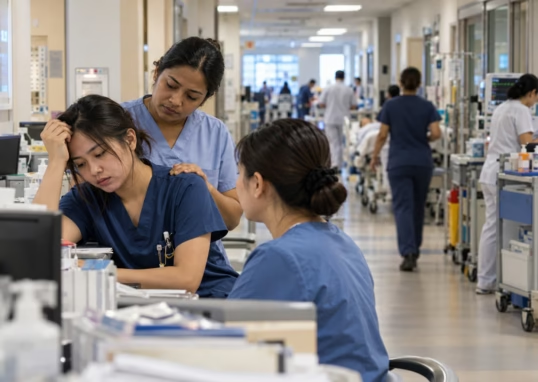
The Nursing Exodus: Why Singapore’s Local Nurses Are Leaving and What It Will Take to Keep Them
- 0
- 650 words
The Silent Drain on Singapore’s Healthcare Frontline Behind the polished corridors of Singapore’s public hospitals, a quiet crisis is unfolding. Over half...
Read out all
NTU Singapore’s Microscopic Peptide Droplets Slash Colorectal Tumour Growth by 67%
- 0
- 352 words
A New Approach to an Old Problem Colorectal cancer remains one of the most challenging malignancies to treat, particularly when tumours develop...
Read out all
Plant Protein Powders and Functional RTDs Are Redefining Singapore’s Urban Supplement Culture
- 0
- 395 words
At 8 a.m. in Singapore’s Central Business District, the breakfast crowd is no longer just ordering kopi and toast. Many are grabbing...
Read out all
Mindful Aesthetics: The Integration of Holistic Mental Wellness into Singapore’s Beauty Routines
- 0
- 563 words
In the bustling metropolis of Singapore, where the pressure to perform is relentless, the beauty industry is recognizing that stress is the...
Read out all