- 0
- 312 words
Audio as a Tool for National Upskilling
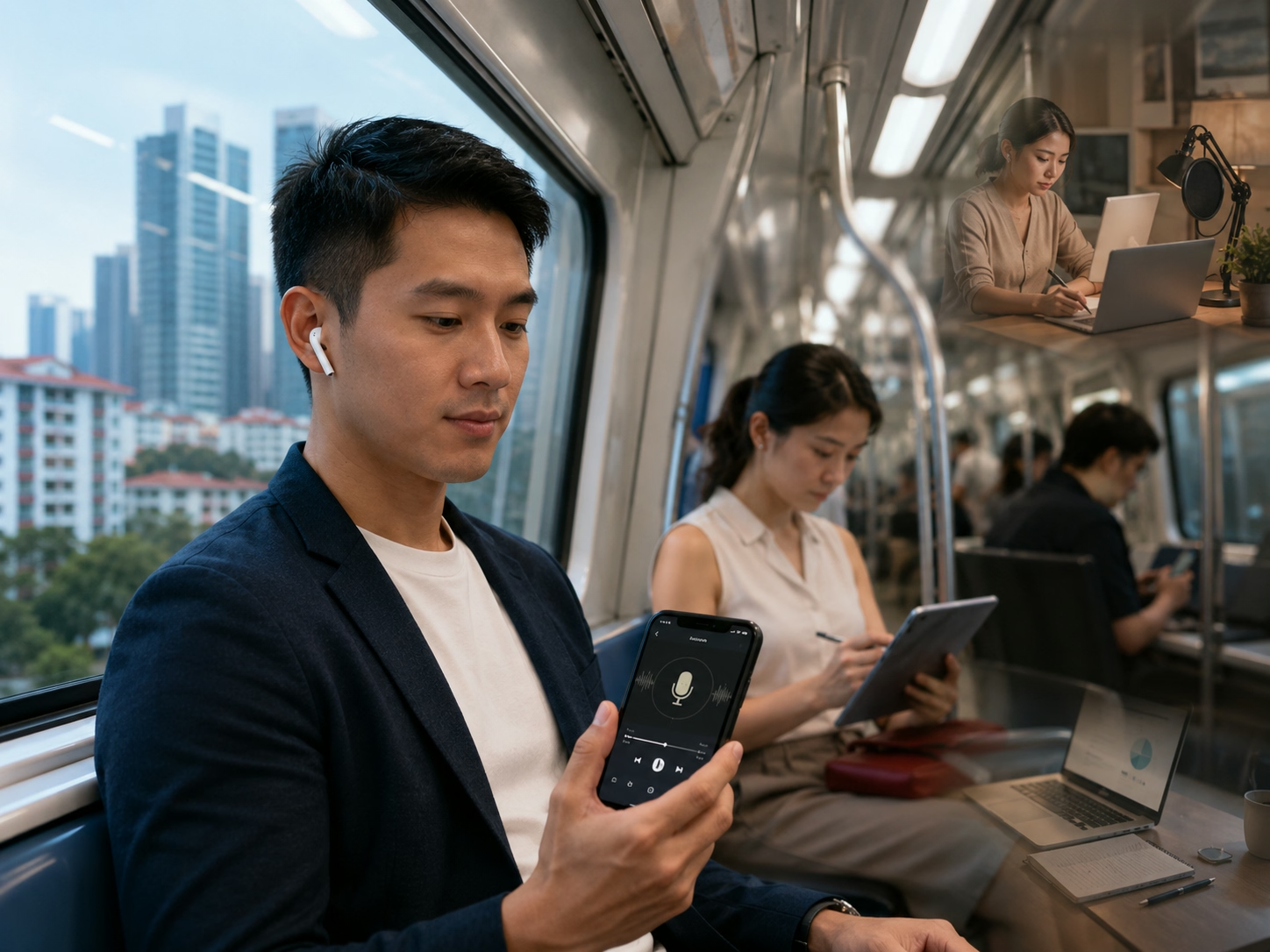
While Western markets often top the charts with true crime and comedy, Singapore’s podcast ecosystem is charting a distinctly educational path. Reflecting the nation’s ethos of meritocracy and continuous improvement, the fastest-growing category in 2026 is educational and professional development content. Podcasts have become the de facto mobile classroom for busy professionals commuting on the MRT or exercising in East Coast Park.
The Integration of SkillsFuture and Audio Learning
The Singaporean government’s aggressive push toward lifelong learning has inadvertently subsidized the podcast boom. Several educational tech companies and government-affiliated agencies have launched podcast series that complement formal SkillsFuture courses. For example, a course on data analytics might now come with a companion podcast discussing real-world applications of AI in Singapore’s finance sector. This “listen-to-learn” culture has normalized the consumption of complex, information-dense content that would typically struggle to find an audience in other markets.
The “Fintech and Fried Rice” Phenomenon
One of the most interesting trends of 2026 is the humanization of complex industries. Hyper-niche shows focusing on specific sectors—such as cross-border fintech regulations, sustainable urban farming techniques, or the intricacies of the Singapore Exchange (SGX)—are gaining massive traction. Shows like The Business Times’ audio expansions have proven that listeners are hungry for local business context. The appeal lies in contextualizing global events for the Singaporean market, helping investors and entrepreneurs make better decisions.
Low Production, High Value
Interestingly, many of these educational podcasts defy the trend of high-gloss production. In this niche, substance trumps style. A solo host recording on a basic USB microphone in a HDB flat can outrank a corporate studio production if their insight into supply chain logistics is superior. This low barrier to entry has democratized who gets to be a thought leader, allowing university professors, retired civil servants, and mid-career professionals to build loyal followings.
Author

Clara@gmail.com
Related Posts
Inside The Kallang’s Strategy to Become Asia’s Premier Concert Destination
- 0
- 427 words
From Sports Hub to Entertainment Powerhouse The National Stadium at The Kallang has hosted Taylor Swift, Coldplay, and Blackpink in recent years....
Read out all
Beyond K-Pop: The K-WAVE × AIGC Alliance and Singapore’s Role in AI-Driven Asian Entertainment
- 0
- 476 words
A Trilateral Bet on the Future of Content At the 20th Busan Content Market in June 2026, a quiet signing ceremony took...
Read out all
The Rise of Independent Artist Management in Singapore: Tasha Low and the New Autonomy Model
- 0
- 606 words
A Defining Moment in Singapore’s Talent Management Landscape When Tasha Low announced her departure from WILD Entertainment Group in August 2026 after...
Read out all
Beyond the Headset: Location-Based VR Redefines Narrative Entertainment in Singapore
- 0
- 500 words
HavenXR: Where Cinema Meets Gaming Singapore has long positioned itself at the intersection of entertainment, innovation, and technology. The next evolution of...
Read out all
Inside Singapore’s Influencer Economy: When Entertainment Content Becomes the Most Powerful Ad Format
- 0
- 717 words
The Creator-Led Advertising Boom Singapore’s advertising industry is witnessing a quiet revolution, and its driving force isn’t a new media platform or...
Read out all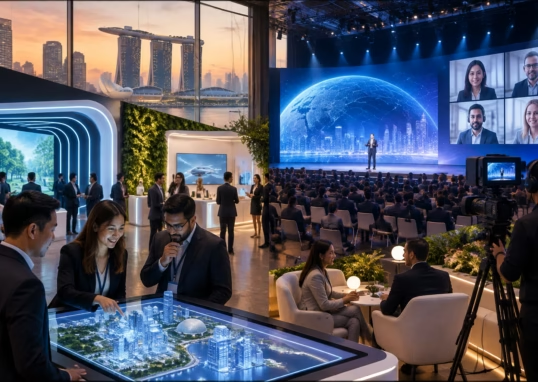
Inside Singapore’s MICE Powerhouse: Event Organizers Driving a $3.5 Billion Industry
- 0
- 486 words
Singapore has cemented its position as Asia’s undisputed MICE (Meetings, Incentives, Conferences, and Exhibitions) capital. In 2026, the sector is on track...
Read out all