- 0
- 486 words
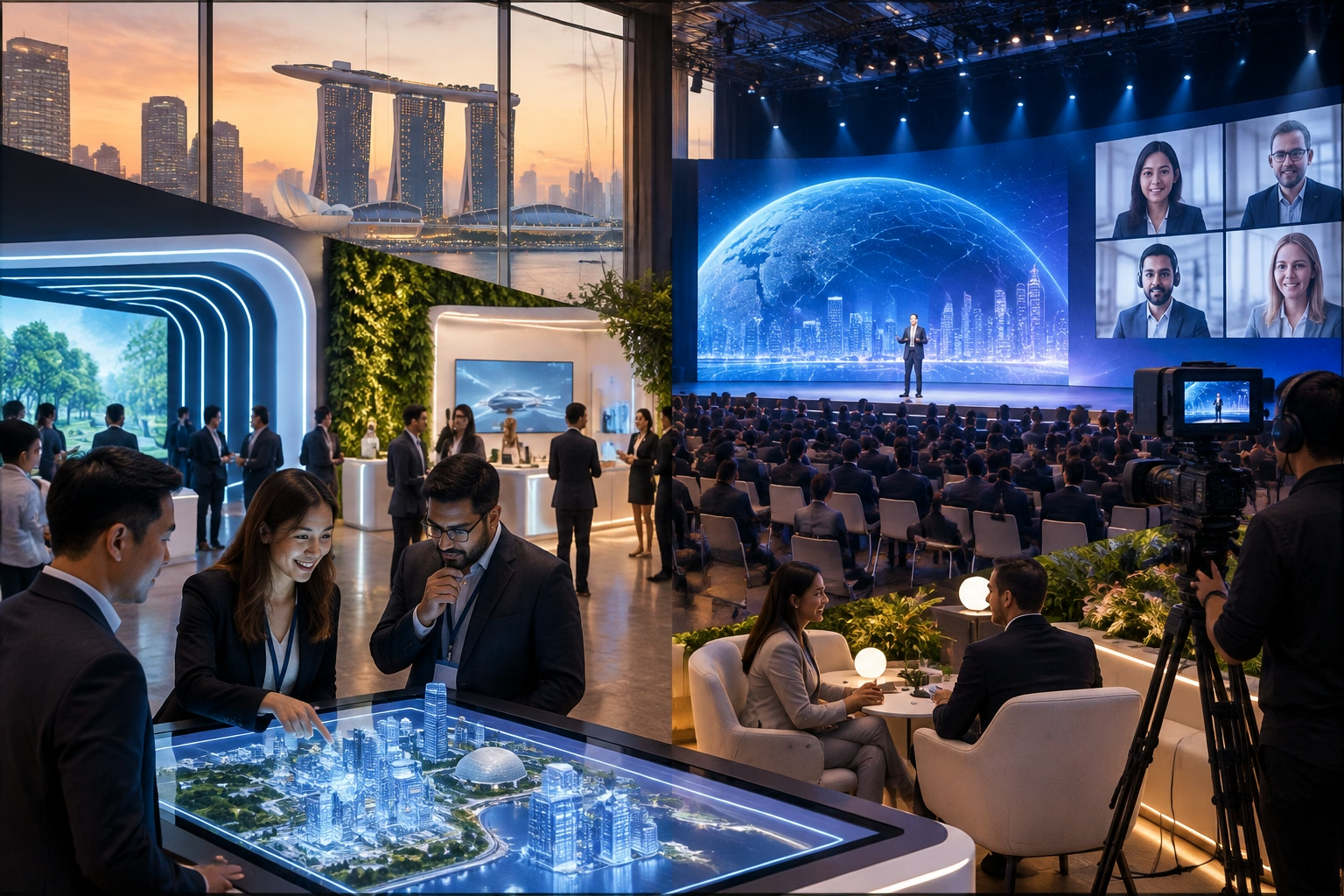
Singapore has cemented its position as Asia’s undisputed MICE (Meetings, Incentives, Conferences, and Exhibitions) capital. In 2026, the sector is on track to contribute over $3.5 billion in direct spending, according to the Singapore Tourism Board’s latest quarterly performance report. Behind this staggering figure lies a sophisticated network of local event organizers who have turned the city into a seamless, repeatable engine for large-scale business gatherings—from 10,000-delegate medical congresses to intimate incentive trips for Fortune 500 sales teams.
The Scale of Singapore’s MICE Machine
Singapore hosts more than 3,200 MICE events annually, with the average international delegate spending 3.5 times more than a leisure tourist. Event organizers like Constellar, MP International, and Experia Events manage a portfolio that includes some of Asia’s largest trade shows: Singapore Airshow (attracting 60,000 trade visitors), Food & Hotel Asia, and the Singapore FinTech Festival, which drew 66,000 participants from 150 countries in 2025. The infrastructure is equally impressive: Marina Bay Sands’ 120,000 sqm of meeting space, Suntec Singapore’s 100,000 sqm column-free halls, and the upcoming expansion at Singapore EXPO will push total MICE venue capacity beyond 400,000 sqm by 2027.
How Event Organizers Leverage Government Incentives
The Singapore Exhibition & Convention Bureau (SECB) plays a proactive role in bidding for international association congresses. Through the Business Events in Singapore (BEiS) scheme, organizers receive funding support of up to 70% for qualifying costs, including venue rental, marketing, and speaker fees. In 2026, SECB extended the scheme to cover carbon offsetting and local community engagement programs. Event organizers who combine this funding with their own operational expertise create a formidable competitive advantage. For example, the World Cities Summit 2026, organized by the Urban Redevelopment Authority with support from local agency Pico, secured 40% more international exhibitors than its previous edition by bundling subsidized travel packages with extended exhibition slots.
The Rise of Integrated Event Management
Modern MICE organizers in Singapore are no longer just logistics providers. They now offer end-to-end solutions: destination management, hotel block booking, visa facilitation, delegate registration software, and even post-event tour curation. A 2026 SACEOS member survey revealed that 68% of local organizers have expanded their service scope to include “event legacy planning”—designing conferences that leave behind tangible outcomes such as research partnerships, talent pipelines, or policy whitepapers. This shift aligns with the government’s goal of using MICE as a soft power tool to attract investment and talent.
Challenges and Adaptations
Despite the boom, Singapore’s MICE organizers face rising costs for skilled labor, venue rental, and technology. In response, many are adopting modular exhibition systems, reusable booth materials, and AI-powered crowd management to reduce overhead. The industry also grapples with regional competition from Bangkok and Kuala Lumpur, which offer lower price points. However, Singapore’s organizers maintain an edge through reliability, safety, and the unmatched connectivity of Changi Airport—handling over 100 airlines to 400 cities. As the 2026 ASEAN Business Summit in Singapore demonstrated, when a single event can generate $120 million in economic impact, the value of a top-tier organizer becomes undeniable.
Author

Clara@gmail.com
Related Posts
Singapore’s Help-to-Buy Ticketing Boom Tests the Limits of Consumer Protection in a Scam-Prone Market
- 0
- 789 words
A Grey Zone Between Service and Scalping Help-to-Buy (HTB) ticketing occupies an uncomfortable space in Singapore’s consumer landscape. It is not ticket...
Read out all
Inside The Kallang’s Strategy to Become Asia’s Premier Concert Destination
- 0
- 427 words
From Sports Hub to Entertainment Powerhouse The National Stadium at The Kallang has hosted Taylor Swift, Coldplay, and Blackpink in recent years....
Read out all
Beyond K-Pop: The K-WAVE × AIGC Alliance and Singapore’s Role in AI-Driven Asian Entertainment
- 0
- 476 words
A Trilateral Bet on the Future of Content At the 20th Busan Content Market in June 2026, a quiet signing ceremony took...
Read out all
The Rise of Independent Artist Management in Singapore: Tasha Low and the New Autonomy Model
- 0
- 606 words
A Defining Moment in Singapore’s Talent Management Landscape When Tasha Low announced her departure from WILD Entertainment Group in August 2026 after...
Read out all
Beyond the Headset: Location-Based VR Redefines Narrative Entertainment in Singapore
- 0
- 500 words
HavenXR: Where Cinema Meets Gaming Singapore has long positioned itself at the intersection of entertainment, innovation, and technology. The next evolution of...
Read out all
Inside Singapore’s Influencer Economy: When Entertainment Content Becomes the Most Powerful Ad Format
- 0
- 717 words
The Creator-Led Advertising Boom Singapore’s advertising industry is witnessing a quiet revolution, and its driving force isn’t a new media platform or...
Read out all