- 0
- 717 words
The Creator-Led Advertising Boom
Singapore’s advertising industry is witnessing a quiet revolution, and its driving force isn’t a new media platform or a breakthrough technology—it’s the creator. The city-state’s influencer marketing spend reached an estimated SGD 180 million in 2026, fuelling a creator economy of over 35,000 active individuals across all tiers. What makes this figure particularly significant is not its absolute size but what it represents: a fundamental reorientation of advertising budgets away from interruptive formats and toward entertainment-driven content that audiences actively choose to consume.
The data supporting this shift is unambiguous. According to AnyMind Group’s “Singapore Digital Landscape 2025” report, 62% of Singaporeans are more likely to engage with sponsored influencer content, while 49% express greater receptivity to influencer-led short videos. These aren’t marginal preferences—they reflect a population that has developed sophisticated mechanisms for filtering out traditional advertising and now reserves its attention for content that entertains, informs, or resonates on a personal level.
Entertainment as the Dominant Influencer Vertical
A revealing detail from the AnyMind study is the distribution of Singapore’s influencer community by vertical. Entertainment and fashion & beauty emerge as the dominant categories, giving brands the largest pool of creators to collaborate with. This concentration isn’t coincidental. Entertainment content—whether it takes the form of comedy sketches, lifestyle vlogs, or music-driven storytelling—naturally incorporates brand messaging in ways that feel organic rather than imposed. When a creator entertains their audience, the advertising becomes a component of the entertainment rather than an interruption to it.
The practical implications for brands are significant. Collaborating with entertainment-focused creators requires a different skill set than traditional media buying. It demands an understanding of narrative pacing, audience psychology, and the creator’s unique voice—elements that don’t always fit neatly into standardised advertising templates. Yet the payoff, as the engagement data suggests, can be substantial.
Beyond Influencers: The Broader Entertainment Ecosystem
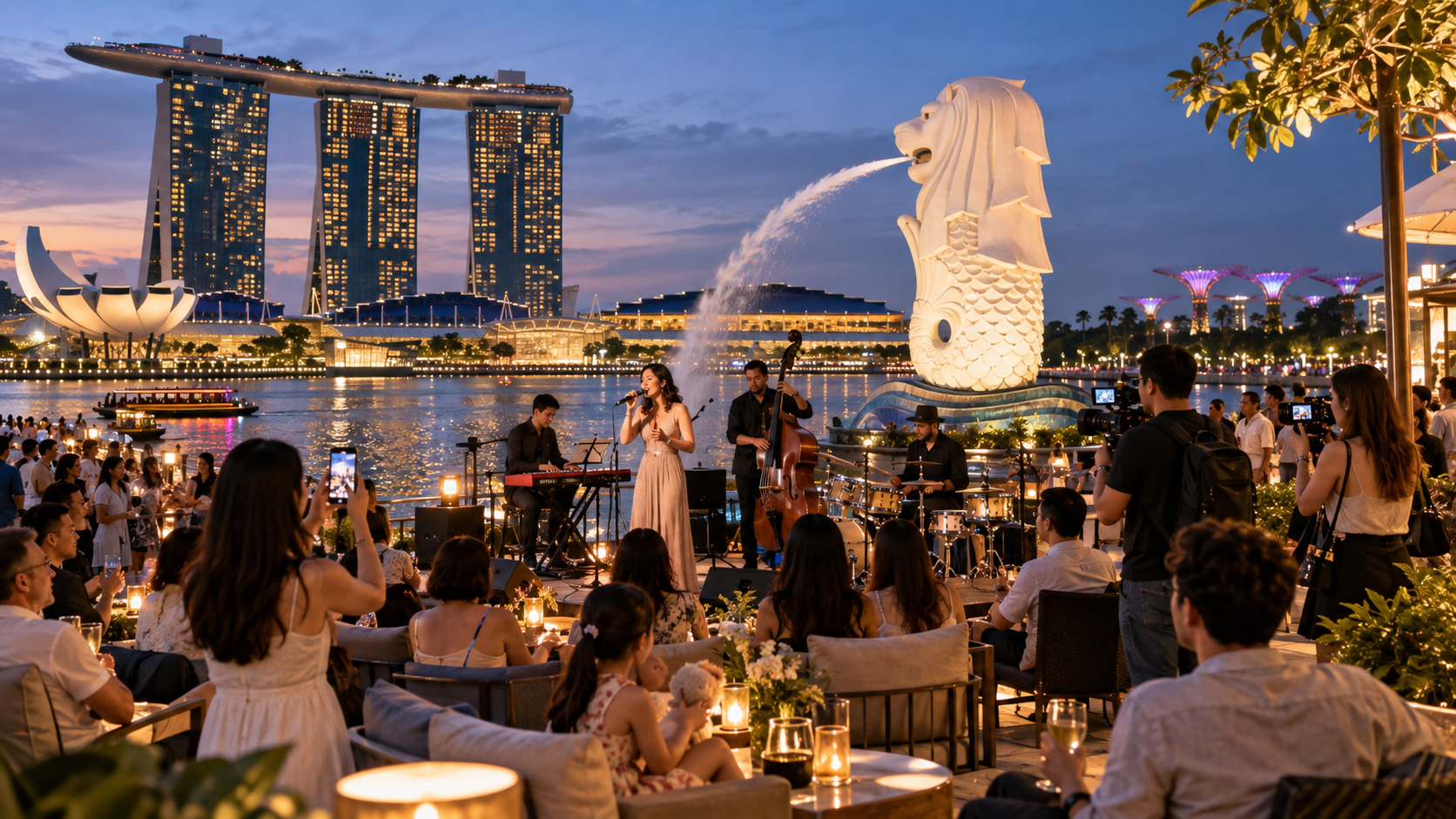
The creator economy doesn’t operate in isolation. It intersects with and amplifies other entertainment-driven marketing strategies across Singapore. The Singapore Tourism Board’s partnership with Universal Music Singapore, signed in May 2026, illustrates how institutional brands are integrating music and artiste-led content into their marketing architectures. The three-year MoU explicitly aims to create “exclusive, Singapore-only experiences” through integrated campaigns and fan activations.
Similarly, the #MerlionMadeMeDoIt challenge, part of the Singapore Superfans campaign, leverages creator networks across multiple markets to generate user-generated content that feeds back into the campaign’s social ecosystem. The distinction between “influencer content” and “brand content” becomes increasingly blurred when campaigns are designed as participatory entertainment experiences from the outset.
The Trust Factor
One of the more nuanced findings from the AnyMind report is that word of mouth and search remain the most influential channels for driving sales in Singapore, suggesting that trust and intent continue to anchor consumer decision-making even in a fast-evolving digital landscape. This has important implications for influencer strategy. It suggests that the most effective creator collaborations are those that build genuine trust over time—not one-off sponsored posts but sustained relationships that position the creator as a credible voice within their community.
The report’s observation that the traditional linear marketing funnel no longer reflects consumer behaviour is particularly relevant here. Toh Yi Hui, country manager for AnyMind Group in Singapore, described the modern consumer journey as “orbital” rather than linear, with audiences engaging across multiple touchpoints before converting. In this environment, entertainment-driven creator content functions not as a single touchpoint but as a continuous presence that shapes perception across the entire decision-making process.
What This Means for Brands and Agencies
For brands operating in Singapore, the creator-led entertainment model presents both opportunity and challenge. The opportunity lies in access to audiences that have largely tuned out conventional advertising. The challenge lies in navigating a creator landscape that rewards authenticity and punishes overt commercialism. The brands that succeed will be those that approach influencer collaboration as a creative partnership rather than a media buy—investing in content that entertains first and promotes second.
As Singapore’s creative advertising industry continues to mature, the integration of entertainment and influencer strategy is likely to become less of a distinct approach and more of a baseline expectation. The data suggests that audiences have already made their choice. The question is whether brands are prepared to follow.
Author

Clara@gmail.com
Related Posts
Inside Singapore’s MICE Powerhouse: Event Organizers Driving a $3.5 Billion Industry
- 0
- 486 words
Singapore has cemented its position as Asia’s undisputed MICE (Meetings, Incentives, Conferences, and Exhibitions) capital. In 2026, the sector is on track...
Read out all
Beyond Entertainment – The Rise of Hyper-Niche Educational Podcasts in Singapore’s Lifelong Learning Culture
- 0
- 312 words
Audio as a Tool for National Upskilling While Western markets often top the charts with true crime and comedy, Singapore’s podcast ecosystem...
Read out all
Inside Singapore’s 2026 Creative Industry Surge: Designers, Artists, and Digital Creators Drive Growth
- 0
- 388 words
The creative industry in Singapore is experiencing one of its strongest growth phases. Data from the Ministry of Culture, Community and Youth’s...
Read out all
AI on the Menu: How Predictive Analytics and Smart Kitchens Are Eliminating Food Waste in Singapore’s Restaurant Industry
- 0
- 465 words
For an industry built on razor-thin margins and perishable inventory, artificial intelligence is proving to be the ultimate sous-chef. In 2026, Singapore’s...
Read out all
Why Singaporean Animation Is Using Southeast Asian Stories to Win International Audiences
- 0
- 628 words
Cultural Identity Is Becoming a Commercial Advantage Global animation audiences are increasingly exposed to stories originating outside the traditional production centers of...
Read out all
How OTT Platforms Are Redefining Entertainment Consumption Patterns Across Singapore’s Digital Society
- 0
- 439 words
The entertainment industry in Singapore is undergoing a major transformation as over-the-top (OTT) streaming platforms become increasingly integrated into daily life. Unlike...
Read out all