- 0
- 606 words
A Defining Moment in Singapore’s Talent Management Landscape
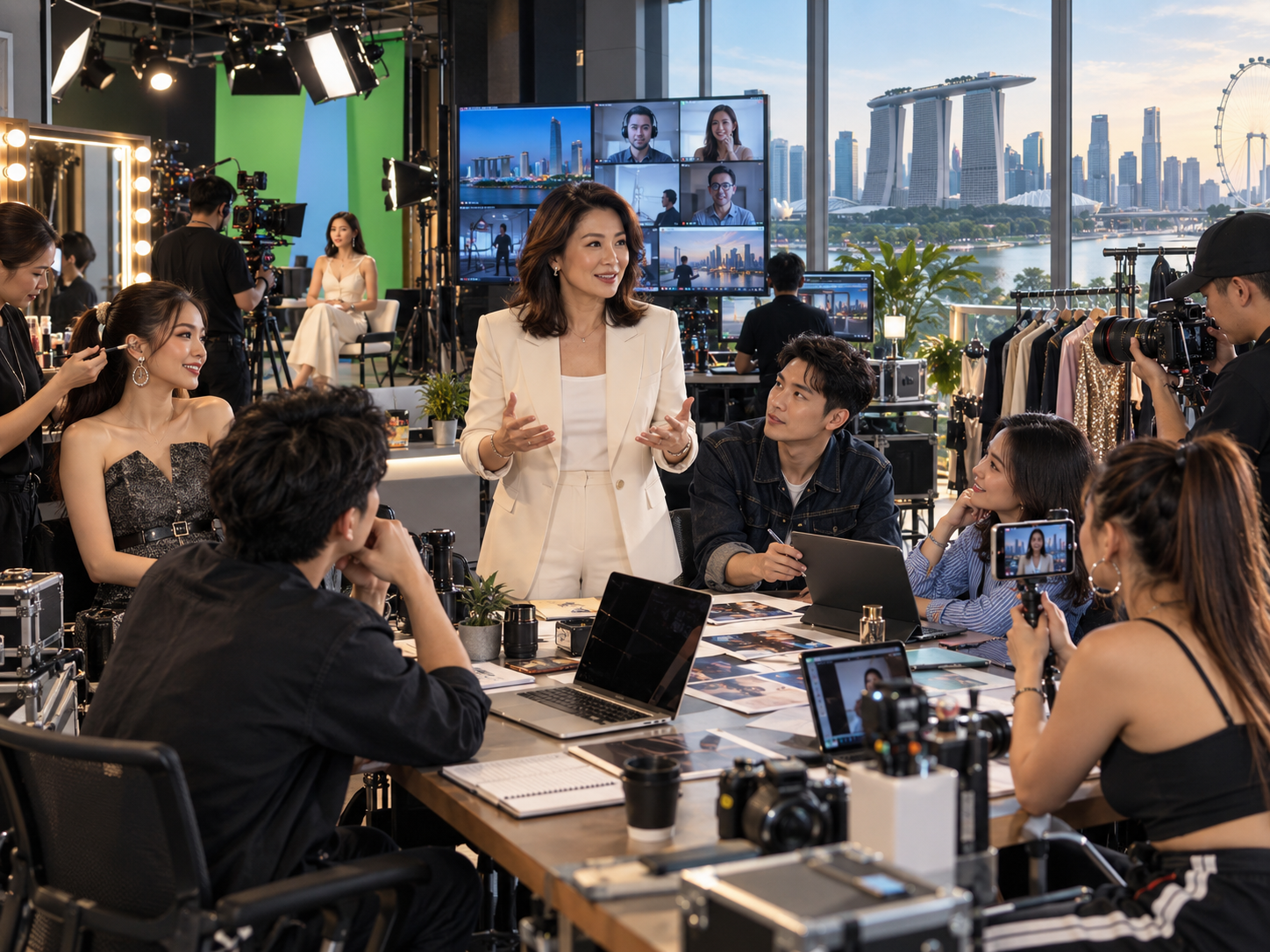
When Tasha Low announced her departure from WILD Entertainment Group in August 2026 after four years of representation, she joined a growing cohort of Singaporean artists questioning whether traditional agency models still serve their career aspirations. Her subsequent launch of Base A28, a company she registered herself, represents more than a career move—it signals a philosophical shift in how artists approach their professional trajectories.
Low’s journey is instructive. From her time as a K-pop trainee in Skarf to her return to Singapore and eventual success in local television, she has navigated multiple management systems across two countries. Her decision to go independent raises a compelling question: does the traditional agency model still provide the best pathway for artist development in Singapore’s maturing entertainment ecosystem?
The Autonomy Calculation
In her announcement, Low framed her decision around a fundamental question: “Am I staying because of comfort and familiarity, or is this truly where I’ve always dreamed of being?” This introspective approach reflects a broader trend among Singaporean creatives who increasingly view career management as a personal strategic exercise rather than a delegated responsibility.
The actress described the most compelling aspect of independence as “having greater autonomy and being able to take control” of her career and future choices. For artists operating in a small market with limited production volume, this autonomy translates directly into the ability to pursue projects that align with personal creative visions rather than commercial imperatives alone.
The Economics of Going Independent
Going independent in Singapore’s media landscape presents unique challenges. Without agency infrastructure, artists must self-manage contract negotiations, brand partnerships, scheduling, and public relations. Low acknowledged this reality, admitting it is “daunting because there are more things to consider and manage”.
Yet the economic calculus has shifted. Digital platforms enable direct audience engagement, bypassing traditional gatekeepers. Social media provides artists with marketing tools that once required agency resources. And streaming platforms have created new distribution channels for content that artists can control.
The Broader Shift in Singapore’s Talent Ecosystem
Low’s move is not isolated. The Singapore arts sector has seen growing acknowledgment that freelancing is “one of the more viable options and ways to pursue an artistic career,” partly because “Singapore does not have many agencies that manage performing artists”. This structural gap creates both challenges and opportunities for artists willing to operate independently.
The rise of independent artist management also reflects changing expectations around transparency and fairness. In 2026, the National Trades Union Congress and trade associations called for “fairer and more transparent collaboration practices” to improve protections for performing artists and creative freelancers who face issues including unsigned contracts and delayed payments.
What Independent Management Means for Career Development
For artists considering independence, Low’s experience offers a template. Her approach—registering a formal company, maintaining a low public profile about specific plans while signaling strategic intent—balances the legitimacy of incorporation with the flexibility of self-management.
She stated she is “indeed working on some plans” but chose not to reveal details, expressing excitement about “new opportunities and possibilities”. This measured communication strategy suggests that independent artists can control their narrative while still building anticipation for future work.
The Road Ahead
As Singapore’s media industry continues to evolve—with government initiatives like IMDA’s SGD 200 million Talent Accelerator Programme creating new structured pathways—the independent route may become increasingly viable for artists with entrepreneurial instincts and strong personal brands.
Low’s journey will serve as a test case for whether autonomy, when paired with strategic self-management, can deliver career outcomes comparable to—or exceeding—traditional agency representation.
Author

Clara@gmail.com
Related Posts

Beyond the Headset: Location-Based VR Redefines Narrative Entertainment in Singapore
- 0
- 500 words
HavenXR: Where Cinema Meets Gaming Singapore has long positioned itself at the intersection of entertainment, innovation, and technology. The next evolution of...
Read out all
Inside Singapore’s Influencer Economy: When Entertainment Content Becomes the Most Powerful Ad Format
- 0
- 717 words
The Creator-Led Advertising Boom Singapore’s advertising industry is witnessing a quiet revolution, and its driving force isn’t a new media platform or...
Read out all
Inside Singapore’s MICE Powerhouse: Event Organizers Driving a $3.5 Billion Industry
- 0
- 486 words
Singapore has cemented its position as Asia’s undisputed MICE (Meetings, Incentives, Conferences, and Exhibitions) capital. In 2026, the sector is on track...
Read out all
Beyond Entertainment – The Rise of Hyper-Niche Educational Podcasts in Singapore’s Lifelong Learning Culture
- 0
- 312 words
Audio as a Tool for National Upskilling While Western markets often top the charts with true crime and comedy, Singapore’s podcast ecosystem...
Read out all
Inside Singapore’s 2026 Creative Industry Surge: Designers, Artists, and Digital Creators Drive Growth
- 0
- 388 words
The creative industry in Singapore is experiencing one of its strongest growth phases. Data from the Ministry of Culture, Community and Youth’s...
Read out all
AI on the Menu: How Predictive Analytics and Smart Kitchens Are Eliminating Food Waste in Singapore’s Restaurant Industry
- 0
- 465 words
For an industry built on razor-thin margins and perishable inventory, artificial intelligence is proving to be the ultimate sous-chef. In 2026, Singapore’s...
Read out all