- 0
- 658 words
From Pain Point to Product Innovation: The Sunnystep Story
Sometimes the most disruptive innovations emerge from the most personal struggles. Mao Ting, founder of Singaporean footwear brand Sunnystep, was just 28 when a spinal injury left her in chronic pain, unable to sit or walk for extended periods. Over two years, she consulted more than 20 medical professionals, from physiotherapists to orthopaedic specialists, without relief.
Her turning point came from an unexpected direction: footwear design. Unable to find shoes that were lightweight, stable, and supportive without sacrificing style, Mao Ting began designing her own. What started as a personal solution evolved into a brand with 12 outlets in Singapore, three in Malaysia, and two in Indonesia—a regional footprint built on a single, powerful premise: comfort should not be a compromise.
The Science of Comfort: Anatomical Design Meets Eco-Innovation
Sunnystep’s product philosophy reflects a broader shift in Singapore’s footwear industry toward functional innovation. The brand uses eco-friendly materials, including algae harvested from polluted waters and repurposed coffee grounds, to create shoes designed with anatomical precision. This dual focus on comfort and sustainability addresses two powerful consumer trends simultaneously: the rising demand for health-conscious footwear and the growing expectation of environmental responsibility.
The broader Singaporean market reflects this convergence. Euromonitor’s 2026 Footwear in Singapore report highlights that “sustainability becomes a core consumer expectation” and that technology is reshaping the market through AI and virtual try-ons. Brands that can credibly claim both comfort technology and ethical sourcing are positioning themselves at the intersection of two of the most potent forces driving consumer choice.
Beyond the Orthopaedic Aesthetic: Stylish Solutions for Everyday Wear
Historically, the phrase “comfort footwear” conjured images of bulky orthopaedic shoes that prioritised function over form. Today’s Singaporean brands are dismantling that stereotype. Mao Ting’s own journey illustrates the problem: she tried running shoes that were too bulky with forward propulsion unsuited to everyday walking, and orthotic shoes that were equally heavy and aesthetically unappealing.
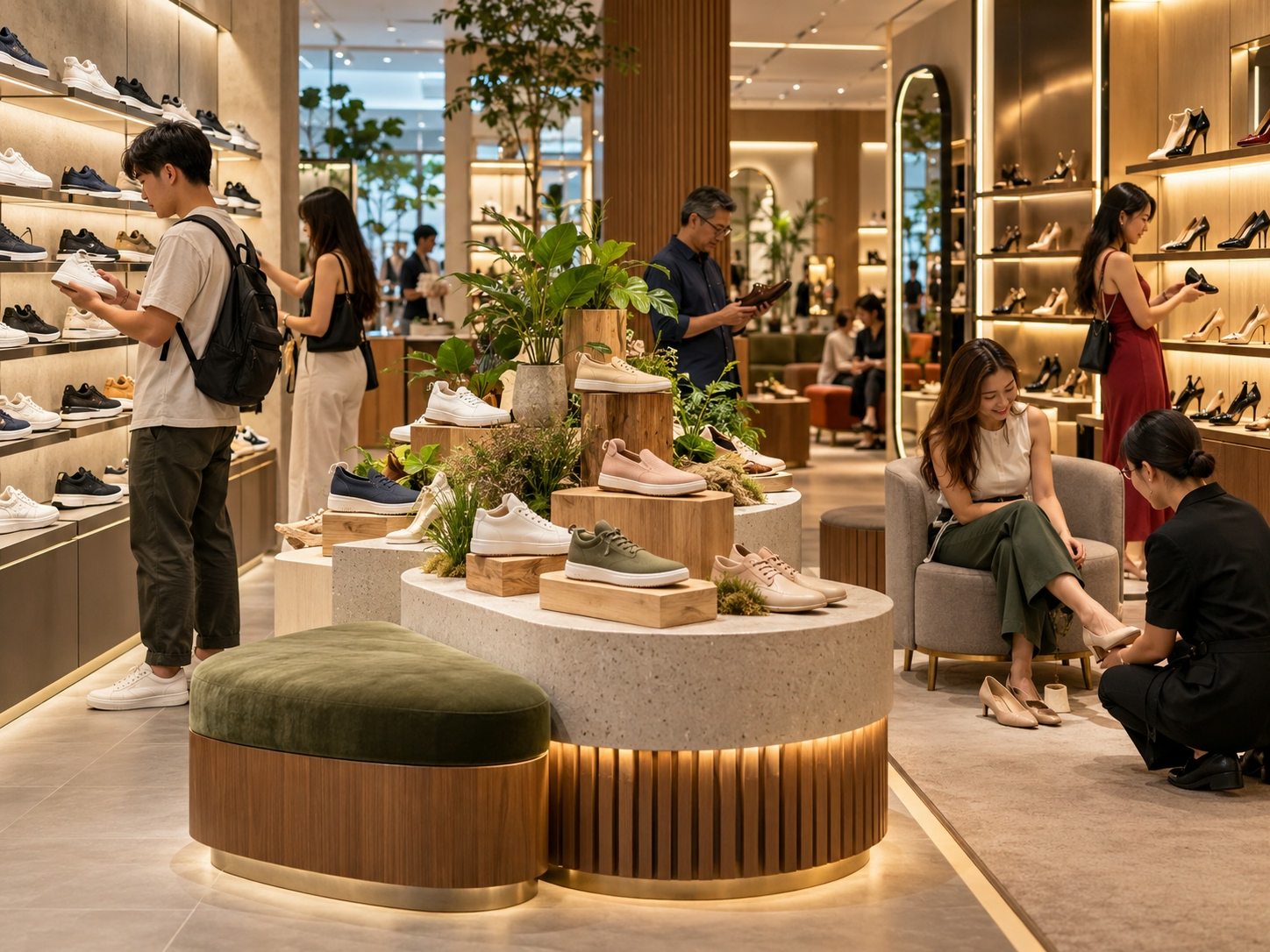
The local brands succeeding in this space are those that recognise consumers want it all: support, style, and sustainability. This is particularly relevant in Singapore, where a “mall-centric shopping culture” means consumers encounter footwear in a retail environment where aesthetic appeal remains paramount. The comfort revolution is not about sacrificing style—it is about redefining what stylish footwear can do for your body.
The Data Behind the Demand: Health Awareness and Disposable Income
The Singaporean sportswear market demonstrated strong growth in 2025, with an 8% increase in total retail value to SGD1.4 billion, driven by consumer demand for performance-driven apparel and rising health and fitness awareness. This health consciousness extends naturally to footwear, as consumers increasingly understand the connection between foot health and overall wellbeing.
With the footwear market projected to reach USD 1,363.7 million by 2031 at a 5.2% CAGR, the comfort segment is well-positioned to capture disproportionate growth. The strategy report notes that “Singaporean consumers are highly trend-conscious and increasingly seek footwear that reflects personal style, lifestyle values and a sense of individuality”. For comfort brands, this means the opportunity is not merely to serve a niche of pain-sufferers but to appeal to a broad, health-aware mainstream audience that views supportive footwear as an investment in daily wellbeing.
What Comes Next: Personalisation, AI, and the Comfort Continuum
Looking ahead, the integration of technology into comfort footwear presents significant opportunities. Euromonitor’s 2026 report highlights that “polarisation and personalisation reshape footwear retail strategies,” while Skechers Singapore has already launched an AI assistant for personalised shopping. For comfort-focused brands, AI-driven fitting tools and virtual try-ons could revolutionise how consumers discover their ideal fit—particularly valuable for a product category where comfort is subjective and individualised.
The comfort revolution in Singapore’s footwear industry is not a fleeting trend but a fundamental recalibration of consumer priorities. As health awareness continues to rise and technology enables increasingly personalised solutions, the brands that can deliver genuine comfort without compromising on style or sustainability will define the next decade of the market.
Author

Clara@gmail.com
Related Posts

Gen Z vs. Gen X—The Generational Battle Over Singapore’s Office Dress Code
- 0
- 576 words
Two Generations, Two Definitions of Professionalism Walk into any Singapore office in 2026, and you may witness a quiet cultural collision. A...
Read out all
Korean Fashion Brands Are Betting Big on Singapore—and Winning
- 0
- 572 words
The Orchard Road Invasion Nobody Saw Coming When Shinsegae Tomboy opened standalone stores for Studio Tomboy and VOV at the METRO department...
Read out all
Blending Tradition with Tech: How Singaporean Fashion Schools Are Forging the Ultimate Hybrid Designers in 2026
- 0
- 465 words
The modern fashion designer is expected to be a polymath. They must be an artist, an engineer, a marketer, and increasingly, a...
Read out all
Lab-Grown Diamonds vs. Natural Stones: The Shifting Preferences in Singapore’s Luxury Sector
- 0
- 352 words
The jewelry counters in Singapore’s luxury malls are witnessing a generational shift in values. While natural diamonds have long been the benchmark for...
Read out all
The Custodians of Rare Threads: Inside Singapore’s Private Vintage Archives for Japanese Denim and Vintage Chanel
- 0
- 480 words
In a temperature-controlled room in a private apartment, rows of 1990s Japanese denim hang in acid-free garment bags. Nearby, a glass cabinet...
Read out all
Focus on Sustainability and Ethical Production
- 0
- 358 words
A profound shift is redefining Singapore’s boutique fashion identity: sustainability has moved from marketing tagline to operational necessity. Independent designers and local...
Read out all