- 0
- 583 words
The Turmeric Takeover
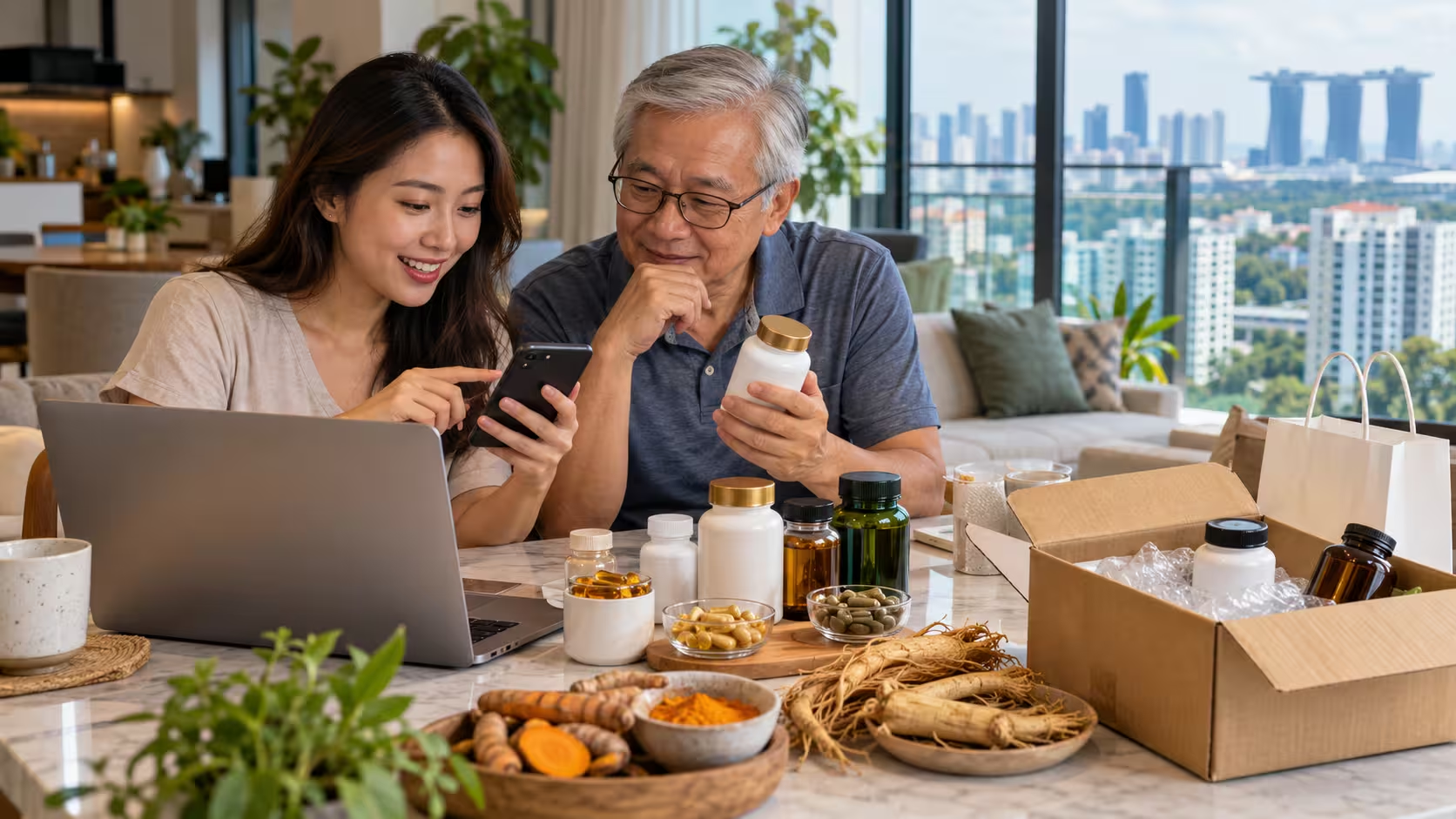
Walk into any Guardian, Watsons, or Unity pharmacy in Singapore, and the dominance of turmeric is unmistakable. Curcumin capsules, turmeric lattes, and standardised extract tablets occupy prime shelf space—and for good reason. Turmeric held the leading position among herb-type segments in Singapore’s herbal supplements market in 2024, based on market size.
The Singapore turmeric market alone was valued at USD 16.66 million in 2024 and is forecast to reach USD 27.84 million by 2033, growing at a CAGR of 5.89% between 2026 and 2033. The growth is driven by “growing consumer awareness about the health benefits of turmeric, leading to increased demand,” alongside its established anti-inflammatory and antioxidant properties.
Ginseng: The Enduring Tonifier
If turmeric represents the new guard, ginseng is the old guard—and it remains formidable. The Singapore ginseng extracts market was estimated at USD 279 million in 2025 and is projected to reach USD 380 million by 2032, growing at a CAGR of 4.5%.
Ginseng’s resilience in the Singapore market is rooted in Traditional Chinese Medicine (TCM) cosmology. As a “tonic” herb, ginseng occupies a category of trust that synthetic supplements struggle to replicate. But the modern ginseng consumer is not necessarily a TCM patient. Singapore men are increasingly turning to Tongkat Ali, Maca, and Ginseng as adaptogens to combat chronic urban stress, which suppresses testosterone and depletes energy. This repositioning—from traditional tonic to modern adaptogen—has broadened ginseng’s demographic appeal without diluting its cultural authority.
Echinacea: The Fastest-Growing Challenger
The most dynamic segment in Singapore’s herbal supplement market is echinacea, projected to post the fastest growth rate through 2033 and sustain its position as the most attractive herb-type segment.
Echinacea’s rise is inseparable from the post-pandemic immune-health boom. The herb, native to North America, has a long history of use by Indigenous peoples and is now widely available in Singapore through brands like Nutrilite, Nature’s Way, and local players like Leaf to Life. Singapore’s National Parks Board (NParks) notes that echinacea extracts are “sold singly or in combination with extracts from Echinacea angustifolia and/or Echinacea pallida as an herbal supplement that helps to stimulate the immune system”.
The clinical evidence for echinacea remains mixed—some studies support its efficacy in shortening cold duration, while others find no significant benefit. Yet in Singapore’s market, perception often outweighs proof. For consumers seeking a “natural” defence against seasonal illness, echinacea’s positioning is compelling.
The Common Thread: Standardisation and Trust
What unites turmeric, ginseng, and echinacea in the Singapore market is a shift toward standardisation. Consumers are no longer buying loose herbs or unstandardised powders. They are buying extracts with specified curcuminoid content, ginsenoside concentrations, and echinacea alkylamide levels.
This demand for standardisation mirrors the broader premiumisation trend in Singapore’s herbal supplements market. Manufacturers are launching products with “naturally derived ingredients and clinically backed health claims to enhance differentiation and consumer trust,” according to Euromonitor.
The Competitive Landscape
Key players in Singapore’s herbal supplements market include Eu Yan Sang, Blackmores, and Nature’s Way, alongside a growing cohort of local wellness brands. Eu Yan Sang, with its deep TCM heritage, bridges the traditional and modern segments—offering both classic ginseng products and contemporary turmeric formulations.
The battleground for the next phase of growth will be format innovation. Compact, travel-friendly packaging, functional beverages, and even AI-personalised formulations are entering the market. The brands that can deliver traditional botanicals in formats that fit Singapore’s fast-paced lifestyle—without compromising on standardisation or cultural authenticity—will define the next decade of the category.
Author

Clara@gmail.com
Related Posts

Cancer Screening Crisis in Singapore’s Malay Community Exposes Deeper Health Equity Failures
- 0
- 520 words
A Preventable Crisis Singapore’s National Population Health Survey 2025 delivered a sobering verdict on cancer screening equity: Malay women have the lowest...
Read out all
The Nursing Exodus: Why Singapore’s Local Nurses Are Leaving and What It Will Take to Keep Them
- 0
- 650 words
The Silent Drain on Singapore’s Healthcare Frontline Behind the polished corridors of Singapore’s public hospitals, a quiet crisis is unfolding. Over half...
Read out all
NTU Singapore’s Microscopic Peptide Droplets Slash Colorectal Tumour Growth by 67%
- 0
- 352 words
A New Approach to an Old Problem Colorectal cancer remains one of the most challenging malignancies to treat, particularly when tumours develop...
Read out all
Plant Protein Powders and Functional RTDs Are Redefining Singapore’s Urban Supplement Culture
- 0
- 395 words
At 8 a.m. in Singapore’s Central Business District, the breakfast crowd is no longer just ordering kopi and toast. Many are grabbing...
Read out all
Mindful Aesthetics: The Integration of Holistic Mental Wellness into Singapore’s Beauty Routines
- 0
- 563 words
In the bustling metropolis of Singapore, where the pressure to perform is relentless, the beauty industry is recognizing that stress is the...
Read out all
Inside Singapore’s High-Tech Specialist Clinics: AI, Robotics, and Precision Medicine in 2026
- 0
- 353 words
The Rise of AI-Augmented Diagnostics Machine Learning in Radiology and Pathology Radiologists and pathologists in leading private clinics now work alongside AI...
Read out all