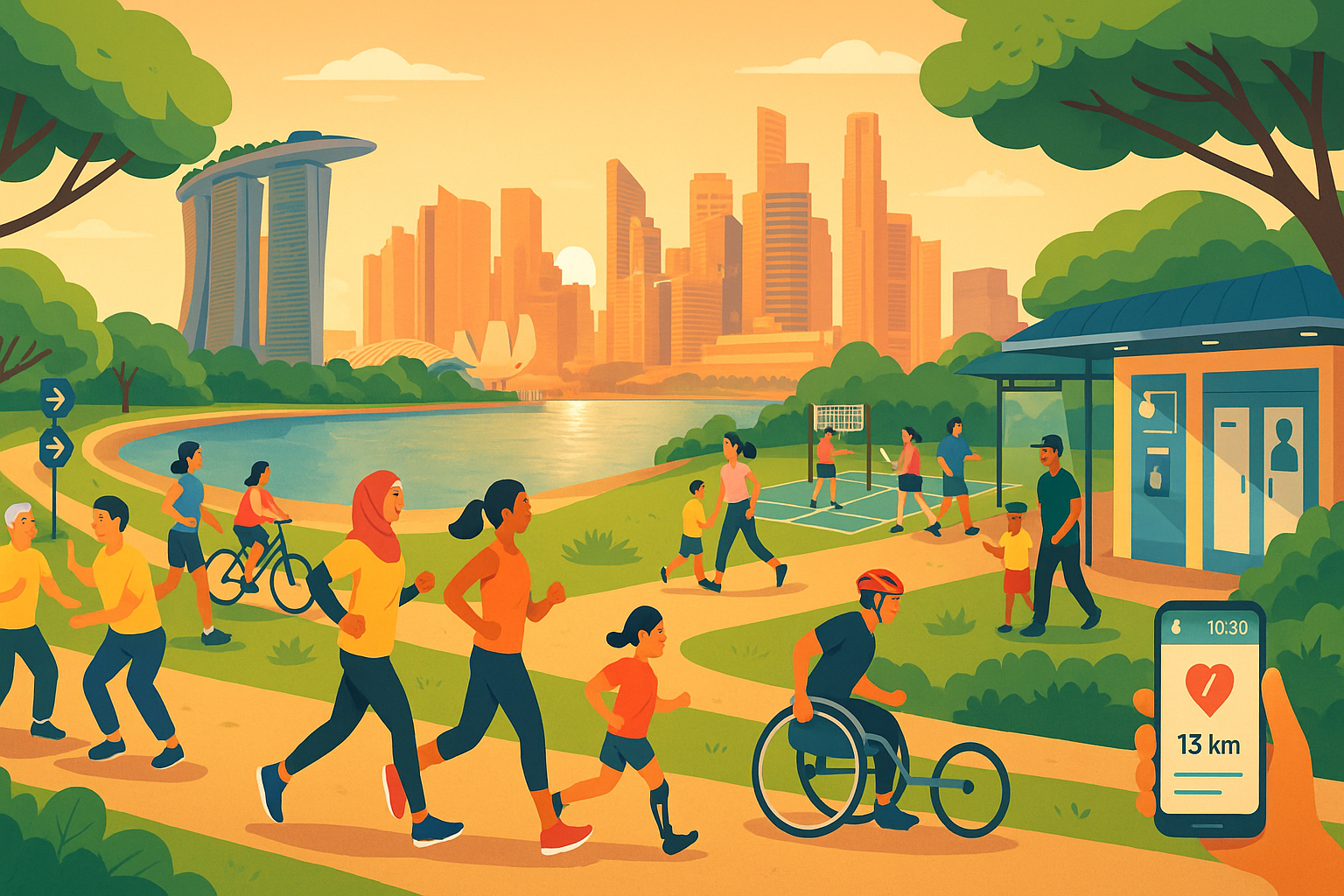
Singapore demonstrates that a city can turn health promotion into a shared endeavor, aligning ministries, schools, employers, and neighborhoods around active living. Sport Singapore and HPB collaborate to lower barriers to participation while building a culture that values small, repeatable choices—walking one more stop, swapping sugary drinks for water, or signing up for a low-cost class at a nearby sports centre.
Start with the built environment. The Park Connector Network gives residents safe, scenic routes for active commuting and weekend recreation, stitched through waterways and green corridors. Community clubs and ActiveSG facilities dot the island, offering everything from table tennis to strength training, priced to welcome youths, families, and seniors. These spaces double as social anchors: people return not only for the treadmill, but for the friendships.
Prevention sits at the heart of the system. Screenings for blood pressure, diabetes risk, and BMI are promoted in neighborhoods and workplaces, often paired with coaching that translates numbers into action plans. Active Health programmes help residents set realistic goals—improving sleep routines, learning proper lifting technique, or integrating restorative mobility work to counter desk-bound strain. By focusing on habits over heroics, the approach sidesteps all-or-nothing thinking.
Food environments are designed to make the better choice the easy choice. Healthier options at hawker stalls, clear nutrition labels, and prompts to choose brown rice or less sugar gradually shift norms. Education campaigns in schools foster early literacy around diet, movement, and mental wellness, while inter-school sports nurture talent and teamwork. For older adults, low-impact groups—like mall walking, tai chi, or chair-based exercises—prioritize balance and joint health to maintain independence.
Heat management is a practical necessity. Public advisories recommend morning or evening workouts, hydration strategies, and rest intervals. Parks incorporate shade, and many community programs provide indoor alternatives during hot or hazy periods. These guidelines are not barriers; they are enablers, ensuring activity is safe year-round.
A key strength is inclusivity. Adaptive sports and para-athlete pathways are visible, with coaches trained in modifications and facilities accommodating varied needs. Community events encourage families to participate together, turning race day into a festival rather than a test. Technology supports engagement—apps to book courts, track steps, or discover classes—while retaining a human-centred ethos: the app is a doorway, not the destination.
By coordinating spaces, incentives, education, and safety, Singapore transforms sport from leisure into public health infrastructure. People move more, sleep better, feel connected, and manage chronic disease risks earlier. That cumulative effect—thousands of small wins—elevates quality of life across the island.
Author

Clara@gmail.com
Related Posts

NTU Singapore’s Microscopic Peptide Droplets Slash Colorectal Tumour Growth by 67%
- 0
- 352 words
A New Approach to an Old Problem Colorectal cancer remains one of the most challenging malignancies to treat, particularly when tumours develop...
Read out all
Plant Protein Powders and Functional RTDs Are Redefining Singapore’s Urban Supplement Culture
- 0
- 395 words
At 8 a.m. in Singapore’s Central Business District, the breakfast crowd is no longer just ordering kopi and toast. Many are grabbing...
Read out all
Mindful Aesthetics: The Integration of Holistic Mental Wellness into Singapore’s Beauty Routines
- 0
- 563 words
In the bustling metropolis of Singapore, where the pressure to perform is relentless, the beauty industry is recognizing that stress is the...
Read out all
Inside Singapore’s High-Tech Specialist Clinics: AI, Robotics, and Precision Medicine in 2026
- 0
- 353 words
The Rise of AI-Augmented Diagnostics Machine Learning in Radiology and Pathology Radiologists and pathologists in leading private clinics now work alongside AI...
Read out all
Duke-NUS’s Team-Based Learning Model: Forging Clinician-Scientists Ready for Singapore’s Future Healthcare Challenges
- 0
- 467 words
Departing from the conventional undergraduate pathway, Duke-NUS Medical School offers a graduate-entry MD programme that emphasizes scientific discovery and clinical leadership. This...
Read out all
How Singapore Is Using Genomics and Precision Medicine to Shape the Future of Asian Healthcare
- 0
- 618 words
Singapore’s biotechnology ambitions are increasingly centered on a fundamental medical question: why do patients with the same disease respond differently to the...
Read out all