- 0
- 384 words
A Policy of Reluctance
Singapore’s approach to concert ticket resale is defined by what the government has chosen not to do. In a written reply to Parliament in May 2026, Deputy Prime Minister and Minister for Trade and Industry Gan Kim Yong stated that government policy does not prohibit the resale of goods and services, including concert tickets . The government’s stated priority is safeguarding consumers from unfair practices and scams rather than regulating the secondary market itself.
This position has drawn scrutiny. A parliamentary question noted that concert ticket scam losses exceeded S$1.1 million between 2023 and 2024, and that consumer surveys show nearly 50 percent of Singaporeans identify scalping as a significant concern . The government’s response acknowledged these figures but maintained that anti-botting legislation is difficult to enforce effectively, citing the rapid evolution of bot technologies and the frequent location of operators outside national jurisdictions .
The Technical Countermeasures
Instead of legislation, Singapore has leaned on platform-level interventions. The Police have imposed Code of Practice requirements under the Online Criminal Harms Act, requiring designated online services to verify users against government-issued records when advertising ticket sales . Ahead of high-demand concerts, police step up public education and work with resale platforms to remove listings suspected of being scams .
Major ticketing providers have adopted dynamic mobile tickets that are harder to duplicate and platform-restricted transfer functions that allow tickets to move only through official channels . These measures target the mechanics of scalping and fraud without criminalising resale itself.
The Fan Experience of Scarcity
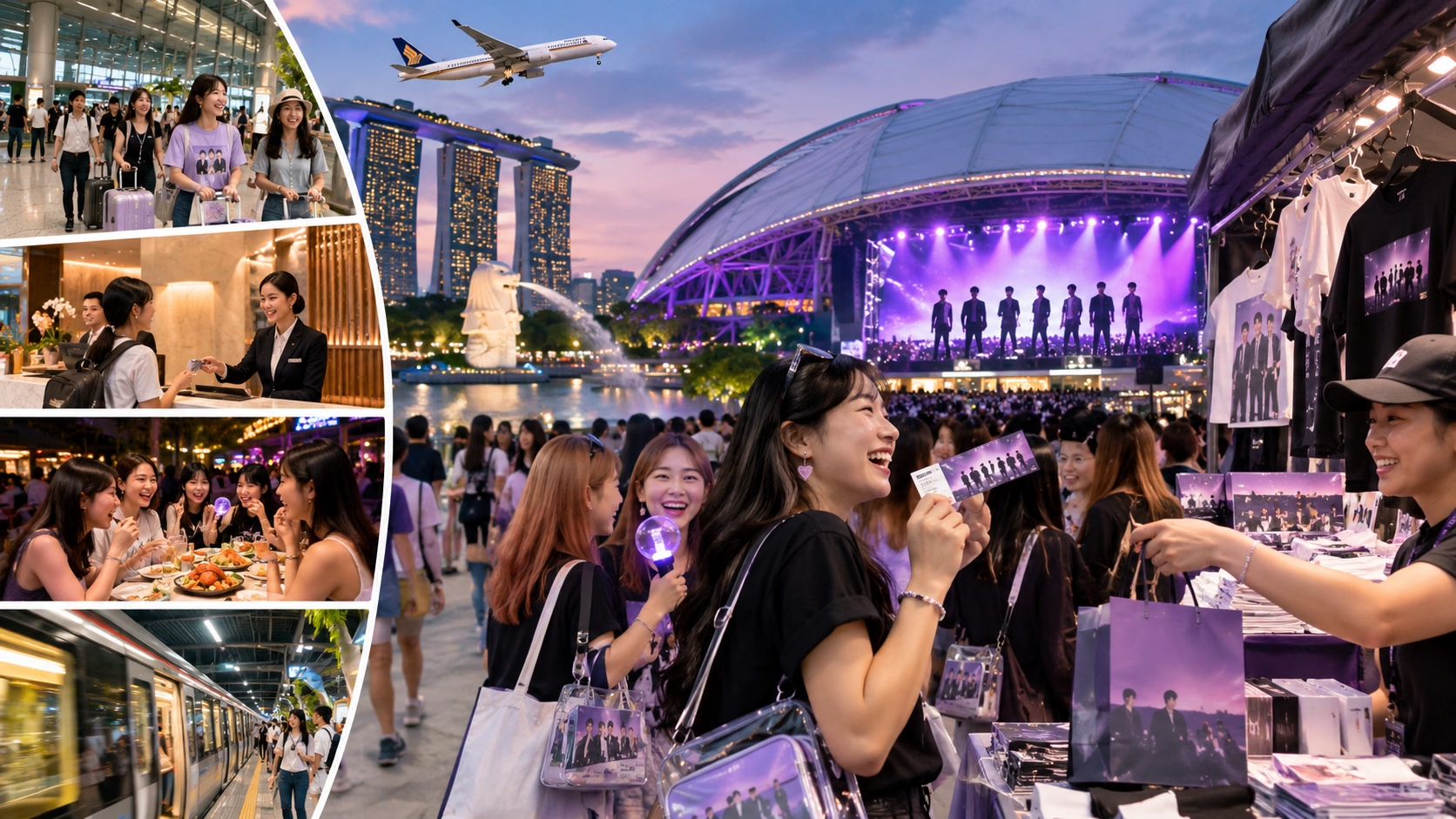
The practical consequence for fans is a market where legitimate resale and fraudulent listings coexist, and where the burden of verification falls largely on the buyer. The government encourages consumers to check terms and conditions and validate ticket legitimacy with official event organisers before purchasing on secondary platforms . For high-demand shows like BTS’s December 2026 run, where all four nights sold out rapidly, this creates a parallel economy of verified transfers and risky speculation.
The scalping debate in Singapore reflects a broader philosophical choice: prioritise market freedom and individual responsibility over regulatory intervention, even when consumer anxiety is measurable. Whether this approach holds as concert demand intensifies remains an open question, but for now, Singapore’s fan economy operates with a secondary market that is tolerated, monitored, and technically constrained rather than legally prohibited.
Author

Clara@gmail.com
Related Posts
The Stadium as Canvas: How Singapore’s Live Events Are Absorbing Immersive Tech
- 0
- 598 words
The National Stadium, with its cavernous dome and 55,000-seat capacity, has always been a difficult venue for intimate storytelling. In 2026, Singapore’s...
Read out all
From Lunch to Last Call: The Hybrid Venues Blurring Singapore’s Day and Night
- 0
- 459 words
One Address, Four Dayparts The traditional night out in Singapore has always involved friction: dinner in one place, drinks in another, a...
Read out all
Generation Sober: How Gen Z Is Replacing the Club Queue with the Coffee Queue
- 0
- 477 words
The S$100 night out vs. the S$20 afternoon For many young Singaporeans, the decision to skip the nightclub is not ideological—it is...
Read out all
Singapore’s Help-to-Buy Ticketing Boom Tests the Limits of Consumer Protection in a Scam-Prone Market
- 0
- 789 words
A Grey Zone Between Service and Scalping Help-to-Buy (HTB) ticketing occupies an uncomfortable space in Singapore’s consumer landscape. It is not ticket...
Read out all
Inside The Kallang’s Strategy to Become Asia’s Premier Concert Destination
- 0
- 427 words
From Sports Hub to Entertainment Powerhouse The National Stadium at The Kallang has hosted Taylor Swift, Coldplay, and Blackpink in recent years....
Read out all
Beyond K-Pop: The K-WAVE × AIGC Alliance and Singapore’s Role in AI-Driven Asian Entertainment
- 0
- 476 words
A Trilateral Bet on the Future of Content At the 20th Busan Content Market in June 2026, a quiet signing ceremony took...
Read out all