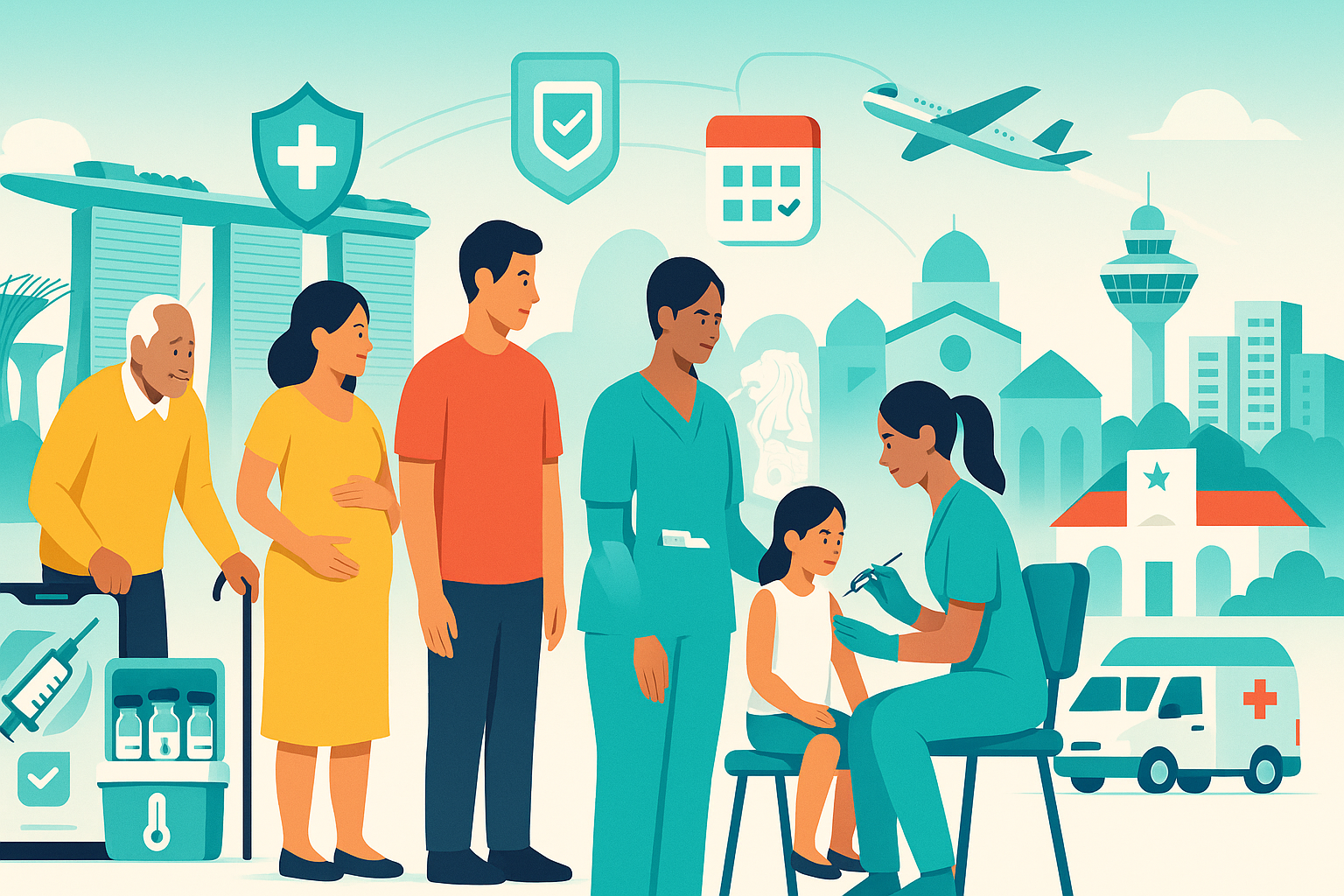
Singapore didn’t get to strong vaccination coverage by accident; it got there by knitting immunisation into everyday life. From the earliest days of school health services to modern digital registries, the system has taught each new cohort that vaccines are ordinary, expected, and worth the trip.
The backbone is a pair of schedules—NCIS for children and NAIS for adults. They scope the journey from infancy vaccines such as hepatitis B, DTaP/IPV/Hib, pneumococcal, and MMR/varicella, to adult offerings like influenza, pneumococcal, Tdap boosters, and HPV for eligible age groups. By publishing these expectations plainly, the Ministry of Health gives families and clinicians the same playbook.
Access matters as much as guidance. Polyclinics, CHAS-participating GPs, and school-based teams keep distances short and queues manageable. Adolescents encounter HPV vaccination where they already are—classrooms—transforming an optional clinic visit into a routine school-day item.
Financing nudges behaviour. Subsidies at public providers and primary care clinics help, while permitted MediSave withdrawals for selected adult vaccines make prevention a planned purchase. When prices are transparent and predictable, uptake climbs without pressure tactics.
Safety and trust are actively cultivated. HSA’s pharmacovigilance watches for adverse events, and providers are trained to screen for contraindications, obtain informed consent, and observe individuals briefly after vaccination. Communication is frank: side effects happen, serious events are rare, and reporting is encouraged so the system can learn fast.
Technology joins the dots. NIR records immunisation history; HealthHub sends reminders and displays schedules; providers see centralised data to coordinate catch-ups. During COVID-19, infrastructure scaled rapidly—mega-centres, appointment systems, and multilingual outreach—and the know-how now serves routine immunisation drive planning.
Singapore also leans into community partnerships. Religious leaders, employers, and grassroots groups host talks, workplace clinics, and weekend events. Materials appear in multiple languages; hotline staff and clinic teams use consistent, plain-language counseling to dispel rumours without scolding.
The result is a culture where vaccines feel normal. Families expect infant shots, teenagers accept school-based HPV, and adults encounter seasonal reminders for influenza and pneumococcal vaccines. In this environment, hesitancy doesn’t vanish, but it meets a calm, coordinated response that is respectful and persistent.
Singapore’s approach is replicable because it balances rigour with practicality. Clear schedules, broad access points, stable financing, meticulous safety systems, and continuous engagement—all stitched together—produce durable coverage year after year. It’s a model built not just on policy, but on habit.
Author

Clara@gmail.com
Related Posts

Innovation Ecosystem and Policy Support in Singapore’s Pharmaceutical Sector
Singapore’s pharmaceutical industry is built on a carefully designed innovation ecosystem that links government, academia, and industry. Rather than growing organically, the...
Read out all
How Singapore’s Government Shapes the Health of Its People
Public health in Singapore is not left to chance. The government deliberately designs structures and policies that influence how people fall ill,...
Read out all
Health-Conscious Dining in Singapore: Eating Trends and Lifestyle Choices
In recent years, Singapore has emerged as a hub for health-conscious dining, where wellness and culinary creativity converge. The city-state’s rich food...
Read out all
What Quality Elderly Care Looks Like in Singapore—From Policy to Practice
Elderly care in Singapore operates as an integrated network rather than isolated services. It connects hospitals, community partners, and home-based teams to...
Read out all
Health in Motion: Singapore’s Whole-of-Society Approach to Active Living
Singapore demonstrates that a city can turn health promotion into a shared endeavor, aligning ministries, schools, employers, and neighborhoods around active living....
Read out all
Inside a Tech-Enabled Care Journey in Singapore
Picture a typical patient journey in Singapore and you’ll see technology at every turn. It begins before arrival: a resident opens HealthHub...
Read out all