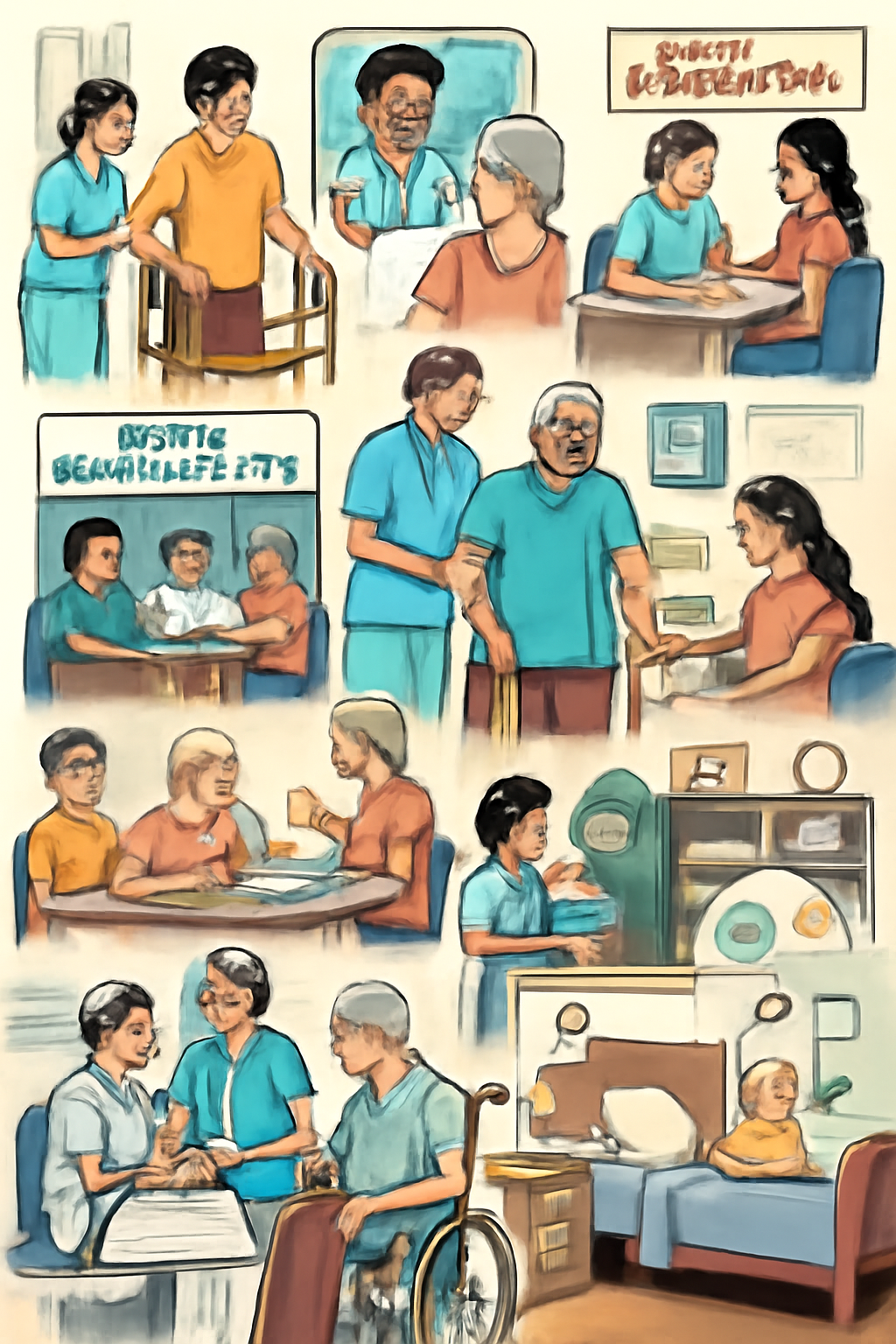
Elderly care in Singapore operates as an integrated network rather than isolated services. It connects hospitals, community partners, and home-based teams to ensure that older adults receive the right support at the right time. The emphasis is on preserving autonomy while meeting medical, functional, and psychosocial needs.
At the entry point are assessments to determine Activities of Daily Living (ADL) abilities, cognitive status, and social supports. Based on this, seniors may be matched to home personal care, home nursing, therapy, or medical escort services. Community day care centers offer meals, exercise, social interaction, and nursing oversight. Dementia day care adds cognitive therapies and structured routines to reduce anxiety and challenging behaviors. For complex conditions or advanced frailty, nursing homes offer round-the-clock clinical care, rehabilitation, and end-of-life services. Transitional facilities and hospital-to-home programs smooth the discharge process, reducing readmission risk.
Regulatory oversight by the Ministry of Health ensures baseline safety and clinical governance, including infection control, medication management, incident reporting, and staff training requirements. The Agency for Integrated Care functions as the navigator, connecting families to subsidies, advising on options, and tracking placement availability across providers. Quality indicators—such as falls per 1,000 bed-days, vaccination rates, pressure injuries, and therapy participation—guide continuous improvement.
The financing structure is multi-pronged. MediShield Life covers large hospital bills; MediSave allows withdrawals for approved long-term care; CareShield Life provides payouts upon severe disability; and means-tested subsidies lower costs for many community and residential services. Schemes like the Silver Support Scheme and generational packages (Pioneer, Merdeka) further ease financial burdens for eligible seniors.
Technology adoption is a strong trend. Teleconsultations reduce travel for routine reviews; smart sensors and bed-exit alerts help prevent falls; electronic medication administration records improve safety; and remote vitals monitoring enables early intervention. Design is equally vital—dementia-friendly layouts, good lighting, and quiet spaces reduce agitation and support orientation.
Caregivers are recognized as pivotal partners. Training workshops teach safe transfers, feeding, hygiene, and communication techniques for dementia. Respite care offers temporary relief through short stays or day programs. Helplines and support groups provide emotional support and practical advice, decreasing isolation and improving sustainability of home care.
For families evaluating providers, consider care team composition (nurses, therapists, physicians), staff-to-resident ratios, language and cultural fit, individualized care plans, fall prevention strategies, and emergency response. Ask about rehabilitation goals, family updates, and end-of-life preferences. Visiting the premises can reveal staff warmth, resident engagement, cleanliness, and mealtime dignity.
Singapore’s direction is clear: grow community supports, expand assisted living concepts, and strengthen preventive health. By combining robust governance with compassionate care and smart financing, the system is designed to deliver quality at scale while honoring the preferences and dignity of older adults.
Author

Clara@gmail.com
Related Posts

NTU Singapore’s Microscopic Peptide Droplets Slash Colorectal Tumour Growth by 67%
- 0
- 352 words
A New Approach to an Old Problem Colorectal cancer remains one of the most challenging malignancies to treat, particularly when tumours develop...
Read out all
Plant Protein Powders and Functional RTDs Are Redefining Singapore’s Urban Supplement Culture
- 0
- 395 words
At 8 a.m. in Singapore’s Central Business District, the breakfast crowd is no longer just ordering kopi and toast. Many are grabbing...
Read out all
Mindful Aesthetics: The Integration of Holistic Mental Wellness into Singapore’s Beauty Routines
- 0
- 563 words
In the bustling metropolis of Singapore, where the pressure to perform is relentless, the beauty industry is recognizing that stress is the...
Read out all
Inside Singapore’s High-Tech Specialist Clinics: AI, Robotics, and Precision Medicine in 2026
- 0
- 353 words
The Rise of AI-Augmented Diagnostics Machine Learning in Radiology and Pathology Radiologists and pathologists in leading private clinics now work alongside AI...
Read out all
Duke-NUS’s Team-Based Learning Model: Forging Clinician-Scientists Ready for Singapore’s Future Healthcare Challenges
- 0
- 467 words
Departing from the conventional undergraduate pathway, Duke-NUS Medical School offers a graduate-entry MD programme that emphasizes scientific discovery and clinical leadership. This...
Read out all
How Singapore Is Using Genomics and Precision Medicine to Shape the Future of Asian Healthcare
- 0
- 618 words
Singapore’s biotechnology ambitions are increasingly centered on a fundamental medical question: why do patients with the same disease respond differently to the...
Read out all