- 0
- 480 words
In a temperature-controlled room in a private apartment, rows of 1990s Japanese denim hang in acid-free garment bags. Nearby, a glass cabinet holds vintage Chanel flaps with 24-karat gold-plated hardware. This is not a boutique or a museum. It is the private archive of a Singapore-based collector who has spent more than a decade sourcing rare fashion pieces. In 2026, such private archives are becoming an important layer of Singapore’s vintage fashion ecosystem, blending passion, preservation and investment.
The Rise of the Private Fashion Archive
Singapore’s serious vintage collectors have moved far beyond casual accumulation. They maintain digital catalogues, control humidity levels and follow restoration protocols. A 2026 profile by CNA Lifestyle (cnalifestyle.channelnewsasia.com) documented a collector whose archive includes more than 200 pieces of 1990s Japanese denim from brands such as Evisu, Sugar Cane and Studio D’Artisan. Each piece is logged with production year, wash technique and original retail price. This level of documentation reflects a broader shift: collectors now see themselves as custodians of fashion history.
Why Japanese Denim Became a Grail Category
Japanese denim from the 1990s is prized for its selvage weaving, natural indigo dyeing and slow production methods. Singapore’s tropical humidity makes preservation difficult, pushing collectors to invest in dehumidifiers, UV-filtered lighting and acid-free storage. Deadstock pairs are increasingly scarce, and prices have risen accordingly. In private collector circles, rare pairs now trade for more than SGD 1,500, with some limited editions fetching significantly higher sums.
Vintage Chanel and the Investment Mindset
Another dominant category is vintage Chanel, particularly Karl Lagerfeld-era pieces from the 1980s and 1990s. Collectors favour the Classic Flap in lambskin with 24-karat gold-plated hardware, which was often handmade with higher-quality materials than modern versions. Auction houses and private dealers in Singapore report steady demand, with rare colours, limited-edition hardware and intact authenticity cards commanding premium prices. For many collectors, vintage Chanel is both a wearable pleasure and an alternative asset.
The Community Behind the Archives
These collectors are not isolated. Many belong to invitation-only WhatsApp and Telegram groups where they authenticate pieces, share restoration advice and organise private viewing sessions. Some have partnered with local fashion schools to let students study garment construction up close. This mentorship model has created a pipeline of younger archivists who see vintage fashion as both a passion and a professional field.
Stewardship, Not Hoarding
Serious collectors are careful to distinguish their practice from hoarding. Stewardship means documenting, preserving and sometimes exhibiting pieces. In 2026, several private archives were loaned to pop-up exhibitions at Design Orchard and the Asian Civilisations Museum, giving the public access to rare fashion history. This shift suggests that Singapore’s private vintage archives are becoming semi-public cultural resources, blurring the line between personal collection and national heritage.
As more collectors digitise their holdings and collaborate with museums, Singapore is positioning itself as a regional hub for vintage fashion authentication and education.
Author

Clara@gmail.com
Related Posts
The Social Enterprise Paradox: Doing Good and Staying Solvent in Singapore’s Eco-Fashion Scene
- 0
- 703 words
The language of Singapore’s sustainable fashion sector tends toward the aspirational: circular economy, conscious consumption, responsible retail. Less frequently discussed is the...
Read out all
The 132-Brand Question—What Three Years of Mall Data Reveal About Chinese Fashion’s Singapore Footprint
- 0
- 651 words
Counting Tenants, Reading Signals: The Retail Geography of Chinese Brand Expansion in Singapore The most concrete way to understand the Chinese fashion...
Read out all
231,000 Tonnes, 3% Recycled: The Hard Numbers Reshaping Singapore’s Reworked Fashion Industry
- 0
- 499 words
The Gap Between Discard and Recovery Singapore’s reworked fashion scene is often framed through individual brand stories — a sold-out sari launch,...
Read out all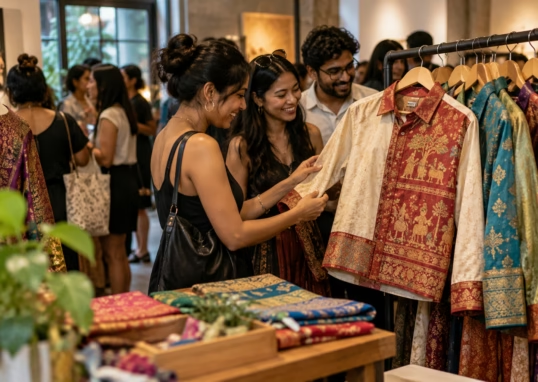
Why Sari Upcycling Is Becoming Singapore’s Most Culturally Specific Circular Fashion Story
- 0
- 464 words
The Cultural Logic of Reuse Upcycled fashion in Singapore is often framed through the language of waste reduction: diverting textiles from incineration,...
Read out all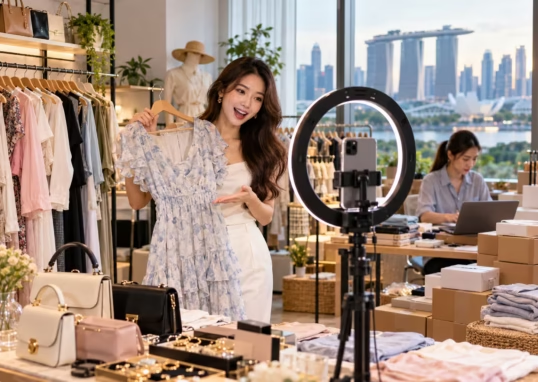
How Singapore’s Homegrown Fashion Labels Rebuilt Their Business Around Livestreaming
- 0
- 514 words
From Side Channel to Core Business Model For a growing cohort of Singaporean fashion brands, livestreaming is no longer a supplementary marketing...
Read out all
Localization as Strategy: How Singapore Fashion Brands Speak Asia’s Many Languages
- 0
- 604 words
The End of One-Size-Fits-All Expansion Singapore fashion brands expanding across Asia are discovering that regional success requires more than translated marketing. Love,...
Read out all