- 0
- 499 words
To walk through Singapore is to flip through the pages of a futuristic novel that actually came true. The city’s modern architecture serves as a chronological map of its rapid economic and social metamorphosis. For architecture enthusiasts, understanding this timeline offers a far richer experience than simply admiring shiny facades.
The Legacy of Post-Independence Optimism
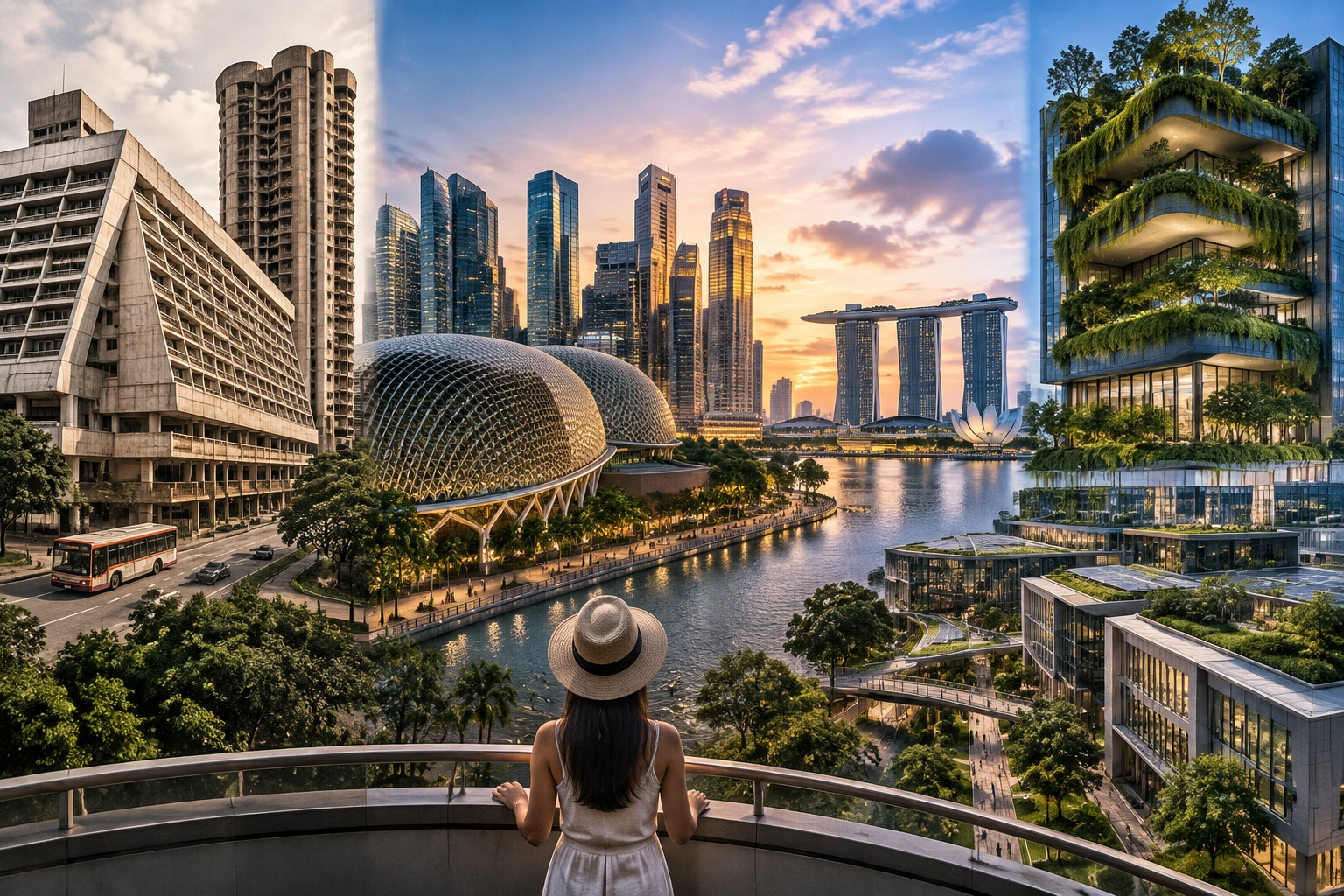
The foundation of Singapore’s architectural identity was laid in the 1970s and 1980s. This era was defined by Brutalism and early Modernism, characterized by raw concrete and functional designs. Buildings like the Golden Mile Complex and the former Pearl Bank Apartments were revolutionary for their time. They introduced the concept of “vertical villages” or high-density living with shared communal spaces.
While some of these structures have faced demolition in recent years, their influence remains. In 2026, architectural tours often begin here to highlight the contrast between the nation’s pragmatic beginnings and its current luxury status. The conservation debates surrounding these buildings have also sparked a new wave of “adaptive reuse” projects, where old structures are retrofitted with modern technology rather than torn down.
The Transition to the “Intelligent” Era
The late 1990s and early 2000s marked Singapore’s pivot toward becoming a “Global City.” This period saw the construction of the Esplanade – Theatres on the Bay . Its spiky aluminum shades, designed to optimize natural light while reducing heat, signified a move toward complex, computer-aided design. It demonstrated that Singapore was no longer just building housing; it was building cultural icons that required sophisticated environmental engineering.
The Contemporary Canvas
Today, the skyline is dominated by structures that prioritize human well-being. The PARKROYAL COLLECTION Pickering in the Central Business District is a stellar example. Designed by WOHA, it features “hotel-in-a-garden” terraces that cascade down the building like rice paddies.
This building effectively brings the rainforest into the concrete jungle, providing habitats for birds and insects while offering guests a retreat from urban stress. It represents a philosophy where architecture is no longer just a shelter but a therapeutic environment.
The Data-Driven City
In 2026, Singapore is moving into an era of “Generative Design.” New buildings are now created using AI algorithms that optimize floor plans for wind flow and sunlight exposure. The Punggol Digital District is the testing ground for this. Here, buildings are designed to be “smart” from the ground up, integrating robotics and IoT sensors to manage energy consumption dynamically.
A report by the Building and Construction Authority (BCA) highlights that the focus has shifted from simply constructing buildings to maintaining their performance over decades. The data collected from these smart districts is available for research, showcasing Singapore’s commitment to transparency in its sustainability goals. For specific statistics on green building performance, you can access the latest releases on the BCA corporate website (bca.gov.sg).
By viewing the city as a time machine, tourists can appreciate the sheer ambition required to transform a small trading port into a leading architectural powerhouse. Each structure is a timestamp, marking a distinct shift in the nation’s priorities.
Author

Clara@gmail.com
Related Posts
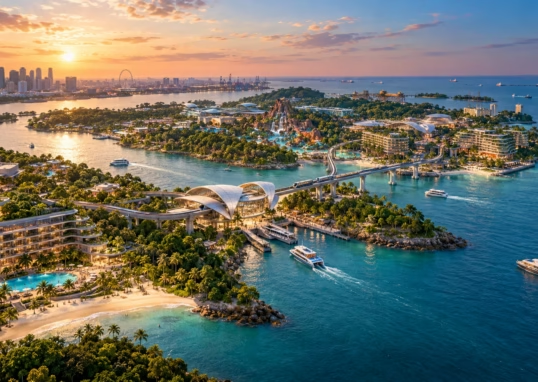
Cooling Sentosa and Carbon Neutrality: The Sustainability Layer Behind the 2030 Transformation
- 0
- 292 words
The 4°C Promise Most tourism master plans treat sustainability as a compliance requirement. Greater Sentosa treats it as a visitor-experience feature. The...
Read out all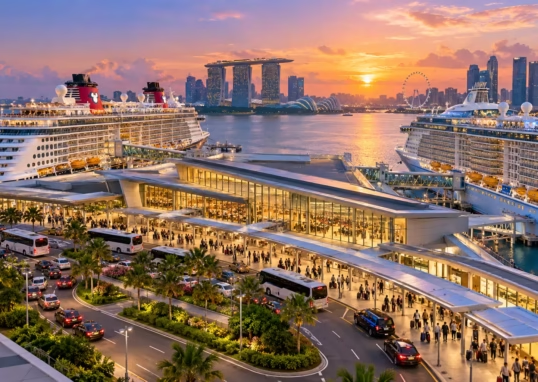
Princess Cruises and Singapore’s Three-Year Partnership: A Blueprint for Cruise Industry Growth in Asia
- 0
- 477 words
A Landmark Partnership for Asian Cruising In May 2026, the Singapore Tourism Board and Princess Cruises announced a three-year partnership that represents...
Read out all
Science Centre Singapore and KidsSTOP: Building Scientific Curiosity Through Play-Based Learning
- 0
- 408 words
A Legacy of Interactive Science Education Since its establishment, Science Centre Singapore has stood as the nation’s premier institution for hands-on scientific...
Read out all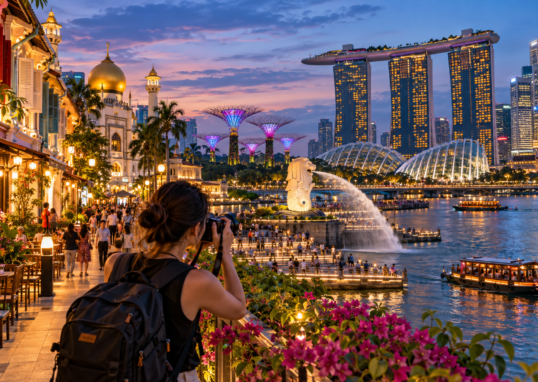
Gardens by the Bay Photography in 2026: A Complete Visual Guide for Travellers
- 0
- 382 words
Gardens by the Bay has welcomed over 87 million visitors since its opening, cementing its status as Singapore’s premier horticultural and photographic...
Read out all
Eating Like a King on a Pauper’s Budget: The Backpacker’s Guide to Singapore Hawker Centres
- 0
- 608 words
The reputation of Singapore as one of the most expensive cities in the world often deters budget travelers, but there is a...
Read out all
Singapore Remote Work Visa Options 2026: Tech.Pass, EntrePass, and Work Holiday Pass Explained
- 0
- 494 words
Many digital nomads assume Singapore offers a dedicated digital nomad visa. It doesn’t. Instead, the city-state uses a suite of targeted passes...
Read out all