- 0
- 376 words
Beyond the Single-Layer Genome
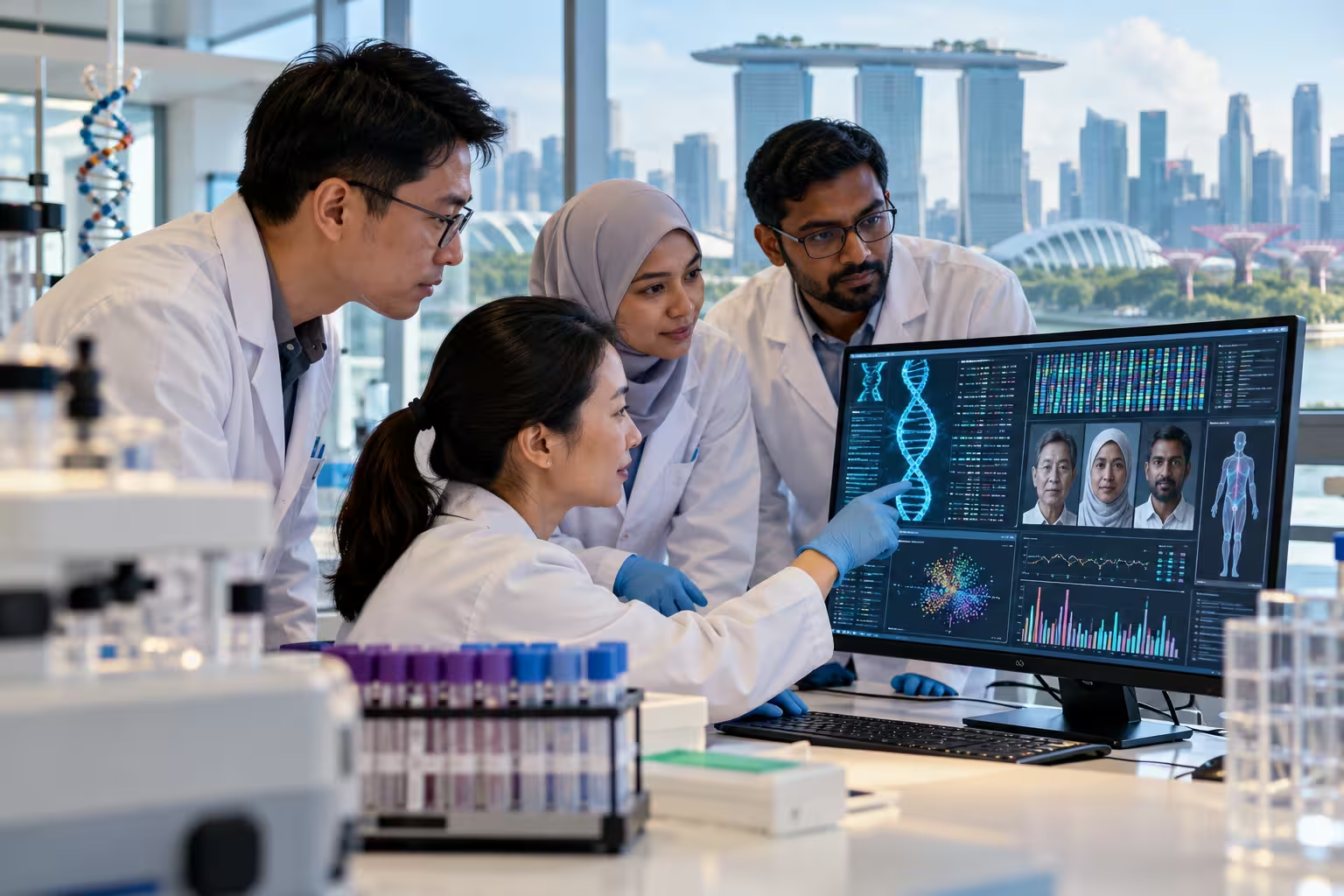
Most genomic studies examine one biological layer at a time. The Health for Life in Singapore (HELIOS) study takes a fundamentally different approach. By integrating whole-genome sequencing, RNA sequencing, DNA methylation quantification, and metabolomic profiling with detailed lifestyle and physiological measurements, HELIOS constructs a multi-dimensional portrait of Asian health.
The study, based at Nanyang Technological University and operating under the PRECISE-SG100K umbrella, has enrolled 10,004 Asian men and women of Chinese, Malay, and Indian descent.
What the Data Reveals
HELIOS researchers have documented extensive lifestyle, physiological, genomic, and molecular diversity between Singapore’s distinct Asian ethnic groups. Perhaps more strikingly, the data show biological interconnectivity between functional layers—how genome regulation patterns correlate with factors like educational attainment and metabolic health.
These findings challenge assumptions that Asian populations can be treated as a homogeneous group in clinical research. They also underscore why precision health must account for intra-population diversity, not just continental ancestry categories.
A Platform for Discovery
The HELIOS cohort serves as a state-of-the-art platform for biomedical researchers seeking to understand the aetiology and pathogenesis of diverse disease outcomes in Asia. Unlike biobanks that collect samples and freeze them for future analysis, HELIOS is designed for longitudinal follow-up, enabling researchers to track how genomic and molecular profiles evolve alongside changing health status.
The study’s multi-omics data are complemented by Singapore-specific lifestyle instruments, including food frequency questionnaires that capture local dietary patterns. This contextual richness allows researchers to move beyond correlation and toward mechanistic understanding of gene-environment interactions.
Real-World Translation: From Cohort to Clinic
The ultimate test of any population cohort is whether its findings change clinical practice. HELIOS data have already contributed to the identification of population-specific risk variants that inform the PPGx pilot’s diagnostic panels. Additionally, the multi-omic reference data are being used to develop AI models trained on local clinical data and practice guidelines, initially targeting cardiometabolic and ophthalmic diseases.
The Bigger Picture
HELIOS represents a philosophical shift in how Asian health research is conducted. Rather than treating diversity as noise to be controlled for, the study treats it as signal to be understood. For a region home to more than half the world’s population, this orientation is not merely scientifically interesting—it is clinically essential.
Author

Clara@gmail.com
Related Posts

Turmeric, Ginseng, and Echinacea—The Three Botanicals Reshaping Singapore’s Supplement Aisle
- 0
- 583 words
The Turmeric Takeover Walk into any Guardian, Watsons, or Unity pharmacy in Singapore, and the dominance of turmeric is unmistakable. Curcumin capsules,...
Read out all
Cancer Screening Crisis in Singapore’s Malay Community Exposes Deeper Health Equity Failures
- 0
- 520 words
A Preventable Crisis Singapore’s National Population Health Survey 2025 delivered a sobering verdict on cancer screening equity: Malay women have the lowest...
Read out all
The Nursing Exodus: Why Singapore’s Local Nurses Are Leaving and What It Will Take to Keep Them
- 0
- 650 words
The Silent Drain on Singapore’s Healthcare Frontline Behind the polished corridors of Singapore’s public hospitals, a quiet crisis is unfolding. Over half...
Read out all
NTU Singapore’s Microscopic Peptide Droplets Slash Colorectal Tumour Growth by 67%
- 0
- 352 words
A New Approach to an Old Problem Colorectal cancer remains one of the most challenging malignancies to treat, particularly when tumours develop...
Read out all
Plant Protein Powders and Functional RTDs Are Redefining Singapore’s Urban Supplement Culture
- 0
- 395 words
At 8 a.m. in Singapore’s Central Business District, the breakfast crowd is no longer just ordering kopi and toast. Many are grabbing...
Read out all
Mindful Aesthetics: The Integration of Holistic Mental Wellness into Singapore’s Beauty Routines
- 0
- 563 words
In the bustling metropolis of Singapore, where the pressure to perform is relentless, the beauty industry is recognizing that stress is the...
Read out all