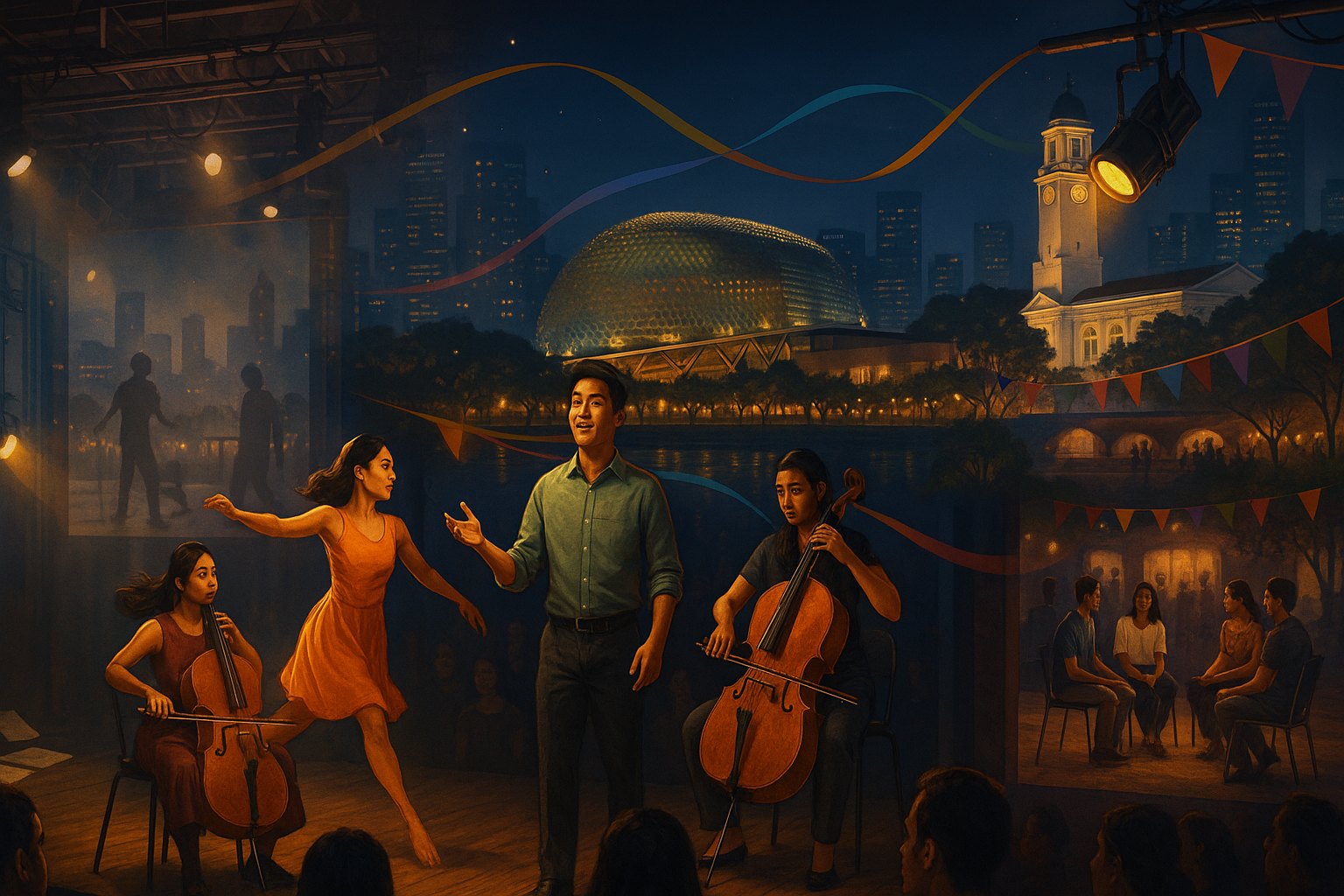
To understand theatre in Singapore, begin with its mosaic of communities. Chinese opera troupes, Malay bangsawan, and Indian performance traditions laid the groundwork well before English-language theatre gained momentum in the mid-20th century. After independence, state support and community passion accelerated growth, creating a professional ecosystem where classical texts, new writing, and devised works co-exist.
Infrastructure is unusually dense for a small island. The Esplanade anchors major premieres, while Victoria Theatre’s restored spaces link heritage with present-day needs. Drama Centre and Gateway Theatre serve both commercial and experimental fare. Goodman Arts Centre and Aliwal provide rehearsal rooms, studios, and black boxes that keep costs manageable and encourage R&D.
Companies carry distinct artistic DNA. WILD RICE champions original Singaporean voices and reimagined classics. The Necessary Stage pursues collaborative dramaturgy and social inquiry. SRT hosts international tours and runs training arms for youth, while Pangdemonium brings emotionally charged contemporary plays to wide audiences. TheatreWorks emphasizes development, residencies, and cross-cultural collaboration.
Festivals act as catalysts. SIFA offers a curated lens on international practice, often commissioning local work that converses with the region. The M1 Fringe foregrounds experimentation and taboo topics, creating space for emerging artists. Smaller showcases—campus festivals, neighborhood arts weeks—channel grassroots energy back into the main circuit.
Training pipelines support the craft. LASALLE and NAFA provide degree programs in acting, design, and technical theatre, while university clubs and independent studios feed curiosity. Many artists apprentice across roles—performers learn producing; designers try dramaturgy—strengthening the ecosystem’s resilience.
What sets Singapore apart is its linguistic fluidity. Playwrights weave English with Malay, Hokkien, Singlish, Tamil, and Mandarin; surtitling is common. This multilingual texture doesn’t just reflect demographics; it powers distinctive dramaturgies where translation becomes an aesthetic choice. Recurring motifs—urban alienation, intergenerational ties, national narratives—gain freshness when refracted through multiple tongues.
Audience experience is friendly to newcomers. Ticketing portals are clear, with concessions for students and seniors. Ratings and advisories communicate themes, language, and intensity. Pre- and post-show talks are common, offering entry points into process and context. If you plan a short visit, pair a marquee night at the Esplanade with a studio show in Goodman or Aliwal to sample both scale and intimacy.
Taken together, Singapore’s theatre is compact, multilingual, and craft-driven. Its institutions keep the lights on; its artists keep the fires lit.
Author

Clara@gmail.com
Related Posts
Inside The Kallang’s Strategy to Become Asia’s Premier Concert Destination
- 0
- 427 words
From Sports Hub to Entertainment Powerhouse The National Stadium at The Kallang has hosted Taylor Swift, Coldplay, and Blackpink in recent years....
Read out all
Beyond K-Pop: The K-WAVE × AIGC Alliance and Singapore’s Role in AI-Driven Asian Entertainment
- 0
- 476 words
A Trilateral Bet on the Future of Content At the 20th Busan Content Market in June 2026, a quiet signing ceremony took...
Read out all
The Rise of Independent Artist Management in Singapore: Tasha Low and the New Autonomy Model
- 0
- 606 words
A Defining Moment in Singapore’s Talent Management Landscape When Tasha Low announced her departure from WILD Entertainment Group in August 2026 after...
Read out all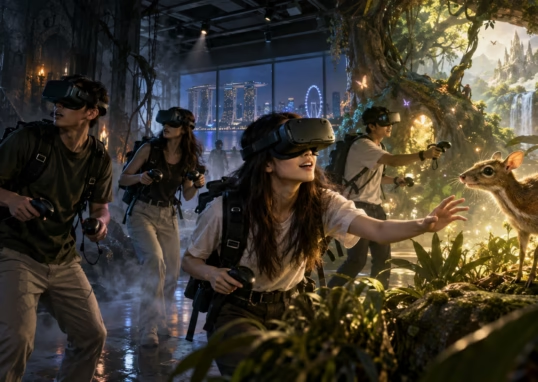
Beyond the Headset: Location-Based VR Redefines Narrative Entertainment in Singapore
- 0
- 500 words
HavenXR: Where Cinema Meets Gaming Singapore has long positioned itself at the intersection of entertainment, innovation, and technology. The next evolution of...
Read out all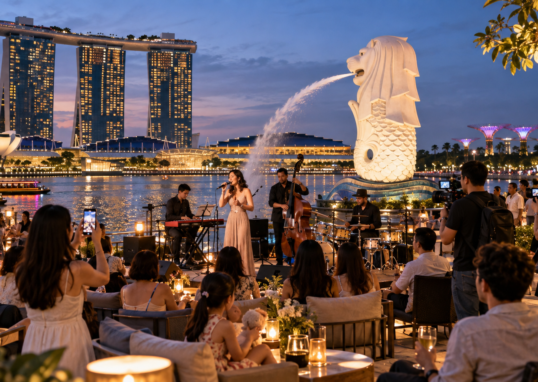
Inside Singapore’s Influencer Economy: When Entertainment Content Becomes the Most Powerful Ad Format
- 0
- 717 words
The Creator-Led Advertising Boom Singapore’s advertising industry is witnessing a quiet revolution, and its driving force isn’t a new media platform or...
Read out all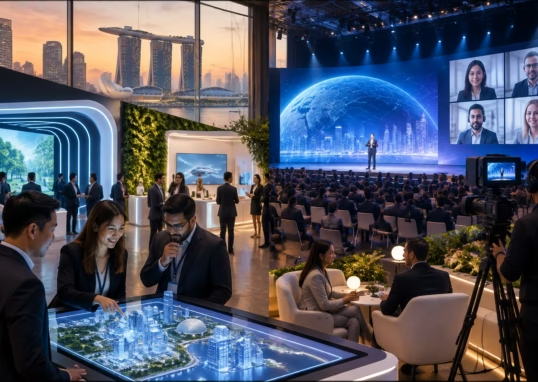
Inside Singapore’s MICE Powerhouse: Event Organizers Driving a $3.5 Billion Industry
- 0
- 486 words
Singapore has cemented its position as Asia’s undisputed MICE (Meetings, Incentives, Conferences, and Exhibitions) capital. In 2026, the sector is on track...
Read out all