- 0
- 2,257 words
Singaporean food is famous for its rich mix of Malay, Chinese, Indian, Peranakan, and global influences. From laksa and nasi lemak to stir-fried greens, fish soup, curry, and hawker-style noodles, the country’s cuisine has always been shaped by trade, migration, and adaptation. But as Singapore continues to think more seriously about food security and sustainability, one question is becoming more important: what role do local ingredients play in Singaporean cuisine?
The answer is simple but meaningful. Local ingredients in Singaporean cuisine help improve freshness, reduce unnecessary food miles, support local farms, and strengthen the country’s food resilience. They also give home cooks, restaurants, and food businesses a practical way to make better choices without abandoning the flavours people already love.
This does not mean every ingredient must be grown locally. Singapore is a small city-state with limited land, so imported food will continue to play a major role. But choosing local produce where it makes sense—such as eggs, leafy greens, fish, herbs, mushrooms, and certain vegetables—can make everyday meals fresher, more reliable, and more connected to the place where people live.
Why Local Ingredients Matter in Singapore Today
Singapore imports a large portion of its food, which makes the country highly connected to global supply chains. This has many benefits: consumers enjoy a wide variety of ingredients year-round, from Japanese seafood to Australian beef, Malaysian vegetables, Thai herbs, and Indian spices. However, dependence on imports also means Singapore must stay prepared for disruptions caused by weather, logistics issues, disease outbreaks, export restrictions, or rising transport costs.
This is why local food production has become part of Singapore’s long-term food strategy. The Singapore Food Agency has highlighted the country’s “30 by 30” goal, which aims to build the capability and capacity to produce 30% of Singapore’s nutritional needs locally by 2030. You can read more from the Singapore Food Agency here: Singapore Food Agency – 30 by 30.
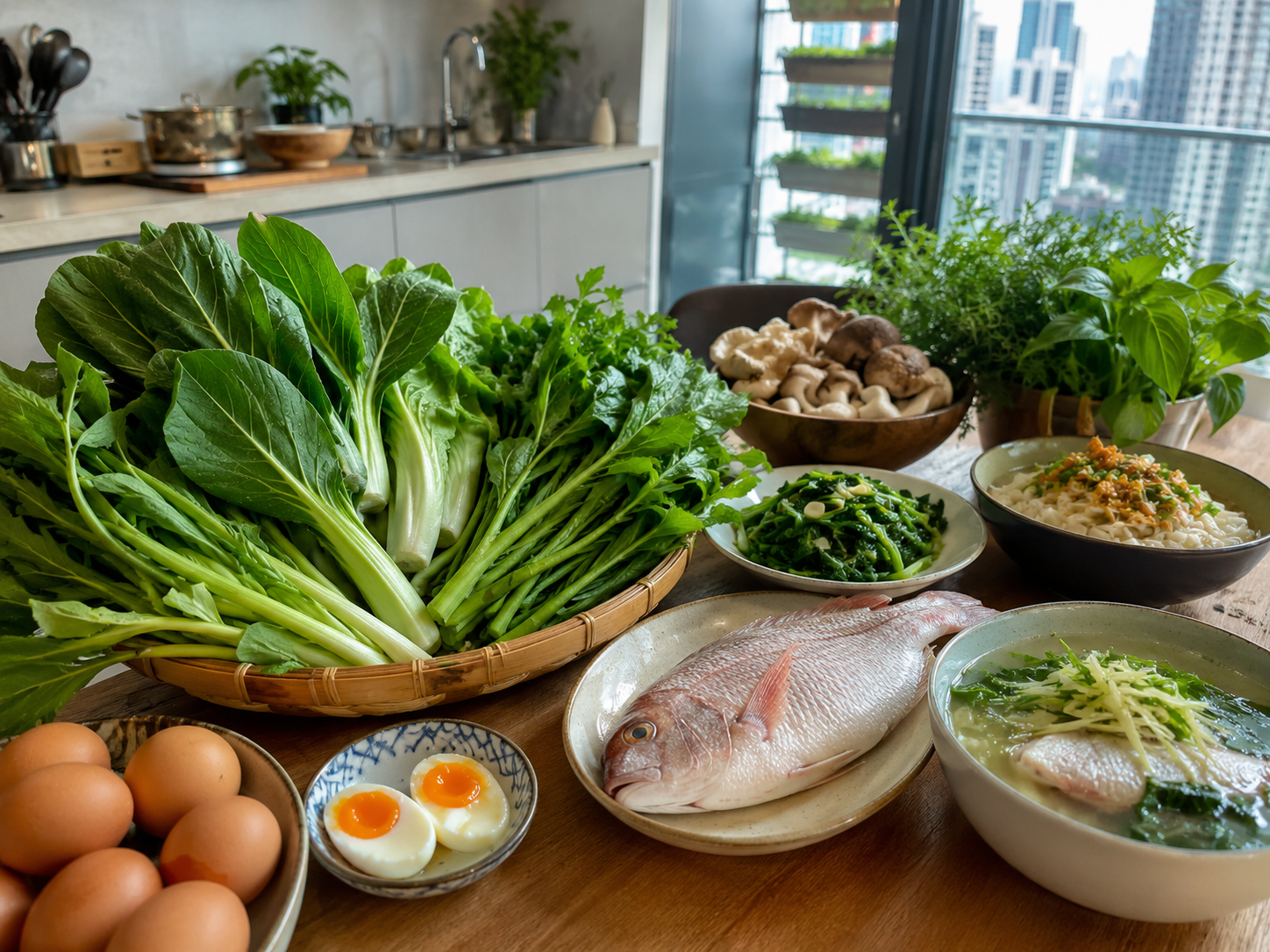
For everyday consumers, this may sound like a national policy issue, but it shows up in very practical ways. A young working couple cooking dinner after work may choose locally grown xiao bai cai or kailan because it is fresh and quick to prepare. A parent making fish soup for the family may choose responsibly farmed local fish when available. A café may feature local eggs because they are consistent, traceable, and suitable for high-volume cooking.
Local ingredients in Singaporean cuisine are not just about patriotism or trendiness. They are about making food systems more stable while keeping meals familiar, accessible, and enjoyable.
How Local Produce Improves Quality, Taste, and Freshness
One of the most immediate benefits of local ingredients is freshness. When produce travels a shorter distance from farm to market, it often spends less time in storage and transit. This can help preserve texture, colour, and flavour, especially for delicate ingredients such as leafy greens, herbs, microgreens, mushrooms, and eggs.
For example, local leafy vegetables can work beautifully in everyday Singaporean meals. Kangkung, nai bai, chye sim, and spinach are commonly used in stir-fries, soups, noodle dishes, and simple rice meals. When fresh, these vegetables need very little effort: a quick stir-fry with garlic, a splash of light soy sauce, or a short simmer in soup is often enough. The natural sweetness and crunch are easier to appreciate when the produce has not been sitting too long.
Freshness also matters for Singaporean dishes because many of them depend on balance. A good bowl of fish soup is not only about the broth; it also depends on fresh greens, clean-tasting fish, and herbs that brighten the dish. A plate of nasi lemak feels more complete when the cucumber is crisp, the egg is rich, and the herbs in the sambal are fragrant. Even simple home-cooked meals like steamed egg, vegetable soup, or fried bee hoon improve when the basic ingredients are fresh.
Another advantage is traceability. Local produce often comes with clearer information about where it was grown or produced. This can be reassuring for households and food businesses that care about consistency and food safety. The Singapore Food Agency provides information on local produce and farming, which can be useful for readers who want to understand the local food ecosystem: SFA – Local Produce.
That said, “local” does not automatically mean “better” in every case. Quality still depends on how the ingredient is grown, handled, stored, and cooked. A local vegetable that has been stored poorly will not be better than a well-handled imported one. The smarter approach is to look at freshness, seasonality, supplier reliability, and how the ingredient will be used in the dish.
Sustainability: The Bigger Role of Local Ingredients
Sustainability is often discussed in abstract terms, but in the kitchen it becomes very practical. Choosing more local ingredients can reduce the distance food travels, support local producers, and encourage a more resilient food system. In Singapore, where land is limited and food demand is high, this is especially important.
Local production can also encourage innovation. Urban farms, indoor vegetable farms, fish farms, egg farms, and high-tech agriculture projects are part of Singapore’s evolving food landscape. These systems are not a complete replacement for imports, but they can help diversify food sources. A more diverse food supply is usually more resilient than one that depends too heavily on a few countries or routes.
For home cooks, sustainability can begin with small decisions. Buying local eggs instead of imported eggs when available is one step. Choosing locally farmed greens for weekday stir-fries is another. Supporting restaurants that work with local producers can also help create demand. These choices may seem small, but when repeated across households, cafés, caterers, and hawker suppliers, they send a signal that local food has value.
Sustainability is also closely linked to food waste. Fresh ingredients that last longer in the fridge are less likely to be thrown away. If a bunch of local greens is fresher when purchased, a household has more time to cook it before it wilts. Singapore has also taken food waste seriously as part of broader sustainability efforts. Readers can explore more through the National Environment Agency’s food waste information: NEA – Food Waste Management.
The key point is not perfection. Most Singaporean households will still buy a mix of local and imported ingredients. The goal is to make thoughtful choices where they make sense. A bowl of home-cooked soup may use imported dried scallops, Malaysian garlic, Thai rice, and local greens. That is still a practical and culturally honest version of sustainable cooking in Singapore.
How to Use More Local Ingredients in Everyday Cooking
Using more local ingredients does not require a dramatic change in diet. The best approach is to start with dishes you already cook and replace one or two ingredients with local alternatives.
For a simple stir-fry, try using locally grown leafy greens with garlic, oyster sauce, or fermented bean paste. The cooking time is short, the flavour is familiar, and the vegetables remain crisp. For breakfast, local eggs can be used in soft-boiled eggs with kaya toast, scrambled eggs, steamed egg custard, or fried rice. For soups, locally farmed fish or fresh greens can be added to clear broth, fish soup, or sliced fish bee hoon.
A practical weekly routine might look like this. On grocery day, choose two local staples: one leafy green and one protein such as eggs or fish. Plan three meals around them. The greens can go into a garlic stir-fry, noodle soup, or fried rice. The eggs can be used for breakfast, steamed egg, or a quick omelette with spring onions. This method keeps the habit simple and reduces the chance of food waste.
Restaurants and small food businesses can take a similar approach. Instead of redesigning an entire menu around local produce, they can start with one dish. A café might use local eggs in its breakfast set. A modern Singaporean restaurant might feature local mushrooms in a stir-fried noodle dish. A hawker-style stall might highlight local greens as part of a soup or economy rice offering. This feels more natural than forcing a “farm-to-table” concept that does not fit the cuisine.
Local ingredients can also work well in fusion or modern Singaporean cooking. Local microgreens can garnish laksa-inspired pasta. Local mushrooms can add depth to vegetarian rendang or mee pok. Fresh herbs can lift sambal, salads, grain bowls, and seafood dishes. The important thing is to respect flavour first. Sustainability should support good cooking, not replace it.
Common Mistakes When Choosing Local Ingredients
One common mistake is assuming local ingredients are always more expensive. Some may cost more, especially if they come from smaller farms or high-tech systems, but others can be reasonably priced depending on availability, season, and retailer. The better question is not “Is local always cheaper?” but “Where does local offer better value?” If local eggs are fresher and more consistent for your household, they may be worth choosing even if the price difference is small.
Another mistake is buying local produce without a plan. Fresh vegetables still spoil if they sit unused in the fridge. Buying local only helps reduce waste when you actually cook what you buy. Before purchasing, think of at least two dishes you can make with the ingredient.
A third mistake is treating sustainability as an all-or-nothing lifestyle. Singaporean cuisine has always depended on regional and international ingredients. Rice, spices, dried seafood, soy products, and many sauces often come from outside Singapore. A realistic approach is better than a rigid one. Choose local where it fits, and choose responsibly sourced imports where local options are not available.
It is also a mistake to ignore cooking technique. Fresh local greens can still turn soggy if overcooked. Local fish can still taste flat if the broth is poorly seasoned. Good ingredients are a foundation, not a guarantee. Proper storage, timing, seasoning, and heat control still matter.
Practical Tips for Buying and Cooking Local
Start with ingredients that are easy to use. Local eggs, leafy greens, mushrooms, herbs, and fish are good entry points because they fit naturally into many Singaporean dishes. They do not require unfamiliar recipes or special equipment.
Check labels and supplier information when shopping. Some supermarkets and wet market stalls identify local produce clearly, while others may require you to ask. Over time, you will learn which vendors carry reliable local options.
Store ingredients properly. Leafy greens usually last longer when wrapped loosely in kitchen paper and stored in a container or produce bag in the fridge. Eggs should be kept according to the storage guidance on the packaging. Fish should be cooked soon after purchase or stored safely if not used immediately.
Cook delicate ingredients simply. Local produce often shines in dishes that do not hide freshness under heavy sauces. Garlic stir-fried greens, clear soups, steamed egg, omelettes, and light noodle dishes are good places to begin.
Finally, support local producers beyond grocery shopping. Visit farmers’ markets when available, look for restaurants that name local suppliers, and follow credible organisations such as the Singapore Food Agency for updates. Community gardening can also help people understand the effort behind food production. For those interested in growing herbs or vegetables at home, NParks provides useful gardening resources: NParks – Gardening.
Conclusion
Local ingredients in Singaporean cuisine matter because they connect freshness, flavour, sustainability, and food resilience in a practical way. They help everyday cooks prepare better meals, support local producers, reduce unnecessary waste, and contribute to a stronger food system.
This does not mean replacing every imported ingredient. Singapore’s food culture is built on regional and global exchange, and that will continue. The more useful goal is balance: use local ingredients where they make sense, value freshness, cook thoughtfully, and avoid waste.
For home cooks, the first step can be as simple as choosing local eggs for breakfast or local greens for dinner. For restaurants, it may mean featuring one locally sourced ingredient in a signature dish. Small choices, repeated often, can make Singaporean food not only delicious but also more resilient for the future.
6. FAQ
What are local ingredients in Singaporean cuisine?
Local ingredients in Singaporean cuisine are food items grown, farmed, or produced in Singapore, such as leafy greens, eggs, fish, mushrooms, herbs, and selected vegetables. They can be used in everyday dishes like stir-fries, soups, noodles, rice meals, and breakfast sets.
Why are local ingredients important in Singapore?
They are important because they can improve freshness, support local producers, reduce reliance on long supply chains, and contribute to Singapore’s food resilience. They also give consumers more traceable options for daily cooking.
Are local ingredients always more sustainable?
Not always. Local ingredients can reduce transport distance and support food resilience, but sustainability also depends on farming methods, energy use, packaging, storage, and food waste. The best approach is to choose fresh, well-produced ingredients and use them fully.
Are local ingredients more expensive in Singapore?
Some local ingredients may cost more, while others are competitively priced. Price depends on supply, production method, retailer, and demand. Shoppers should compare value based on freshness, quality, shelf life, and intended use.
How can I start using local ingredients at home?
Start with familiar ingredients such as local eggs, leafy greens, mushrooms, herbs, or fish. Use them in simple dishes you already cook, such as garlic vegetables, steamed egg, fish soup, fried rice, or noodle soup.
Where can I learn more about Singapore’s local food production?
A good starting point is the Singapore Food Agency, especially its resources on local produce and the “30 by 30” food security goal.
Author

Clara@gmail.com
Related Posts

Inside Singapore’s Bean-to-Bar Revolution: The Artisans Redefining Chocolate Craft
- 0
- 535 words
From Supermarket Shelves to Craft Workshops Singapore’s artisanal chocolate movement has evolved from a niche curiosity into a formidable force within the...
Read out all
At-Sunrice GlobalChef Academy and the “East-Meets-West” Chef Training Model
- 0
- 437 words
At-Sunrice GlobalChef Academy occupies a distinct position in Singapore’s culinary education market: it is neither a government technical institute nor a traditional...
Read out all
Quick Commerce Revolution: How Singapore’s Grocery Delivery Market Is Reshaping Urban Convenience
- 0
- 431 words
The Speed Economy Comes to Singapore’s Groceries Singapore’s relationship with grocery shopping is undergoing a fundamental transformation. What was once a weekly...
Read out all
Cultivated Beef Meets Frozen Formats: Singapore’s Regulatory Breakthrough Opens New Product Frontiers
- 0
- 474 words
A Regulatory First That Ripples Through the Freezer Aisle In August 2026, the Singapore Food Agency approved Aleph Farms’ cultivated thin-cut steak...
Read out all
Why Korean Convenience Store Culture and Street Food are Taking Over Singapore’s Snack Scene
- 0
- 448 words
While high-end Korean restaurants capture the attention of critics, the true penetration of Korean culture in Singapore is happening on the streets...
Read out all
The Omakase Effect: High-End Sushi Dining Transforms Singapore’s Seafood Sourcing and Luxury F&B Scene
- 0
- 359 words
The New Face of Luxury Dining Singapore’s luxury dining scene has long been dominated by European fine dining and modern Asian fusion....
Read out all