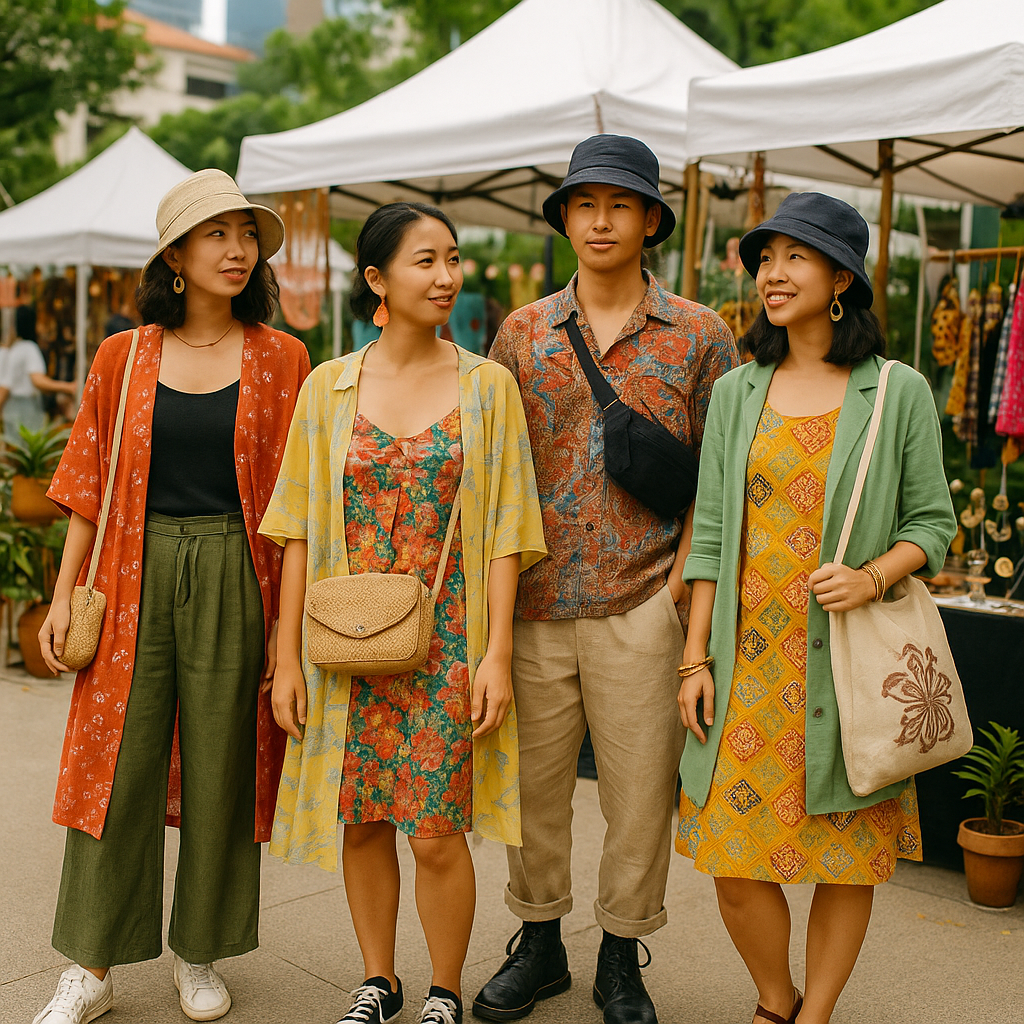
In recent years, festivals in Singapore have evolved into dynamic stages where local fashion designers can shine. Whether at large-scale music festivals, arts carnivals, or cultural events, what people wear increasingly reflects the ingenuity of Singapore’s creative scene. Festival fashion is now a key avenue for homegrown labels to connect with audiences, test new ideas, and build communities around their design philosophies.
For many Singapore-based designers, festivals serve as real-world laboratories. Instead of presenting their pieces only on static runways or lookbooks, they see their garments in motion—dancing, walking, and mingling under bright lights or open skies. This allows them to explore how fabrics behave in humidity, how silhouettes move with the body, and how colors respond to natural or staged lighting. Feedback is immediate: if a design photographs well, withstands the heat, and draws compliments, it often becomes a signature piece or inspires follow-up collections.
Singapore’s festival fashion scene is also defined by its rich cultural layering. Designers routinely borrow elements from the city’s diverse communities to create pieces that feel familiar yet fresh. A contemporary jumpsuit might feature a print inspired by Indian block patterns, while a bomber jacket could incorporate Peranakan color palettes. Rather than replicating traditional garments, designers reinterpret these influences into garments suitable for DJs’ sets, street performances, and immersive art installations.
Pop-up booths and market segments within festivals further deepen the relationship between designers and attendees. Local brands set up stalls where visitors can browse limited-edition items, customize pieces, or learn more about the stories behind each collection. Some designers offer on-the-spot printing, embroidery, or patchwork, turning festival fashion into a live, participatory experience. These interactions humanize the design process and help customers feel connected to the people behind the clothes.
Another important aspect is accessibility. Many Singaporean labels understand that festival-goers range from students to working professionals, so they aim to offer price points that are approachable without compromising design integrity. Capsule collections tailored specifically for festival seasons might include versatile pieces that can transition from day to night or from casual settings to more polished occasions. Reversible tops, detachable sleeves, and modular accessories are popular strategies to offer more value and flexibility.
Digital culture plays a crucial role as well. Designers strategically plan drops or collaborations around major festivals in the city, leveraging the buzz to gain visibility. Limited-release collections tied to specific events encourage attendees to see fashion as part of the festival’s narrative. Hashtags, outfit challenges, and style contests encourage people to share their looks online, effectively turning customers into co-creators of the brand’s visual identity.
The emphasis on sustainability is steadily growing among Singapore’s creative community. Designers experiment with recycled fabrics, natural dyes, and zero-waste cutting techniques, often promoting these commitments at festival booths. Educational panels or small exhibitions sometimes accompany fashion-focused events, sparking conversations about responsible consumption. As a result, festival fashion in Singapore is not only about looking stylish but also about making conscious choices and supporting brands that align with personal values.
Through all these elements, Singapore’s festivals function as open, accessible runways. They allow local designers to step outside traditional fashion structures and connect directly with people who are eager to wear outfits that celebrate the city’s identity, creativity, and forward-thinking spirit.
Author

Clara@gmail.com
Related Posts
How Singapore’s Homegrown Fashion Labels Rebuilt Their Business Around Livestreaming
- 0
- 514 words
From Side Channel to Core Business Model For a growing cohort of Singaporean fashion brands, livestreaming is no longer a supplementary marketing...
Read out all
Localization as Strategy: How Singapore Fashion Brands Speak Asia’s Many Languages
- 0
- 604 words
The End of One-Size-Fits-All Expansion Singapore fashion brands expanding across Asia are discovering that regional success requires more than translated marketing. Love,...
Read out all
The Comfort Revolution: How Singaporean Footwear Brands Are Redefining Support, Health, and Everyday Wear
- 0
- 658 words
From Pain Point to Product Innovation: The Sunnystep Story Sometimes the most disruptive innovations emerge from the most personal struggles. Mao Ting,...
Read out all
Gen Z vs. Gen X—The Generational Battle Over Singapore’s Office Dress Code
- 0
- 576 words
Two Generations, Two Definitions of Professionalism Walk into any Singapore office in 2026, and you may witness a quiet cultural collision. A...
Read out all
Korean Fashion Brands Are Betting Big on Singapore—and Winning
- 0
- 572 words
The Orchard Road Invasion Nobody Saw Coming When Shinsegae Tomboy opened standalone stores for Studio Tomboy and VOV at the METRO department...
Read out all
Blending Tradition with Tech: How Singaporean Fashion Schools Are Forging the Ultimate Hybrid Designers in 2026
- 0
- 465 words
The modern fashion designer is expected to be a polymath. They must be an artist, an engineer, a marketer, and increasingly, a...
Read out all