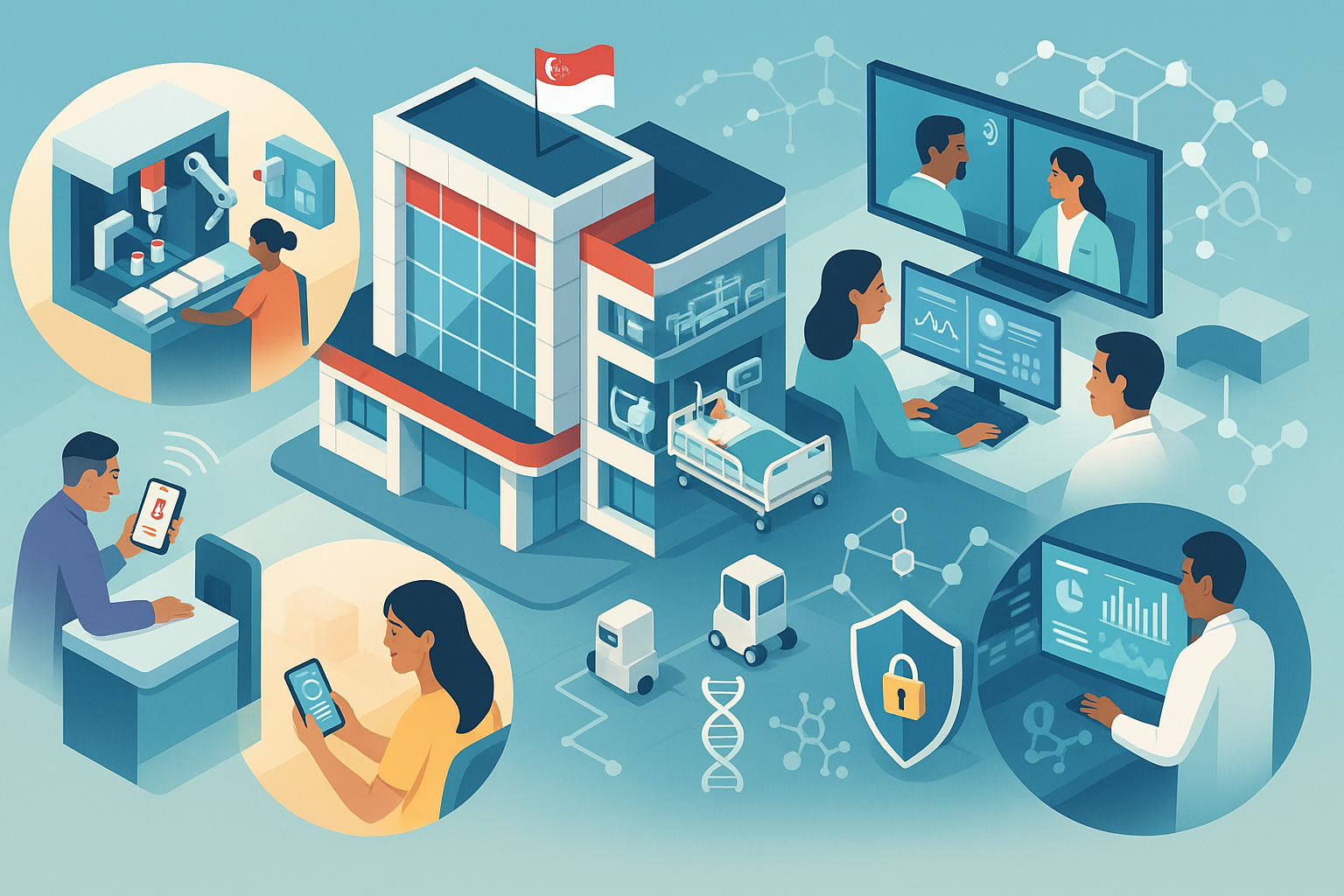
Picture a typical patient journey in Singapore and you’ll see technology at every turn. It begins before arrival: a resident opens HealthHub to book a slot with a polyclinic, receives triage questions online, and uploads photos of a rash for an initial nurse review. The system proposes a video consult if criteria fit, or directs the patient to an in-person visit if red flags appear.
At the clinic, registration is contactless. Identity is verified securely, allergies and long-term medications appear from the NEHR, and the GP’s dashboard presents recent labs from an earlier specialist appointment. Clinical decision support suggests evidence-based order sets based on the presenting problem. When the doctor prescribes, drug–drug interaction alerts are checked automatically; the e-prescription routes to an automated pharmacy, which prepares the medication and sends a pickup notification.
For cases needing escalation, referrals move digitally. The receiving specialist views structured notes and test results, avoiding repetition. If imaging is ordered, radiology AI assists with triage, highlighting urgent abnormalities for faster review. The radiologist remains the final arbiter, but the queue moves more safely and efficiently. In emergency departments, similar triage support surfaces patients with sepsis indicators or stroke symptoms, helping teams beat time-sensitive targets.
Hospitals increasingly function as command centres for home-based care. Remote monitoring kits record vitals for heart failure, COPD, or post-operative recovery. A dashboard flags concerning trends; nurses call or message patients, adjust care plans, or schedule early reviews. Clinicians collaborate in virtual multidisciplinary meetings, where data and imaging are shared in real time.
Robotics and automation handle the back-of-house grind: autonomous mobile robots shuttle supplies between floors, pneumatic tubes speed lab specimens, and inventory systems forecast demand to prevent stockouts. On wards, digital observation charts reduce charting friction, and early warning scores trigger rapid response teams. Barcode matching ensures the right patient gets the right medication at the right time.
Data architecture underpins it all. Interoperability—achieved through standards like HL7 FHIR—allows systems from different vendors to exchange information securely. Role-based access ensures that only authorised personnel see sensitive details. Cybersecurity layers include encryption at rest and in transit, network micro-segmentation, and continuous monitoring; healthcare is a prime target, so defenses are engineered like critical infrastructure.
Education keeps pace with change. Clinicians are trained on new pathways through simulation, and feedback loops refine order sets and alerts to reduce fatigue. Patients receive digital literacy support through helplines, community partners, and simplified interfaces in multiple languages. Cost protections and subsidies help ensure that telehealth and remote devices are not luxuries but mainstream options.
The outcome is a care journey that is faster at the front door, safer at handoffs, and kinder to clinicians’ time. Singapore’s model shows how a compact system can scale impact: put the patient’s data at the center, graft automation onto the most error-prone steps, and let teams practice at the top of their license.
Author

Clara@gmail.com
Related Posts

Innovation Ecosystem and Policy Support in Singapore’s Pharmaceutical Sector
Singapore’s pharmaceutical industry is built on a carefully designed innovation ecosystem that links government, academia, and industry. Rather than growing organically, the...
Read out all
How Singapore’s Government Shapes the Health of Its People
Public health in Singapore is not left to chance. The government deliberately designs structures and policies that influence how people fall ill,...
Read out all
Health-Conscious Dining in Singapore: Eating Trends and Lifestyle Choices
In recent years, Singapore has emerged as a hub for health-conscious dining, where wellness and culinary creativity converge. The city-state’s rich food...
Read out all
What Quality Elderly Care Looks Like in Singapore—From Policy to Practice
Elderly care in Singapore operates as an integrated network rather than isolated services. It connects hospitals, community partners, and home-based teams to...
Read out all
Health in Motion: Singapore’s Whole-of-Society Approach to Active Living
Singapore demonstrates that a city can turn health promotion into a shared endeavor, aligning ministries, schools, employers, and neighborhoods around active living....
Read out all
Health First: How Pollution Control Protects People in Singapore
In Singapore, environmental policy is ultimately health policy. The city-state’s approach prioritizes human outcomes—fewer respiratory attacks, safer drinking water, cooler neighborhoods—by managing...
Read out all