- 0
- 395 words
Scrolling through a Singaporean parent’s social media feed in 2026 reveals a distinct aesthetic: carefully coordinated mother-daughter or family ensembles that blur the line between adult runway trends and playground practicality. Mini-me dressing—the art of twinning in matching or complementary outfits—has evolved from a novelty into a cultural and commercial powerhouse that is fundamentally rewriting children’s fashion preferences.
Social Media as a Style Accelerator
The visual platforms Instagram and TikTok have become discovery engines for family fashion. The account @matchingwithminisg, which curates daily twinning looks from local parents, amassed over 50,000 followers in the first quarter of 2026 alone. Viral challenges like #OOTDFamilySG push specific prints, color palettes, and even accessories into the spotlight, creating real-time demand spikes. Unlike traditional seasonal trends, these micro-trends can ignite and saturate the market within a week. Parents, many of whom see these coordinated moments as a form of creative self-expression and bonding, feel a social currency in producing shareable imagery. Consequently, the children’s wardrobe becomes an extension of the parent’s personal brand, prioritizing photogenic appeal and “Instagrammability” alongside comfort.
Brands Scramble to Serve the Twinning Economy
Retailers have quickly adapted. Local womenswear labels like Love, Bonito and The Stage Walk now routinely release “Mini” capsule lines that directly replicate their bestselling adult silhouettes. International fast-fashion players have followed suit, but the most compelling growth is among Singapore-based direct-to-consumer startups. TwinningTots, launched in late 2025, uses AI to let parents design a matching set by uploading a photo of their own outfit; the company reported a 300% revenue jump by mid-2026. The Singapore Childrenswear Market report by Mordor Intelligence (2026 update) notes that the “family-themed apparel” subsegment is expanding 1.7 times faster than the overall childrenswear market, fueled by social media’s visual imperative.
Redefining Consumer Expectations
The impact reaches beyond aesthetics. Parents now expect greater size inclusivity (matching from newborn to plus-size adult) and seasonless drop cycles that mirror the speed of viral content. Critically, children are not passive recipients; toddlers who see themselves dressed like their parents often develop a sense of agency and enthusiasm for dressing up, which further locks in the purchasing habit. While some critics warn of over-commercializing childhood, proponents view it as a celebration of familial unity. Either way, in Singapore’s digital-first society, mini-me dressing has become one of the most potent forces reshaping children’s fashion, turning every family outing into a potential editorial moment.
Author

Clara@gmail.com
Related Posts
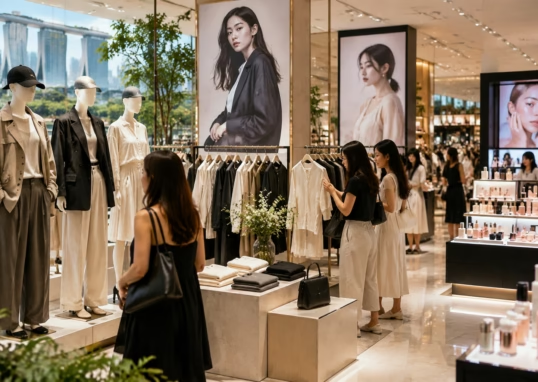
Korean Fashion Brands Are Betting Big on Singapore—and Winning
- 0
- 572 words
The Orchard Road Invasion Nobody Saw Coming When Shinsegae Tomboy opened standalone stores for Studio Tomboy and VOV at the METRO department...
Read out all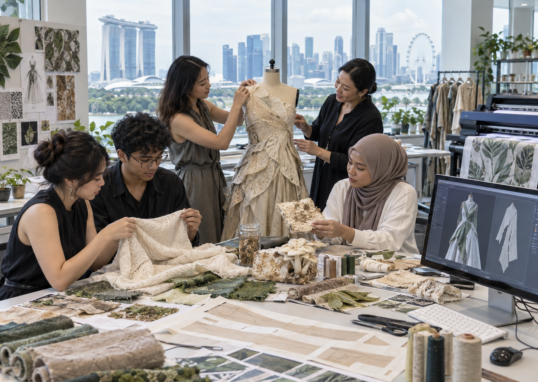
Blending Tradition with Tech: How Singaporean Fashion Schools Are Forging the Ultimate Hybrid Designers in 2026
- 0
- 465 words
The modern fashion designer is expected to be a polymath. They must be an artist, an engineer, a marketer, and increasingly, a...
Read out all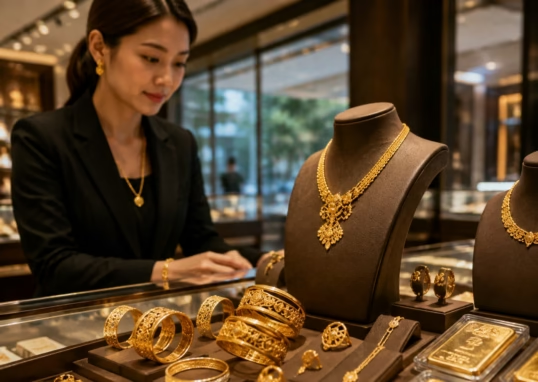
Lab-Grown Diamonds vs. Natural Stones: The Shifting Preferences in Singapore’s Luxury Sector
- 0
- 352 words
The jewelry counters in Singapore’s luxury malls are witnessing a generational shift in values. While natural diamonds have long been the benchmark for...
Read out all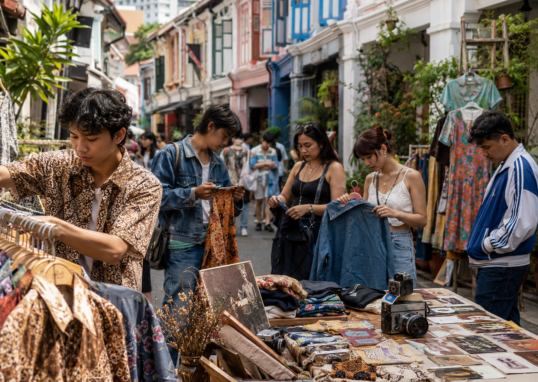
The Custodians of Rare Threads: Inside Singapore’s Private Vintage Archives for Japanese Denim and Vintage Chanel
- 0
- 480 words
In a temperature-controlled room in a private apartment, rows of 1990s Japanese denim hang in acid-free garment bags. Nearby, a glass cabinet...
Read out all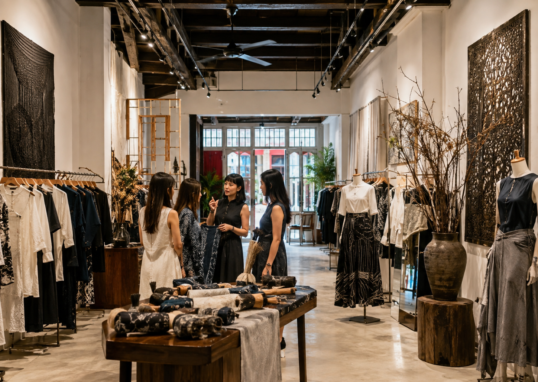
Focus on Sustainability and Ethical Production
- 0
- 358 words
A profound shift is redefining Singapore’s boutique fashion identity: sustainability has moved from marketing tagline to operational necessity. Independent designers and local...
Read out all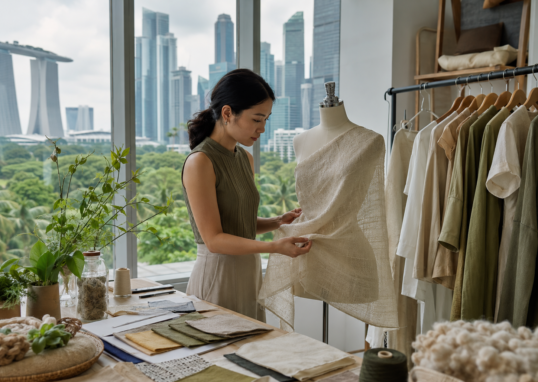
Singapore’s Circular Textile Economy: Tackling Fashion Waste Through Recycling, Resale and Better Design
- 0
- 604 words
Singapore’s fashion market faces a structural contradiction. Consumers have access to a large selection of affordable clothing, yet the country has limited...
Read out all