- 0
- 572 words
The Orchard Road Invasion Nobody Saw Coming
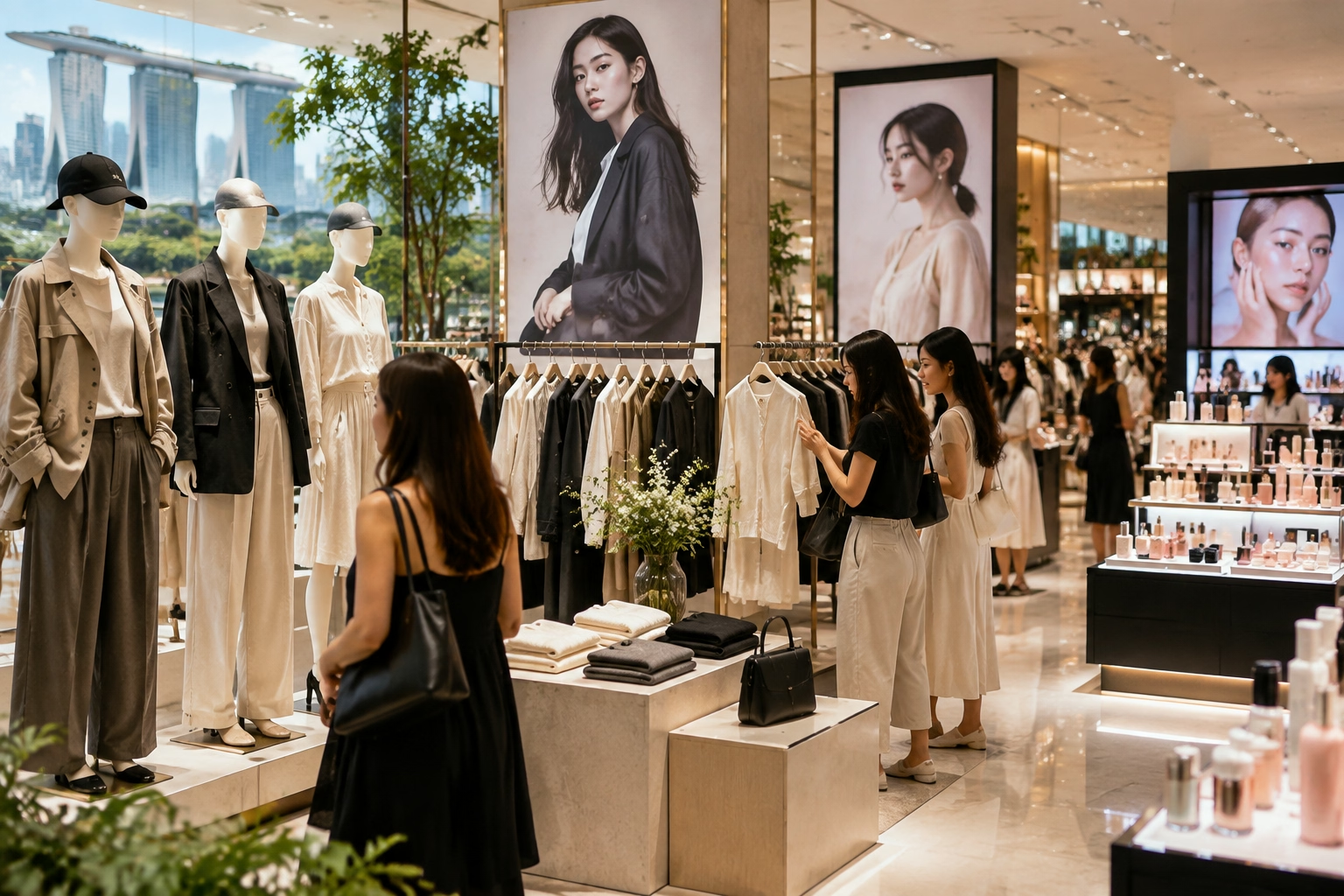
When Shinsegae Tomboy opened standalone stores for Studio Tomboy and VOV at the METRO department store on Orchard Road in July 2026, it marked more than just another retail launch. It signaled that Korean fashion brands have moved beyond testing Singapore’s waters and are now diving in headfirst. The simultaneous debut of two distinct women’s labels represents a strategic confidence in a market that industry observers increasingly view as the gateway to Southeast Asia.
Why Singapore Became the Testbed
The logic behind this expansion is straightforward. Singapore offers what few Southeast Asian markets can: a consumer base with high purchasing power, sensitivity to global trends, and a willingness to adopt new brands quickly. As one industry report noted, Singapore is “considered a testbed where fashion brands gauge consumer response before expanding further into Southeast Asia”. The success of a 2025 pop-up—which drew over 10,000 visitors in just 11 days and exceeded sales targets—convinced Shinsegae Tomboy that Singaporean consumers were ready for permanent retail presence.
The Metro Paragon K-Fashion Edit
The physical manifestation of this confidence is visible at Metro Paragon’s Level 3, where a curated Korean fashion edit has transformed a section of the department store into what one publication described as “a slice of Myeongdong”. The lineup includes Studio Tomboy’s genderless, oversized aesthetic, Voices of Voices’ modern feminine minimalism, and JAAH’s layering-focused lifestyle pieces.
JAAH’s debut is particularly instructive. A Shinsegae Casa brand, JAAH opened its first overseas store at Metro Paragon on July 14, 2026, positioning itself as a lifestyle fashion label that prioritizes versatile, day-to-night pieces. The brand’s strategy includes adapting its product mix to Singapore’s tropical climate while maintaining the design sensibility that made it successful in Korea. A company spokesperson emphasized that Singapore’s “high interest in K-fashion and quick adoption of global trends” made it the ideal market for demonstrating global competitiveness.
The Broader K-Fashion Ecosystem
What makes the Korean brand expansion in Singapore notable is its ecosystemic nature. It is not just one or two labels testing the market—it is a coordinated movement involving department stores, distributors, and pop-up infrastructure. Metro’s partnership with Shinsegae International brought multiple Korean labels under one roof, creating a destination shopping experience rather than scattered brand presence.
This ecosystem extends beyond women’s fashion. The beauty sector has followed a parallel trajectory, with K-beauty brands like Laneige and Sulwhasoo gaining prominent placement in Singapore’s Sephora stores and dedicated Korean skincare sections appearing in major malls. The convergence of K-fashion and K-beauty creates a holistic lifestyle proposition that appeals to Singaporean consumers seeking comprehensive Korean-inspired aesthetics.
What Comes Next
The success of these initial forays has implications beyond Singapore’s borders. Korean fashion companies are treating Singapore as a strategic base for Southeast Asian expansion, with plans to extend distribution networks to neighboring countries once local operations prove sustainable. This positions Singapore not just as a consumer market but as a logistical and branding hub for the region.
For Singaporean consumers, the result is unprecedented access to Korean fashion without the need for a Seoul flight. For the local retail industry, it represents both opportunity and challenge—opportunity in the form of increased foot traffic and spending, challenge in the need to differentiate local offerings in an increasingly competitive landscape. The Korean fashion brands betting on Singapore appear confident that the city-state’s consumers will reward their investment.
Author

Clara@gmail.com
Related Posts
Blending Tradition with Tech: How Singaporean Fashion Schools Are Forging the Ultimate Hybrid Designers in 2026
- 0
- 465 words
The modern fashion designer is expected to be a polymath. They must be an artist, an engineer, a marketer, and increasingly, a...
Read out all
Lab-Grown Diamonds vs. Natural Stones: The Shifting Preferences in Singapore’s Luxury Sector
- 0
- 352 words
The jewelry counters in Singapore’s luxury malls are witnessing a generational shift in values. While natural diamonds have long been the benchmark for...
Read out all
The Custodians of Rare Threads: Inside Singapore’s Private Vintage Archives for Japanese Denim and Vintage Chanel
- 0
- 480 words
In a temperature-controlled room in a private apartment, rows of 1990s Japanese denim hang in acid-free garment bags. Nearby, a glass cabinet...
Read out all
Focus on Sustainability and Ethical Production
- 0
- 358 words
A profound shift is redefining Singapore’s boutique fashion identity: sustainability has moved from marketing tagline to operational necessity. Independent designers and local...
Read out allThe Rise of Mini-Me Dressing: How Instagram and TikTok Shape Singapore’s Kids Fashion Scene
- 0
- 395 words
Scrolling through a Singaporean parent’s social media feed in 2026 reveals a distinct aesthetic: carefully coordinated mother-daughter or family ensembles that blur...
Read out all
Singapore’s Circular Textile Economy: Tackling Fashion Waste Through Recycling, Resale and Better Design
- 0
- 604 words
Singapore’s fashion market faces a structural contradiction. Consumers have access to a large selection of affordable clothing, yet the country has limited...
Read out all